The Profound Impact of Global Trade Agreements on U.S. Economic Sectors in the Next 12 Months
In an increasingly interconnected world, the intricate web of global trade agreements casts a long shadow, influencing everything from the price of consumer goods to the stability of entire industries. For the United States, a nation deeply embedded in the global economy, understanding the evolving landscape of these agreements is not merely an academic exercise; it’s a critical imperative for businesses, policymakers, and citizens alike. Over the next 12 months, the impact of global trade agreements on U.S. economic sectors is poised to be particularly dynamic, driven by a confluence of geopolitical shifts, technological advancements, and ongoing domestic economic priorities. This comprehensive analysis delves into the multifaceted ways these international pacts will shape the American economic landscape, examining key sectors, potential challenges, and emerging opportunities.
The concept of global trade is as old as civilization itself, but its modern incarnation, characterized by complex multilateral and bilateral agreements, is a relatively recent phenomenon. These agreements, such as the North American Free Trade Agreement (NAFTA) – now the United States-Mexico-Canada Agreement (USMCA) – the World Trade Organization (WTO) accords, and various free trade agreements (FTAs) with individual countries or blocs, are designed to reduce barriers to trade, foster economic cooperation, and, theoretically, promote prosperity. However, their real-world effects are often nuanced, creating winners and losers across different sectors and regions. The current geopolitical climate, marked by rising protectionist sentiments in some quarters, renewed emphasis on supply chain resilience, and a push for ‘friend-shoring’ or ‘near-shoring,’ adds layers of complexity to predicting the precise impact of global trade agreements.
For businesses operating within the U.S., staying abreast of these developments is crucial. Changes in tariffs, quotas, regulatory standards, and intellectual property protections can significantly alter competitive landscapes, operational costs, and market access. For policymakers, the challenge lies in crafting trade policies that balance national interests with the benefits of international cooperation, ensuring that the U.S. economy remains robust and competitive on the global stage. This article will dissect the probable trajectory of these influences, providing a roadmap for understanding the significant transformations anticipated within the next year.
Understanding the Current Landscape of Global Trade Agreements
Before we can fully appreciate the future impact of global trade agreements, it’s essential to grasp the current state of play. The U.S. is party to numerous trade agreements, each with its own specific provisions and implications. The USMCA, for instance, governs a substantial portion of U.S. trade with its North American neighbors, impacting sectors like automotive manufacturing, agriculture, and digital trade. Beyond regional agreements, the U.S. also engages with a multitude of bilateral FTAs, such as those with South Korea, Australia, and Singapore, which facilitate trade in specific goods and services.
The World Trade Organization (WTO) remains a cornerstone of the multilateral trading system, providing a framework of rules for global commerce and a forum for negotiating trade agreements and resolving disputes. However, the WTO has faced challenges in recent years, including stalemates in new rounds of negotiations and disputes over its dispute settlement mechanism. The effectiveness and future direction of the WTO will undoubtedly continue to influence the broader environment in which U.S. trade policy operates and, consequently, the impact of global trade agreements on American industries.
Furthermore, the U.S. is actively involved in various trade dialogues and initiatives that, while not formal agreements, can lay the groundwork for future pacts or significantly influence trade flows. Examples include discussions around critical minerals supply chains, digital trade standards, and environmental sustainability in trade. These ongoing conversations, even without immediate legislative outcomes, create a dynamic backdrop that businesses must monitor closely. The evolving relationship with China, characterized by both competition and interdependence, also plays a pivotal role. Tariffs imposed during previous administrations, and the ongoing strategic competition, continue to shape trade patterns and investment decisions across numerous sectors.
Key Trade Agreements and Their Immediate Relevance
- USMCA (United States-Mexico-Canada Agreement): This agreement is particularly vital for manufacturing, especially the automotive industry, as it dictates rules of origin and labor provisions. Its continuous implementation and periodic reviews will directly influence production decisions and supply chain configurations within North America. The impact of global trade agreements like USMCA is felt directly by workers and businesses in these sectors.
- Bilateral FTAs: Agreements with countries like South Korea (KORUS FTA) and Australia continue to facilitate specific trade flows. Any adjustments or renegotiations of these agreements could have targeted impacts on specific agricultural products, manufactured goods, or services.
- Indo-Pacific Economic Framework (IPEF): While not a traditional free trade agreement focused on tariff reductions, IPEF aims to establish common standards in areas like supply chain resilience, clean energy, and digital trade. Its progress could reshape regional economic integration and diversify supply chains away from over-reliance on single nations, thereby influencing investment and production strategies for U.S. companies in the region. The long-term impact of global trade agreements or frameworks like IPEF could be substantial.
- Transatlantic Trade and Technology Council (TTC): This forum with the European Union addresses issues such as technology standards, supply chain security, and export controls. While not an FTA, its outcomes can establish de facto standards that U.S. companies must adhere to when trading with the EU, affecting sectors like technology, cybersecurity, and advanced manufacturing.
Sector-Specific Impacts: Who Wins and Who Faces Challenges?
The impact of global trade agreements is rarely uniform across all sectors. Some industries thrive under liberalized trade, gaining access to new markets and cheaper inputs, while others may face heightened competition from foreign producers. Understanding these sector-specific dynamics is crucial for anticipating the overall economic effects.
Manufacturing Sector
The U.S. manufacturing sector is arguably one of the most sensitive to global trade agreements. Industries ranging from automotive and aerospace to textiles and electronics are heavily reliant on international supply chains, export markets, and competition from imported goods. The USMCA, for instance, has significantly influenced automotive production, with its stricter rules of origin aiming to encourage more North American content. This can lead to increased domestic investment and job creation in some segments, but also higher costs for manufacturers adjusting to new requirements.
Furthermore, ongoing discussions about diversifying critical supply chains – particularly for semiconductors, pharmaceuticals, and rare earth minerals – will likely lead to new incentives and agreements aimed at reshoring or nearshoring production. This trend, while potentially boosting domestic manufacturing capacity, could also increase production costs in the short term. The overall impact of global trade agreements and related policies here is a complex interplay of cost, efficiency, and national security.
Agriculture Sector
U.S. agriculture is a major exporter, and its prosperity is intimately tied to open access to international markets. Trade agreements often include specific provisions for agricultural products, addressing tariffs, quotas, and sanitary and phytosanitary (SPS) standards. For instance, maintaining favorable access to markets in Asia and Europe is crucial for producers of soybeans, corn, beef, and dairy.
However, agricultural trade is also highly susceptible to geopolitical tensions and retaliatory tariffs, as seen in past trade disputes. The next 12 months will likely see continued efforts to secure and expand market access for U.S. agricultural products through new bilateral agreements or by addressing existing trade barriers. The impact of global trade agreements on this sector can literally mean the difference between a profitable year and significant losses for farmers.
Technology and Digital Services
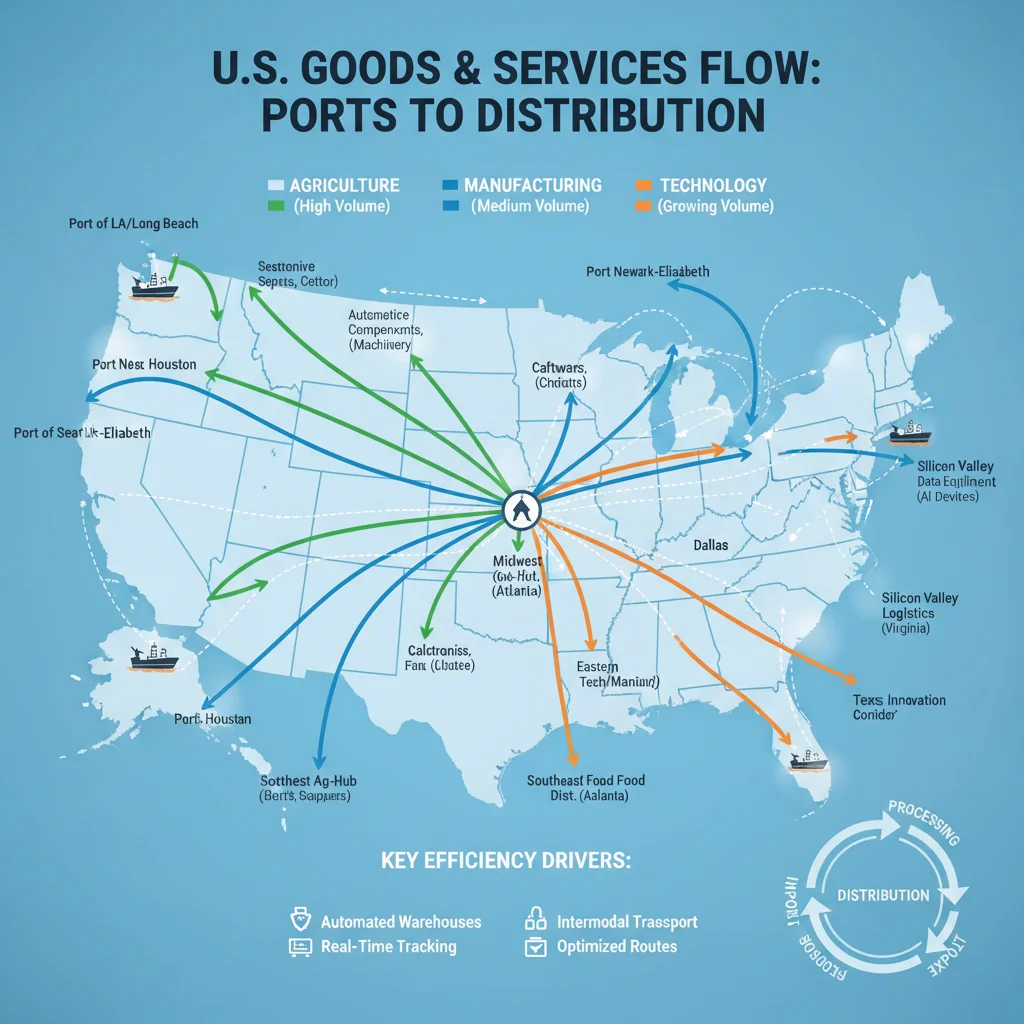
The rapidly growing technology and digital services sectors are increasingly becoming a focal point of global trade discussions. Agreements are evolving to address issues like data localization, cross-border data flows, intellectual property protection for digital products, and digital taxation. The U.S. generally advocates for open digital trade, while some countries emphasize data sovereignty and local content requirements. The impact of global trade agreements in this sphere will dictate how U.S. tech companies can operate internationally, influencing everything from cloud computing services to e-commerce platforms.
The IPEF and TTC discussions are particularly relevant here, as they seek to establish common standards and norms for digital trade among key partners. Success in these initiatives could create a more predictable and favorable environment for U.S. tech exports, while failures or divergent approaches could lead to fragmentation and increased compliance costs.
Energy Sector
The U.S. energy sector, particularly oil and natural gas, has seen its role in global markets expand dramatically in recent years. Trade agreements and international energy policies influence export capabilities, investment in infrastructure (like LNG terminals), and the overall competitiveness of U.S. energy products. As global demand for energy continues to shift, and as countries increasingly focus on energy security and climate goals, the rules governing energy trade will become even more critical.
Discussions around carbon border adjustments, subsidies for renewable energy, and critical mineral supply chains (essential for batteries and other clean energy technologies) will have a direct impact of global trade agreements on the U.S. energy transition and its role as a global energy supplier.
Services Sector (Beyond Digital)
The U.S. is a net exporter of services, including financial services, education, healthcare, and professional consulting. Trade agreements play a vital role in opening foreign markets for these services, addressing issues like professional licensing, visa requirements for service providers, and regulatory harmonization. As the global economy becomes more service-oriented, the focus on services trade within agreements is expected to intensify. Any new agreements or updates to existing ones could significantly expand opportunities for U.S. service providers abroad.
Emerging Trends and Future Outlook
The next 12 months will not only be shaped by existing agreements but also by several emerging trends that will redefine the impact of global trade agreements.
Supply Chain Resilience and Diversification
The COVID-19 pandemic and recent geopolitical events have underscored the vulnerabilities of highly concentrated global supply chains. There’s a strong push, both from government and industry, to diversify sourcing, reduce reliance on single countries, and build more resilient supply networks. This trend will likely lead to new incentives for domestic production, nearshoring to allied countries, and greater scrutiny of foreign investments in critical sectors. Trade agreements may evolve to include provisions that support these goals, potentially favoring trade with partners that offer greater supply chain security.
Geopolitical Competition and ‘Friend-Shoring’
The strategic competition between major global powers is increasingly influencing trade policy. The concept of ‘friend-shoring,’ where countries prioritize trade and investment with geopolitical allies, is gaining traction. This could lead to a reorientation of trade flows, with a greater emphasis on economic security alongside economic efficiency. The impact of global trade agreements forged under this paradigm could result in stronger economic blocs among like-minded nations, but also potential fragmentation of the global trading system.
Climate Change and Environmental Standards
Climate change is becoming an ever-more prominent factor in trade policy. Countries are exploring how trade agreements can support environmental goals, such as promoting sustainable practices, reducing carbon emissions, and regulating trade in environmentally sensitive goods. The EU’s proposed Carbon Border Adjustment Mechanism (CBAM, for example, could have significant implications for U.S. exporters, particularly in energy-intensive industries. Future trade agreements are likely to incorporate more robust environmental provisions, influencing production methods and supply chain choices for U.S. businesses.
Technological Advancements and Digital Trade Rules
The rapid pace of technological innovation, particularly in areas like artificial intelligence, quantum computing, and biotechnology, will continue to drive the need for new rules in global trade. Issues surrounding data governance, cybersecurity, and the ethical implications of emerging technologies will increasingly feature in trade negotiations. The U.S. will likely continue to advocate for open, interoperable, and secure digital ecosystems, but finding common ground with diverse international partners will remain a challenge.

Strategic Implications for U.S. Businesses and Policymakers
Given the anticipated shifts, both U.S. businesses and policymakers must adopt strategic approaches to navigate the evolving global trade landscape and mitigate the potential negative impact of global trade agreements while maximizing opportunities.
For Businesses:
- Diversify Supply Chains: Reduce reliance on single-source suppliers and explore new sourcing locations, especially in allied countries, to enhance resilience against geopolitical shocks and trade disruptions.
- Monitor Policy Developments: Stay informed about ongoing trade negotiations, proposed tariffs, and regulatory changes in key markets. Membership in industry associations can provide valuable insights and advocacy opportunities.
- Invest in Adaptability: Be prepared to adjust production processes, sourcing strategies, and market entry approaches in response to changes in trade agreements. This might include investing in automation or domestic manufacturing capabilities.
- Embrace Digital Trade: Understand and adapt to evolving digital trade rules, ensuring compliance with data privacy regulations and cybersecurity standards in different jurisdictions.
- Leverage FTAs: Fully utilize the benefits offered by existing free trade agreements, ensuring products meet rules of origin requirements to qualify for preferential tariff treatment.
For Policymakers:
- Balance Protection with Openness: Craft trade policies that protect strategic domestic industries and national security interests without unduly isolating the U.S. economy or stifling innovation.
- Strengthen Alliances: Work with key allies to establish common standards and approaches to critical issues like supply chain resilience, digital trade, and clean energy, potentially creating larger economic blocs with shared values.
- Invest in Domestic Competitiveness: Complement trade policy with domestic investments in infrastructure, education, R&D, and workforce development to ensure U.S. industries can compete effectively on a global scale.
- Modernize Trade Enforcement: Ensure that trade agreements are effectively enforced, addressing unfair trade practices and protecting U.S. intellectual property.
- Lead on New Trade Agendas: Proactively engage in shaping the rules for emerging areas of trade, such as AI governance, biotechnology, and sustainable trade, to ensure U.S. interests are reflected in future global norms.
Conclusion
The next 12 months promise a dynamic and challenging period for the U.S. economy as it navigates the complex and ever-evolving landscape of global trade agreements. The impact of global trade agreements will be felt across every major sector, from manufacturing and agriculture to technology and services. While some industries will find new opportunities for growth and market expansion, others will face increased competition and the need for significant adaptation. The interplay of geopolitical shifts, technological advancements, and a renewed focus on supply chain resilience will define the contours of this period.
For businesses, agility, informed decision-making, and a proactive approach to understanding and leveraging trade policies will be paramount. For policymakers, the task involves striking a delicate balance between national interests, international cooperation, and the long-term competitiveness of the U.S. economy. By strategically engaging with the complexities of international trade, the United States can continue to harness the benefits of global commerce while safeguarding its economic prosperity and security in a rapidly changing world.
The ongoing dialogue and adjustments to existing and new trade frameworks will ultimately determine the trajectory of various U.S. economic sectors. Staying informed, adaptable, and forward-thinking will be the keys to success in this intricate global economic dance.