Boost Your Credit Score: 7 Key Factors for Financial Health in 2026

In the evolving landscape of personal finance, your credit score remains a cornerstone of your financial health. As we look towards 2026, understanding and actively managing this crucial number is more important than ever. A strong credit score doesn’t just open doors to better loan rates and credit card offers; it can influence everything from apartment rentals to insurance premiums. This comprehensive guide will delve into the seven key factors that determine your credit score and provide actionable strategies to help you significantly boost credit score by 50 points or more, setting you up for robust financial health in the coming years.
Boost Your Credit Score: 7 Key Factors for Financial Health in 2026
Your credit score is more than just a number; it’s a reflection of your financial reliability and a powerful tool that can either empower or hinder your financial aspirations. Whether you’re planning to buy a home, finance a car, or simply secure a favorable interest rate on a personal loan, a healthy credit score is paramount. As we edge closer to 2026, the financial algorithms and lending criteria continue to refine, making it imperative to stay informed and proactive about your credit health. This article aims to demystify the complex world of credit scoring, focusing on the seven most influential factors that can help you significantly boost credit score and achieve your financial goals.
Many people view their credit score as a static entity, something they have little control over. This couldn’t be further from the truth. With consistent effort and a clear understanding of the underlying mechanics, anyone can improve their credit standing. Our goal is to equip you with the knowledge and practical tips to not just understand your credit score, but to actively manage and elevate it. Let’s embark on this journey to strengthen your financial foundation for 2026 and beyond.
Understanding the Credit Scoring Models: FICO and VantageScore
Before we dive into the specific factors, it’s essential to understand that there isn’t just one universal credit score. The two most widely used scoring models are FICO (Fair Isaac Corporation) and VantageScore. While they both evaluate similar aspects of your credit history, their weighting of these factors can differ slightly. Most lenders use FICO scores, but VantageScore is gaining traction, especially with free credit monitoring services. Regardless of the model, the core principles for improving your score remain consistent.
Both models analyze your credit report, which is a detailed summary of your credit history compiled by the three major credit bureaus: Experian, Equifax, and TransUnion. It’s crucial to regularly check your credit report for inaccuracies, as errors can negatively impact your score without your knowledge. You’re entitled to a free copy of your credit report from each bureau once every 12 months via AnnualCreditReport.com.
Now, let’s explore the seven pivotal factors that will help you boost credit score effectively.
Factor 1: Payment History – The Foundation of Your Credit Score
Your payment history is, without a doubt, the most critical factor in determining your credit score, accounting for roughly 35% of your FICO score and a significant portion of your VantageScore. This factor reflects whether you pay your bills on time. Lenders want to see a consistent track record of timely payments, as it indicates reliability and a lower risk of default.
Why Timely Payments are Paramount:
- Predictor of Future Behavior: Past payment behavior is considered the best indicator of future payment behavior. If you’ve been consistent, lenders are more likely to trust you.
- Impact of Missed Payments: Even a single late payment (typically 30 days or more past due) can have a significant negative impact on your score, especially if your credit history is short or otherwise pristine. The longer a payment is overdue, the worse the impact.
- Collection Accounts and Bankruptcies: These are severe negative marks that can remain on your credit report for seven to ten years, severely hindering your ability to obtain new credit.
Strategies to Improve Payment History and Boost Credit Score:
- Automate Payments: Set up automatic payments for all your bills, especially credit cards and loans, to ensure you never miss a due date.
- Set Reminders: Use calendar alerts or financial apps to remind you of upcoming payment due dates.
- Pay More Than the Minimum: While paying the minimum keeps your account in good standing, paying more helps reduce your overall debt faster, which positively impacts other factors.
- Contact Creditors: If you anticipate difficulty making a payment, contact your creditor immediately. They might be willing to work with you on a payment plan or deferment.
- Dispute Errors: Regularly review your credit report for any late payments that are inaccurately reported. Dispute them immediately with the credit bureau.
Maintaining a flawless payment history is the single most effective way to build and maintain an excellent credit score. It’s the bedrock upon which all other credit-building efforts stand.

Factor 2: Credit Utilization Ratio – How Much You Owe vs. Your Limit
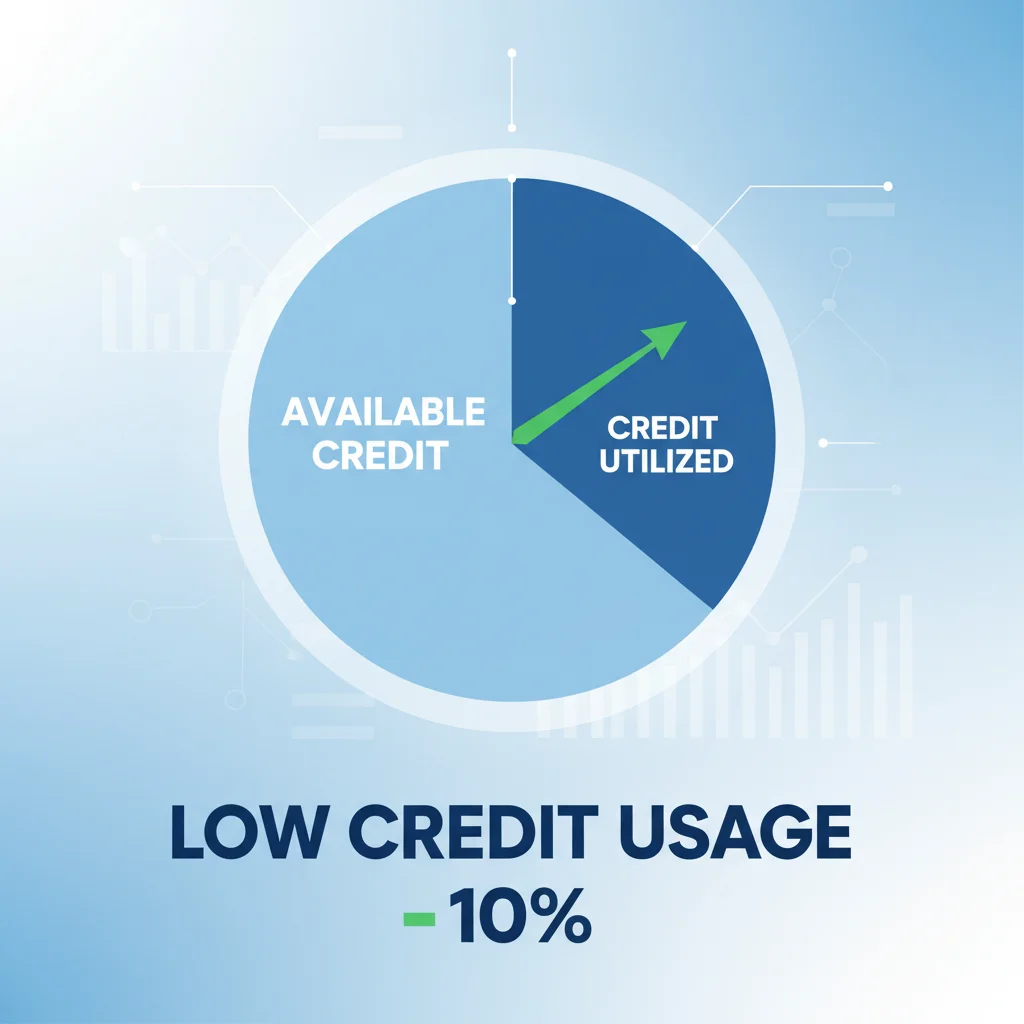
Your credit utilization ratio, often referred to as the amount you owe, is the second most influential factor, typically accounting for 30% of your FICO score. This ratio compares the total amount of credit you’re using to your total available credit. For example, if you have a credit card with a $10,000 limit and you currently owe $2,000, your utilization for that card is 20%.
Why Credit Utilization Matters:
- Indicator of Risk: High utilization suggests that you might be over-reliant on credit and could be a higher risk for lenders.
- Impact on Score: Keeping your utilization low signals responsible credit management. Experts generally recommend keeping your overall credit utilization below 30%, with many advising even lower, around 10%, for optimal scores.
- Revolving vs. Installment Debt: This factor primarily applies to revolving credit (like credit cards and lines of credit) rather than installment loans (like mortgages or car loans) where the balance decreases over time.
Strategies to Optimize Credit Utilization and Boost Credit Score:
- Pay Down Balances: The most direct way to lower your utilization is to pay down your credit card balances. Focus on cards with the highest balances first.
- Make Multiple Payments: Instead of waiting for the statement due date, make smaller payments throughout the month, especially if you use your card frequently. This can keep your reported balance low.
- Increase Credit Limits: If you have a good payment history, you can request a credit limit increase from your existing creditors. This increases your total available credit without increasing your debt, thus lowering your utilization ratio. Be cautious not to then spend up to the new limit.
- Avoid Closing Old Accounts: Closing old credit card accounts can reduce your total available credit, which could inadvertently increase your utilization ratio, even if your balances remain the same.
- Open New Credit (Cautiously): Opening a new credit card can increase your total available credit, but this strategy should be used with caution as it also involves a hard inquiry (see Factor 4) and adds a new account to manage.
Managing your credit utilization effectively is a powerful way to significantly boost credit score in the short term, as this factor often updates quickly with new reporting cycles.
Factor 3: Length of Credit History – The Value of Time
The length of your credit history, also known as the age of your accounts, accounts for approximately 15% of your FICO score. This factor considers the age of your oldest credit account, the age of your newest account, and the average age of all your accounts. Lenders prefer to see a long history of responsible credit management.
Why Length of Credit History is Important:
- Demonstrates Stability: A longer history provides more data points for lenders to assess your creditworthiness, demonstrating consistent financial behavior over time.
- Impact of New Accounts: Opening many new accounts in a short period can lower the average age of your accounts, which might temporarily ding your score.
Strategies to Lengthen Your Credit History and Boost Credit Score:
- Keep Old Accounts Open: As mentioned, resist the urge to close old credit card accounts, especially those with no annual fees. These accounts contribute to the average age of your credit.
- Be Patient: This factor primarily improves with time. There’s no quick fix, but consistent responsible behavior over years will naturally improve this aspect of your score.
- Become an Authorized User: If a trusted family member with a long, positive credit history adds you as an authorized user on one of their credit cards, their account history might appear on your credit report, potentially boosting your credit age. However, ensure they maintain excellent payment habits.
- Start Early: If you’re new to credit, consider getting a secured credit card or a small installment loan to start building your history as soon as you can responsibly manage it.
While you can’t magically age your credit accounts, strategic management of existing accounts and patience are key to improving this long-term factor and helping to boost credit score over time.
Factor 4: New Credit – The Impact of Recent Applications
New credit, or recent credit applications, makes up about 10% of your FICO score. This factor looks at how many new credit accounts you’ve opened recently and how many hard inquiries appear on your credit report. A hard inquiry occurs when a lender pulls your credit report to make a lending decision (e.g., applying for a new credit card, loan, or mortgage).
Why New Credit Applications Matter:
- Risk Indicator: A sudden flurry of new credit applications can signal to lenders that you might be in financial distress or are taking on too much debt, making you a higher risk.
- Hard vs. Soft Inquiries: Hard inquiries can temporarily lower your score by a few points and remain on your report for two years (though their impact diminishes after a few months). Soft inquiries (e.g., checking your own credit, pre-approved offers) do not affect your score.
Strategies to Manage New Credit and Boost Credit Score:
- Apply for Credit Only When Needed: Avoid applying for multiple new credit accounts in a short period. Space out your applications.
- Shop for Rates Wisely: If you’re rate-shopping for a mortgage or auto loan, multiple inquiries within a specific timeframe (typically 14-45 days, depending on the scoring model) are often counted as a single inquiry, minimizing the impact on your score.
- Be Selective: Only apply for credit products that you genuinely need and are likely to be approved for.
- Understand Pre-Approval: Pre-qualification or pre-approval processes often involve a soft inquiry, which doesn’t harm your score. Use these to gauge your eligibility before committing to a hard inquiry.
While new credit is a necessary part of financial life, being strategic about when and how often you apply can help you maintain a healthy credit profile and continue to boost credit score.
Factor 5: Credit Mix – The Variety of Your Accounts
Your credit mix, or the types of credit accounts you have, accounts for approximately 10% of your FICO score. This factor considers whether you have a healthy blend of revolving credit (like credit cards) and installment credit (like mortgages, car loans, or student loans). Lenders like to see that you can responsibly manage different types of credit.
Why Credit Mix is Important:
- Demonstrates Versatility: Successfully managing both revolving and installment credit shows lenders that you are a well-rounded and responsible borrower.
- Not a Primary Driver: While important, this factor typically has less impact than payment history or utilization. If you only have one type of credit, don’t rush to open another just for the sake of mix, especially if it means taking on unnecessary debt.
Strategies to Optimize Your Credit Mix and Boost Credit Score:
- Natural Progression: For most people, a healthy credit mix develops naturally over time as they take on different types of loans (e.g., student loans, then a car loan, then a mortgage) and credit cards.
- Consider a Small Installment Loan: If you only have credit cards, a small, manageable personal loan (paid off responsibly) can add an installment account to your mix.
- Secured Loans: Some banks offer credit-builder loans or secured personal loans specifically designed to help individuals establish a credit mix.
Focus on maintaining good standing with your existing accounts before actively trying to diversify your credit mix. A natural progression is often the best approach to help boost credit score through this factor.
Factor 6: Public Records and Collections – Significant Negative Impacts
While not a percentage-based factor in the same way the others are, public records and collection accounts have a profoundly negative impact on your credit score. These include bankruptcies, foreclosures, civil judgments, and tax liens. While some older public record types (like civil judgments and tax liens) are no longer included in FICO 9 and VantageScore 3.0/4.0 if they are paid or released, bankruptcies and unpaid collections remain highly detrimental.
Why Public Records and Collections are Detrimental:
- High-Risk Indicators: These events signal significant financial distress or an inability to meet financial obligations, making you a very high-risk borrower.
- Long-Term Effects: Bankruptcies can stay on your report for 7-10 years, and unpaid collections for seven years from the date of first delinquency, severely suppressing your score during that time.
Strategies to Address Public Records and Collections and Boost Credit Score:
- Avoid at All Costs: The best strategy is to prevent these from ever appearing on your report by managing your finances responsibly and seeking help if you’re in financial trouble.
- Pay Off Collections: If you have collection accounts, paying them off can improve your standing, especially with newer scoring models. Some collection agencies may agree to remove the item from your report if you pay it in full (a ‘pay-for-delete’ agreement, though these are not always granted).
- Seek Professional Help: If you’re facing severe financial difficulties, consider credit counseling or speaking with a financial advisor about debt management plans or bankruptcy alternatives.
- Monitor Your Report: Ensure that any public records or collections are accurately reported and removed once their reporting period expires.
Avoiding these severe negative marks is crucial for maintaining a healthy credit score. If they are already present, addressing them strategically is vital to begin the process of rebuilding and helping to boost credit score over the long term.
Factor 7: Inaccurate Information and Fraud – The Silent Score Killer
While not a traditional scoring factor like the others, inaccurate information and fraudulent activity on your credit report can silently erode your credit score. Errors can range from incorrect personal details to accounts that aren’t yours, or even misreported payment statuses. Identity theft, a form of fraud, can lead to new accounts being opened in your name, which can devastate your score.
Why Inaccurate Information is a Problem:
- Misrepresentation: Errors can make you appear riskier than you are, leading to lower scores and denied credit.
- Missed Opportunities: A lower score due to errors can cost you thousands in higher interest rates over the lifetime of loans.
Strategies to Combat Inaccurate Information and Fraud and Boost Credit Score:
- Regularly Review Credit Reports: As mentioned, get your free credit reports from AnnualCreditReport.com at least once a year from each of the three major bureaus (Experian, Equifax, TransUnion). Stagger your requests to review one every four months.
- Dispute Errors Promptly: If you find an error, dispute it directly with the credit bureau and the creditor. Provide documentation to support your claim. The Fair Credit Reporting Act (FCRA) requires bureaus to investigate and correct inaccuracies.
- Monitor Credit Regularly: Use free credit monitoring services or your credit card’s free credit score access to keep an eye on changes and alerts.
- Protect Your Information: Be vigilant about protecting your personal and financial information to prevent identity theft. Use strong passwords, be wary of phishing attempts, and shred sensitive documents.
Proactively monitoring and correcting inaccuracies is a powerful way to protect and help boost credit score, ensuring your credit report accurately reflects your financial responsibility.
Putting It All Together: A Holistic Approach to Boost Credit Score
Improving your credit score isn’t about focusing on just one factor; it’s about adopting a holistic approach that addresses all seven areas. While payment history and credit utilization have the most immediate and significant impact, neglecting any of these factors can hinder your progress. Think of your credit score as a garden; it requires consistent care, weeding out problems, and nurturing growth over time.
Long-Term Strategies for Sustained Credit Health:
- Create a Budget: A well-planned budget helps you manage your income and expenses, ensuring you have funds available for timely payments and debt reduction.
- Build an Emergency Fund: Having savings to cover unexpected expenses prevents you from relying on credit cards during financial emergencies, thus avoiding high utilization.
- Educate Yourself Continuously: The financial landscape changes. Stay informed about credit best practices, new regulations, and tools that can help you manage your finances.
- Seek Professional Advice: If you’re struggling with debt or navigating complex credit issues, a certified credit counselor can provide personalized guidance.
- Be Patient and Persistent: Credit improvement is a marathon, not a sprint. Consistent positive actions over time will yield significant results. Don’t get discouraged by slow progress; every positive step counts.
By consistently applying the strategies outlined for each of these seven factors, you can realistically expect to see your credit score improve. A 50-point increase is an achievable goal for many, and for some, even more significant gains are possible. The key is diligence, understanding, and a commitment to responsible financial habits.
The Benefits of a Higher Credit Score in 2026
As you work to boost credit score, it’s important to remember the tangible benefits that come with a healthier credit profile in 2026:
- Lower Interest Rates: A higher score often translates to lower interest rates on mortgages, auto loans, and personal loans, saving you thousands of dollars over the life of the loan.
- Better Credit Card Offers: Access to premium credit cards with attractive rewards, sign-up bonuses, and lower interest rates.
- Easier Loan Approvals: Lenders are more likely to approve your applications for credit when your score is strong.
- Lower Insurance Premiums: In many states, insurance companies use credit-based insurance scores to determine premiums for auto and home insurance. A better credit score can lead to lower costs.
- Easier Rental Approvals: Landlords often check credit scores as part of the tenant screening process. A good score can make finding an apartment much easier.
- Utility and Cell Phone Deposits: A strong credit score might exempt you from paying security deposits for utilities or cell phone contracts.
- Increased Negotiation Power: A high score gives you leverage when negotiating terms for various financial products.
These benefits underscore why investing time and effort into improving your credit score is one of the most impactful financial decisions you can make. It’s an investment in your future, providing greater financial flexibility and security.
Conclusion: Your Path to a Stronger Credit Score in 2026
Navigating the complexities of credit scoring can seem daunting, but by breaking it down into these seven manageable factors, the path to improvement becomes clear. Your payment history, credit utilization, length of credit history, new credit inquiries, credit mix, absence of public records/collections, and the accuracy of your credit report all play vital roles in shaping your financial reputation.
By prioritizing timely payments, keeping credit utilization low, responsibly managing your accounts over time, and diligently monitoring your credit reports, you are well on your way to achieving a significantly improved credit score by 2026. Remember, every positive action you take, no matter how small, contributes to your overall financial well-being. Take control of your credit today, implement these strategies, and watch your financial health flourish. A higher credit score is not just a number; it’s a gateway to greater financial freedom and opportunity.