Unemployment Benefits 2026: Extended Aid & Application Strategies

The economic landscape is constantly shifting, and with it, the provisions designed to support individuals during periods of job loss. As we look ahead to 2026, understanding the nuances of unemployment benefits 2026 becomes paramount for anyone who might find themselves navigating the complexities of joblessness. This comprehensive guide aims to shed light on what to expect, focusing on extended aid provisions across different states and offering critical strategies to ensure a successful application process. Whether you’re currently unemployed, anticipating a job transition, or simply want to be informed, this article provides invaluable insights into the future of unemployment support.
The year 2026 is projected to bring both continuity and potential changes to the unemployment insurance (UI) system. While the core federal-state partnership that underpins UI will remain, specific state-level adjustments and the potential for federal intervention in times of economic distress will continue to shape the availability and duration of benefits. Our focus here is to equip you with the knowledge needed to understand these dynamics, particularly concerning extended benefits and how to effectively secure them.
Understanding the Basics of Unemployment Benefits in 2026
Before diving into the specifics of unemployment benefits 2026, it’s crucial to grasp the fundamental structure of the unemployment insurance system. Unemployment benefits are typically a joint federal and state program designed to provide temporary financial assistance to eligible workers who are unemployed through no fault of their own. These benefits are not welfare; rather, they are insurance payments funded by employer contributions.
Eligibility Criteria for Unemployment Benefits
While specific requirements can vary by state, general eligibility for unemployment benefits 2026 usually hinges on a few key factors:
- Monetary Eligibility: You must have earned a certain amount of wages during a “base period” (typically the first four of the last five completed calendar quarters before you filed your claim). Each state sets its own minimum earnings requirements.
- Reason for Separation: You must be unemployed through no fault of your own. This generally means you were laid off, your position was eliminated, or you were fired for reasons other than misconduct. Quitting voluntarily without good cause (as defined by state law) usually disqualifies you.
- Able and Available for Work: You must be physically able and actively looking for new employment. States often require claimants to register with their state’s workforce agency and engage in specific job search activities.
- Weekly Certification: To continue receiving benefits, you must typically file weekly or bi-weekly certifications, affirming your continued eligibility, job search efforts, and reporting any earnings.
Standard Benefit Duration and Amounts
The standard duration for unemployment benefits in most states is 26 weeks, though some states offer fewer and a few offer more. The weekly benefit amount is also determined by state law, usually calculated as a percentage of your average weekly wages during your base period, up to a maximum limit. These limits are subject to change and are an important aspect to monitor when considering unemployment benefits 2026.
State-by-State Guide to Extended Aid: What to Expect in 2026
One of the most critical aspects of unemployment benefits 2026 is the potential for extended aid. Historically, extended benefits (EB) programs come into play during periods of high unemployment, allowing individuals to receive benefits beyond the standard state-allotted weeks. These extensions are often triggered by specific economic indicators within a state or nationwide. While predicting the exact economic conditions for 2026 is impossible, understanding the mechanisms for extended aid is crucial.
Federal-State Extended Benefits (EB) Program
The permanent Extended Benefits (EB) program is a federal-state program that provides additional weeks of unemployment benefits to workers in states experiencing high unemployment. This program is typically triggered when a state’s insured unemployment rate (IUR) or total unemployment rate (TUR) reaches certain thresholds. The duration of EB can vary, usually providing an additional 13 or 20 weeks of benefits, depending on the state’s unemployment rate.
For 2026, the availability of EB will depend on the economic health of individual states. It’s essential to monitor your state’s specific unemployment metrics and announcements from your state’s workforce agency. Historically, federal legislation has also stepped in during severe economic downturns to provide temporary additional weeks of benefits, as seen during the COVID-19 pandemic. While there’s no guarantee of such federal intervention in 2026, it remains a possibility in extreme circumstances.
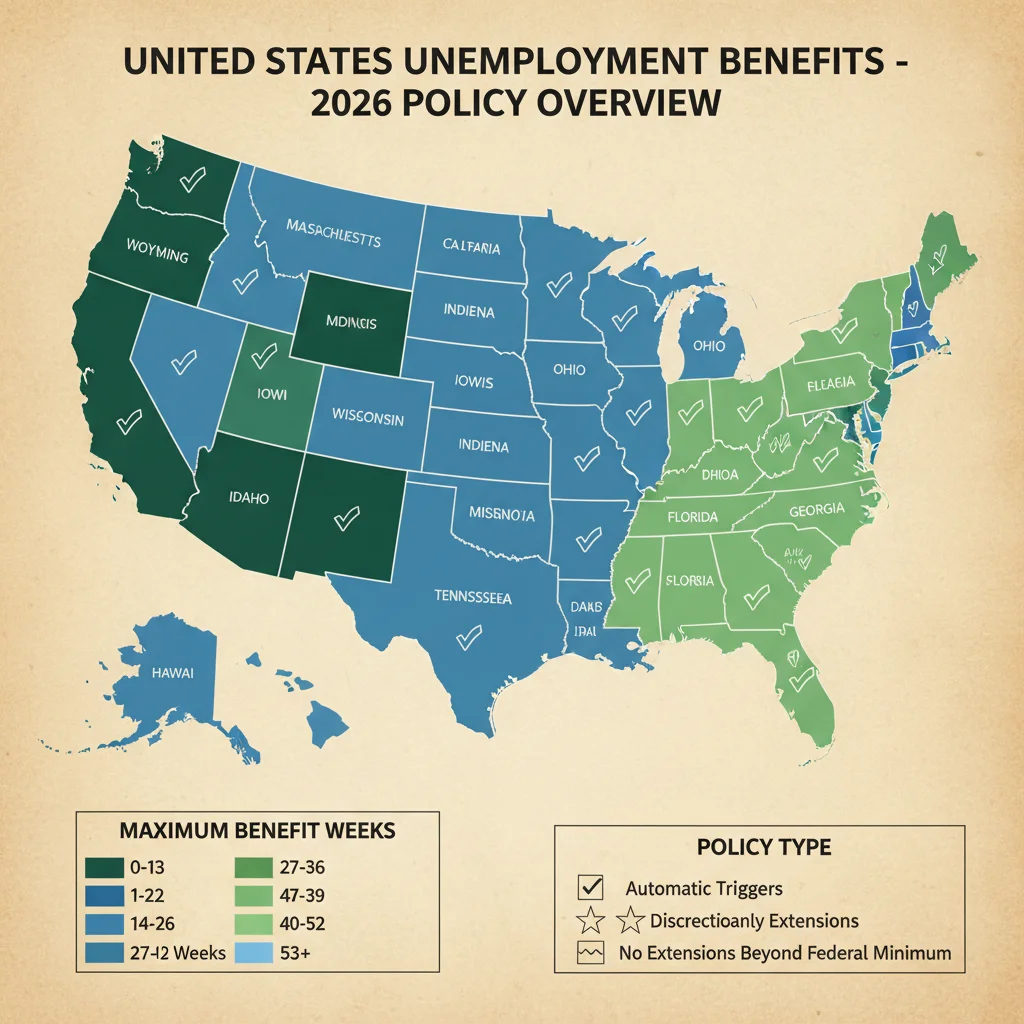
State-Specific Extended Benefit Programs and Initiatives
Beyond the federal-state EB program, some states may implement their own temporary or permanent extended benefit programs or initiatives. These programs are often designed to address unique economic challenges within a state or to provide a safety net that goes beyond federal minimums. Keeping abreast of legislative changes and announcements from your state’s Department of Labor or equivalent agency will be vital for understanding the full scope of unemployment benefits 2026 in your area.
Here’s a hypothetical look at how different states might approach extended aid in 2026, based on common patterns and potential future legislative directions:
- States with Strong Economic Buffers (e.g., North Dakota, South Dakota, Nebraska): These states might maintain standard 26-week benefits with EB only triggering in significant downturns, as their unemployment trust funds are typically robust.
- States with Historically Higher Unemployment (e.g., California, New York, Illinois): These states might be more proactive in implementing or advocating for extended benefits, especially if their unemployment rates remain elevated. They might also explore supplementary state-funded programs.
- States with Seasonal Industries (e.g., Alaska, Hawaii, agricultural states): These states often have specific provisions or a greater likelihood of triggering extended benefits during off-peak seasons due to fluctuating employment.
- States with Rapidly Changing Industries (e.g., Michigan, Pennsylvania): States undergoing significant industrial transitions might see more frequent discussions around extended benefits to support workers in retraining or seeking new opportunities.
It is crucial to remember that this is a generalized overview. Each state’s economic conditions and legislative priorities can shift. Therefore, diligent research into your specific state’s unemployment agency website will be the most reliable source for information regarding unemployment benefits 2026.
Critical Application Strategies for Unemployment Benefits in 2026
Securing unemployment benefits 2026 isn’t just about eligibility; it’s also about effective application. A well-prepared and strategic approach can significantly reduce delays and increase your chances of approval. Here are three critical application strategies to keep in mind:
Strategy 1: Meticulous Documentation and Record-Keeping
The foundation of a successful unemployment claim is thorough documentation. From the moment you anticipate or experience job loss, begin gathering and organizing all relevant paperwork. This strategy is not just about the initial application but also about maintaining eligibility throughout your claim.
- Employment History: Collect names, addresses, phone numbers, and dates of employment for all employers over the past 18-24 months. Include your reasons for leaving each position. Your most recent employer’s information is particularly critical.
- Wage Information: Have pay stubs, W-2 forms, or other proof of earnings readily available. This will help your state accurately calculate your weekly benefit amount.
- Separation Documentation: If you were laid off, obtain a letter from your employer stating the reason for your separation. If you were fired, gather any documentation related to your performance reviews, disciplinary actions, or the termination notice. If you resigned, have documentation explaining your “good cause” for leaving, if applicable.
- Personal Identification: Ensure you have your Social Security number, driver’s license or state ID, and bank account information (for direct deposit) easily accessible.
- Job Search Records: Start a log of all job search activities immediately. This should include the date of application, company name, job title, method of application, and contact person if available. Many states require you to demonstrate active job seeking to remain eligible for unemployment benefits 2026.
- Correspondence: Keep copies of all correspondence with the unemployment agency, including letters, emails, and notes from phone calls (date, time, person spoken to, summary of conversation). This can be invaluable if disputes arise.
Maintaining a physical and digital folder for all these documents will streamline the application process and provide a strong defense against any challenges to your claim.
Strategy 2: Proactive Engagement with State Workforce Agencies
Don’t wait for issues to arise. Proactive engagement with your state’s workforce agency (often called the Department of Labor, Employment Security Department, or similar) is a powerful strategy. This means understanding their requirements, utilizing their resources, and communicating effectively.
- Review State-Specific Requirements: Each state has its own rulebook. Before applying for unemployment benefits 2026, thoroughly review your state’s unemployment website. Pay close attention to eligibility criteria, application deadlines, job search requirements, and how to appeal a denial.
- Utilize Online Portals and Resources: Most states have robust online portals for filing claims, certifying weekly benefits, and accessing FAQs. Familiarize yourself with these platforms. Many also offer free job search assistance, resume workshops, and training programs that can aid your reemployment efforts.
- Attend Orientations/Webinars: Some states offer mandatory or optional orientations for new claimants. These can provide crucial information and clarify expectations.
- Ask Questions: If you’re unsure about any aspect of the application process or ongoing requirements, don’t hesitate to contact the agency directly. Document these interactions as part of your record-keeping.
- Report Changes Promptly: Any changes to your employment status (even part-time work), income, or ability/availability for work must be reported immediately. Failure to do so can result in overpayments, penalties, and even fraud charges.
Being proactive demonstrates your commitment to finding work and complying with regulations, which bodes well for your claim for unemployment benefits 2026.

Strategy 3: Strategic Job Search and Skill Development
While receiving unemployment benefits, your primary goal is reemployment. A strategic job search is not only a requirement for benefits but also the quickest path back to financial stability. Furthermore, using this time for skill development can enhance your long-term career prospects.
- Targeted Job Search: Instead of applying to every available position, focus on jobs that align with your skills, experience, and career goals. Tailor your resume and cover letter for each application. Quality often trumps quantity.
- Networking: Leverage your professional network. Inform former colleagues, mentors, and industry contacts that you are seeking new opportunities. Many jobs are found through referrals.
- Skill Assessment and Development: Use this period to assess any skill gaps you might have. Many state workforce agencies offer free or subsidized training programs, certifications, and online courses. Consider learning new software, improving your communication skills, or getting certified in a high-demand area. This not only makes you more marketable but also fulfills job search requirements.
- Interview Preparation: Practice interviewing skills. Utilize mock interviews and feedback from career counselors. The job market in 2026 will likely be competitive, and strong interview performance will be key.
- Flexibility and Adaptability: Be open to new industries, roles, or even temporary positions that can provide income and relevant experience while you search for a long-term fit.
By treating your job search as a full-time job and investing in your professional development, you not only meet the requirements for unemployment benefits 2026 but also position yourself for a stronger return to the workforce.
Common Pitfalls to Avoid When Claiming Unemployment Benefits
Even with the best strategies, certain mistakes can jeopardize your claim for unemployment benefits 2026. Being aware of these pitfalls can help you steer clear of them:
- Failing to Meet Deadlines: Missing deadlines for initial applications, weekly certifications, or appeals can lead to denial or interruption of benefits.
- Inaccurate or Incomplete Information: Providing false or incomplete information, even unintentionally, can result in penalties, repayment of benefits, or disqualification.
- Not Actively Searching for Work: If your state requires job search activities, simply applying to a few jobs without genuine effort can lead to benefit suspension. Keep detailed records as proof.
- Refusing Suitable Work: Generally, if you are offered a job that is suitable for your skills and experience, and you refuse it without good cause, your benefits may be stopped.
- Not Reporting Earnings: Even small amounts of part-time income must be reported. States have wage deduction rules that reduce benefits based on earnings, but failing to report can be considered fraud.
- Ignoring Communication from the Agency: Always respond promptly to requests for information or scheduled appointments from your state’s unemployment agency.
- Lack of Appeal: If your claim is denied, don’t give up immediately. Understand your appeal rights and follow the process carefully, using your meticulous documentation.
The Economic Outlook and its Impact on Unemployment Benefits 2026
The global and national economic outlook for 2026 will undoubtedly play a significant role in the landscape of unemployment benefits 2026. Factors such as inflation rates, interest rate policies, technological advancements (e.g., AI and automation impacting certain job sectors), and geopolitical events can all influence unemployment rates and, consequently, the need for and availability of extended aid.
Economists are constantly modeling future scenarios, and while predictions vary, a general trend towards a more dynamic and potentially volatile job market is often cited. This dynamism underscores the importance of having a robust unemployment insurance system and individuals being well-informed about their options. Governments, both federal and state, will likely continue to monitor economic indicators closely, ready to adjust policies as needed to support their workforce.
Technological Advancements and Job Displacement
One specific area of concern for 2026 and beyond is the accelerating pace of technological change. Artificial intelligence, automation, and advanced robotics are expected to continue transforming industries, potentially leading to job displacement in certain sectors while creating new opportunities in others. This structural unemployment could prompt discussions around retraining initiatives and, potentially, new forms of unemployment support or extended benefits for workers transitioning between industries.
Policy Debates and Legislative Changes
The design and funding of unemployment benefits are perennial topics of debate. In the lead-up to 2026, expect ongoing discussions at both federal and state levels regarding:
- Trust Fund Solvency: Ensuring state unemployment trust funds are adequately funded to handle future downturns.
- Benefit Adequacy: Debates about whether current weekly benefit amounts are sufficient to meet basic needs, especially with rising costs of living.
- Eligibility Expansion: Discussions about extending benefits to workers traditionally excluded, such as gig workers or independent contractors.
- Modernization of Systems: Efforts to upgrade outdated IT systems that administer unemployment benefits, making them more efficient and user-friendly.
These policy debates could lead to legislative changes, further shaping the environment for unemployment benefits 2026. Staying informed through reputable news sources and government publications will be key to understanding these evolving dynamics.
Conclusion: Preparing for Unemployment Benefits in 2026
Navigating unemployment can be a challenging experience, but being prepared and informed can make a significant difference. As we look towards 2026, the landscape of unemployment benefits 2026 will continue to evolve, influenced by economic conditions, state-specific policies, and potential federal interventions. By understanding the core eligibility requirements, staying informed about state-by-state extended aid provisions, and employing critical application strategies – meticulous documentation, proactive engagement, and strategic job searching – you can enhance your chances of securing the support you need.
Remember that unemployment insurance is a vital safety net designed to provide temporary relief and allow you to focus on finding your next employment opportunity. Approach the process with diligence, persistence, and a commitment to reemployment. By doing so, you not only fulfill your obligations as a claimant but also empower yourself to successfully transition back into the workforce.
For the most accurate and up-to-date information specific to your situation, always consult your state’s official unemployment agency website or contact them directly. The information provided in this guide is intended for general informational purposes and should not be considered legal or financial advice. Staying informed and proactive will be your best allies in navigating unemployment benefits 2026.