FEMA Aid 2026: Disaster Assistance Eligibility & Claim Guide
In an increasingly unpredictable world, understanding how to access critical support during and after a disaster is paramount. The Federal Emergency Management Agency (FEMA) stands as the cornerstone of federal assistance, offering a lifeline to communities and individuals grappling with the aftermath of natural catastrophes. As we look ahead to 2026, it’s crucial to be informed about the eligibility criteria, application processes, and claim procedures for FEMA Aid 2026. This comprehensive guide aims to demystify FEMA’s offerings, empowering you with the knowledge needed to navigate the complexities of disaster assistance.
Navigating FEMA Aid 2026: Your Essential Guide to Disaster Assistance
The year 2026 may seem distant, but proactive preparation for potential disasters is always the wisest course of action. Understanding the mechanisms of FEMA Aid 2026 early can significantly reduce stress and expedite recovery when disaster strikes. This article delves deep into what FEMA offers, who is eligible, and how to effectively apply for and claim assistance, ensuring you are well-prepared for any eventuality.
Understanding FEMA’s Mission and the Scope of FEMA Aid 2026
FEMA’s mission is to support citizens and first responders to ensure that as a nation we work together to build, sustain, and improve our capability to prepare for, protect against, respond to, recover from, and mitigate all hazards. This encompasses a broad spectrum of activities, from pre-disaster mitigation to post-disaster recovery. When we talk about FEMA Aid 2026, we’re referring to the financial and direct assistance programs available to individuals, households, and communities affected by federally declared disasters in that year.
The Foundation of Federal Disaster Declarations
Before any individual or community can receive FEMA Aid 2026, a presidential disaster declaration must be made. This declaration unlocks federal resources, including funding for various FEMA programs. These declarations are typically issued following severe natural disasters such as hurricanes, floods, wildfires, earthquakes, and tornadoes. The type of declaration (Emergency Declaration or Major Disaster Declaration) dictates the scope of federal assistance available.
Key Programs Under FEMA Aid 2026
FEMA offers several programs designed to address different needs post-disaster. For individuals and households, the most common forms of assistance fall under the Individuals and Households Program (IHP). This program provides financial assistance and direct services to eligible individuals and families who have uninsured or underinsured necessary expenses and serious needs directly caused by a federally declared disaster.
- Housing Assistance: This includes financial assistance for temporary housing (e.g., rental assistance, hotel stays), repairs to make a damaged home safe, sanitary, and functional, and even replacement assistance for homeowners whose homes are destroyed or severely damaged beyond repair.
- Other Needs Assistance (ONA): This covers other disaster-related necessary expenses and serious needs. Examples include medical and dental expenses, funeral and burial expenses, essential household items, clean-up tools, and damage to essential vehicles.
- Disaster Unemployment Assistance (DUA): Provides financial assistance to individuals whose employment or self-employment has been lost or interrupted as a direct result of a major disaster and who are not eligible for regular unemployment benefits.
- Crisis Counseling Assistance and Training Program: Offers short-term assessment, counseling, and referral services to disaster survivors.
- Disaster Legal Services: Provides free legal assistance to low-income individuals who cannot afford legal counsel for disaster-related issues.
Eligibility Criteria for FEMA Aid 2026: Who Qualifies?
Understanding the eligibility criteria is crucial for anyone seeking FEMA Aid 2026. While specific requirements can vary slightly depending on the nature of the disaster and the program, several core criteria generally apply.
General Eligibility Requirements
- Federally Declared Disaster: The individual’s primary residence must be located in an area designated for individual assistance by a presidential disaster declaration.
- Insurance Status: FEMA assistance is not a substitute for insurance. Applicants must either be uninsured or underinsured for their disaster-related losses. FEMA may provide assistance for needs not covered by insurance.
- U.S. Citizenship/Legal Residency: Applicants must be U.S. citizens, non-citizen nationals, or qualified aliens. However, parents or guardians who are not citizens or qualified aliens may apply on behalf of a minor child who is.
- Primary Residence: The damaged property must have been the applicant’s primary residence at the time of the disaster. FEMA generally does not provide assistance for secondary homes or vacation properties.
- Disaster-Caused Damage: The damages and losses must have been directly caused by the declared disaster.
Specific Program Eligibility
Beyond these general requirements, each program under FEMA Aid 2026 has its own specific criteria. For instance, Housing Assistance might require proof of homeownership or tenancy, while ONA might have income limitations or specific documentation for expenses incurred.
It’s important to note that FEMA assistance aims to bring your home to a safe, sanitary, and functional condition, not to restore it to its pre-disaster condition or upgrade it. This distinction is vital when setting expectations for financial aid.
The Application Process for FEMA Aid 2026: Step-by-Step
Applying for FEMA Aid 2026 can seem daunting, but by following a structured process, you can maximize your chances of receiving timely assistance. The key is to act quickly and accurately.
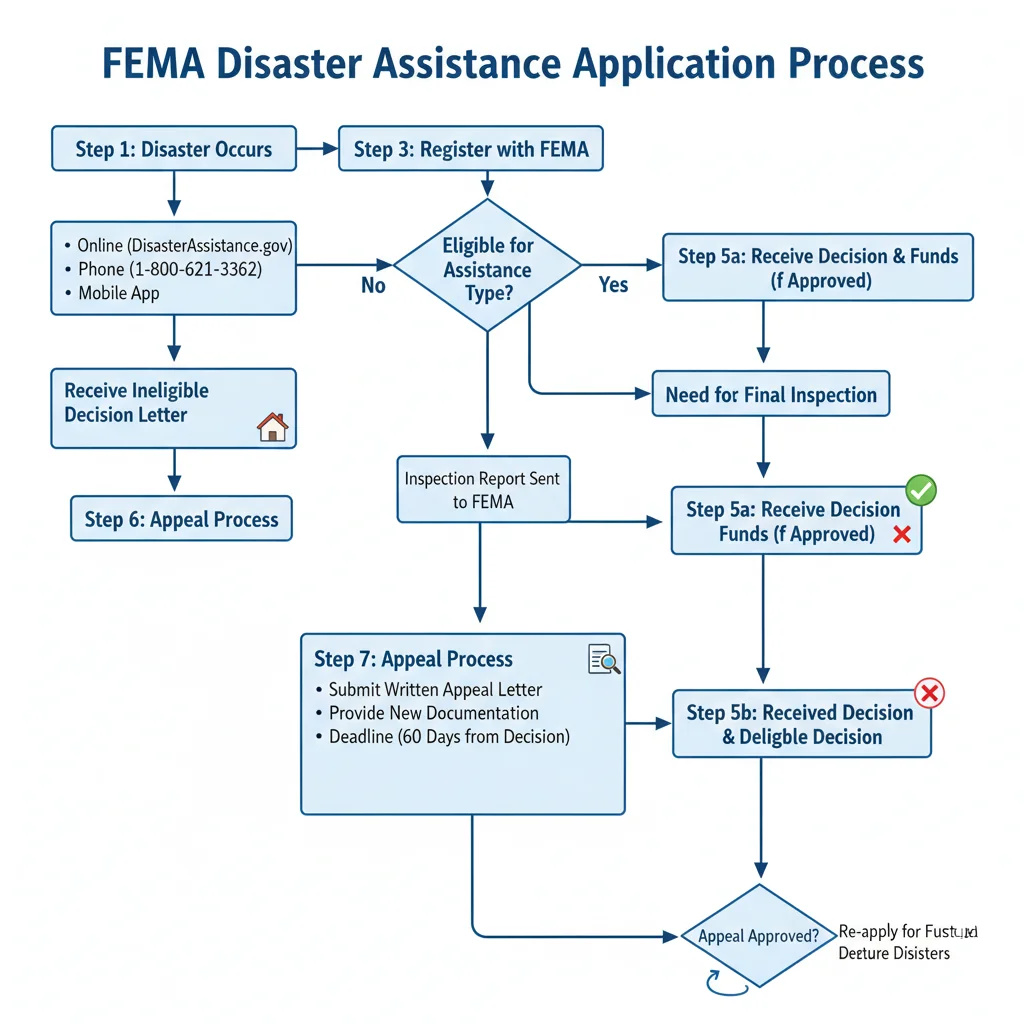
Step 1: Register with FEMA
The first and most critical step is to register with FEMA. This can typically be done in several ways:
- Online: Visit DisasterAssistance.gov. This is often the fastest and most efficient method.
- Phone: Call the FEMA toll-free helpline at 1-800-621-FEMA (3362). For those with speech or hearing disabilities, TTY users can call 1-800-462-7585.
- In-Person: If available, visit a Disaster Recovery Center (DRC). These centers are set up in affected communities to provide in-person assistance.
When registering, you will need to provide detailed information, including:
- Social Security Number (SSN) for yourself and other household members.
- Address of the damaged primary residence.
- Current mailing address and phone number.
- Insurance information (if applicable).
- Total household annual income.
- Bank account information for direct deposit.
- A description of your disaster-caused damage and losses.
Step 2: Document Your Damages
Thorough documentation is paramount. Before you start cleaning up or making repairs, take extensive photographs and videos of all damaged property, both inside and outside your home. Create a detailed inventory of damaged items. Keep all receipts for any repairs, temporary housing, or other disaster-related expenses. This documentation will be invaluable when processing your claim for FEMA Aid 2026.
Step 3: Home Inspection
After registering, FEMA may schedule a home inspection to verify your damages. A FEMA inspector will contact you to arrange a visit. Be present during the inspection and be prepared to show the inspector all damaged areas and items. This step is crucial for determining the type and amount of assistance you may receive.
Step 4: Review Your Determination Letter
Following the inspection, FEMA will send you a determination letter. This letter will explain FEMA’s decision regarding your eligibility for assistance, the amount of aid you will receive, or the reasons for denial. It’s critical to read this letter carefully, as it will also outline your rights, including how to appeal a decision if you disagree with it.
Claim Procedures for FEMA Aid 2026: Receiving and Managing Assistance
Once deemed eligible for FEMA Aid 2026, understanding the claim procedures is the next step. This involves receiving the aid, using it appropriately, and knowing your options if issues arise.
Receiving Financial Assistance
If approved for financial assistance, funds are typically disbursed via direct deposit to your bank account or by check. Direct deposit is generally faster. It’s vital to use these funds for their intended purpose, which is to address disaster-related needs identified by FEMA.
Understanding Your Responsibilities
Recipients of FEMA Aid 2026 have responsibilities. You must maintain records of how you spend the funds, especially for housing repairs or replacements. FEMA may audit these expenses, and misuse of funds could lead to repayment obligations.
The Appeals Process
If your application for FEMA Aid 2026 is denied, or if you believe the amount of assistance is insufficient, you have the right to appeal. The appeal process typically involves:
- Submitting a Written Appeal: You must write a letter explaining why you believe FEMA’s decision is incorrect. Include any new or additional information, documentation, or evidence to support your claim.
- Providing Supporting Documentation: This could include contractor estimates, repair receipts, medical bills, or a letter from your insurance company explaining what they will not cover.
- Meeting Deadlines: Appeals usually have a strict deadline (e.g., 60 days from the date of the determination letter). Ensure your appeal is submitted within this timeframe.
FEMA will review your appeal and send you a decision. It’s a formal process, but many successful claims for FEMA Aid 2026 have been resolved through appeal.
Preparing for FEMA Aid 2026: Proactive Steps
While we hope for a disaster-free 2026, preparedness is key. Taking proactive steps now can make a significant difference in your ability to access and benefit from FEMA Aid 2026 should the need arise.
Create a Disaster Preparedness Kit
A well-stocked disaster kit is essential. Include enough food, water, and medications for at least three days. Also, include important documents, a first-aid kit, a flashlight, batteries, and a hand-crank radio.
Develop an Emergency Plan
Work with your family to create an emergency communication plan. Designate an out-of-state contact, establish meeting points, and discuss evacuation routes. Knowing what to do and how to connect with loved ones can save lives and reduce anxiety.
Secure Important Documents
Keep vital documents—such as insurance policies, deeds, titles, birth certificates, and Social Security cards—in a waterproof, fireproof container or a secure digital format. Having these readily accessible will streamline the application process for FEMA Aid 2026.
Understand Your Insurance Coverage
Review your home, renters, and flood insurance policies annually. Understand what is covered and what isn’t. Remember, standard homeowner’s insurance typically does not cover flood damage, requiring a separate flood insurance policy. Being adequately insured can complement FEMA Aid 2026, covering gaps that federal assistance might not.
Document Your Property
Beyond disaster-related damages, having a pre-disaster inventory of your home’s contents, ideally with photos or videos, can be incredibly helpful for both insurance claims and FEMA Aid 2026 applications. This proves what you owned before the disaster.
Common Challenges and How to Overcome Them
Navigating disaster recovery can be fraught with challenges. Being aware of common pitfalls can help you avoid them and ensure a smoother process for receiving FEMA Aid 2026.
Lack of Documentation
One of the most frequent reasons for denied claims or delays is insufficient documentation. As emphasized, keep meticulous records of everything: photos, videos, receipts, and communication with FEMA and insurance providers. If you’re unsure what to document, err on the side of documenting too much.
Misunderstanding Eligibility
Applicants sometimes assume they qualify for all types of assistance or that FEMA will cover all losses. It’s crucial to review the specific eligibility criteria for each program and understand FEMA’s role as a supplement, not a replacement, for other forms of aid like insurance.
Communication Gaps
Stay in regular contact with FEMA. If your contact information changes, update it immediately. Respond promptly to any requests for additional information. Proactive communication can prevent delays in processing your FEMA Aid 2026 application.
Fraud and Scams
Unfortunately, disasters often attract scammers. Be wary of individuals claiming to be FEMA representatives who ask for money or personal information beyond what is necessary for registration. FEMA never charges for inspections or applications. If you suspect fraud, report it immediately to the National Center for Disaster Fraud (NCDF).
The Role of Community and Local Resources
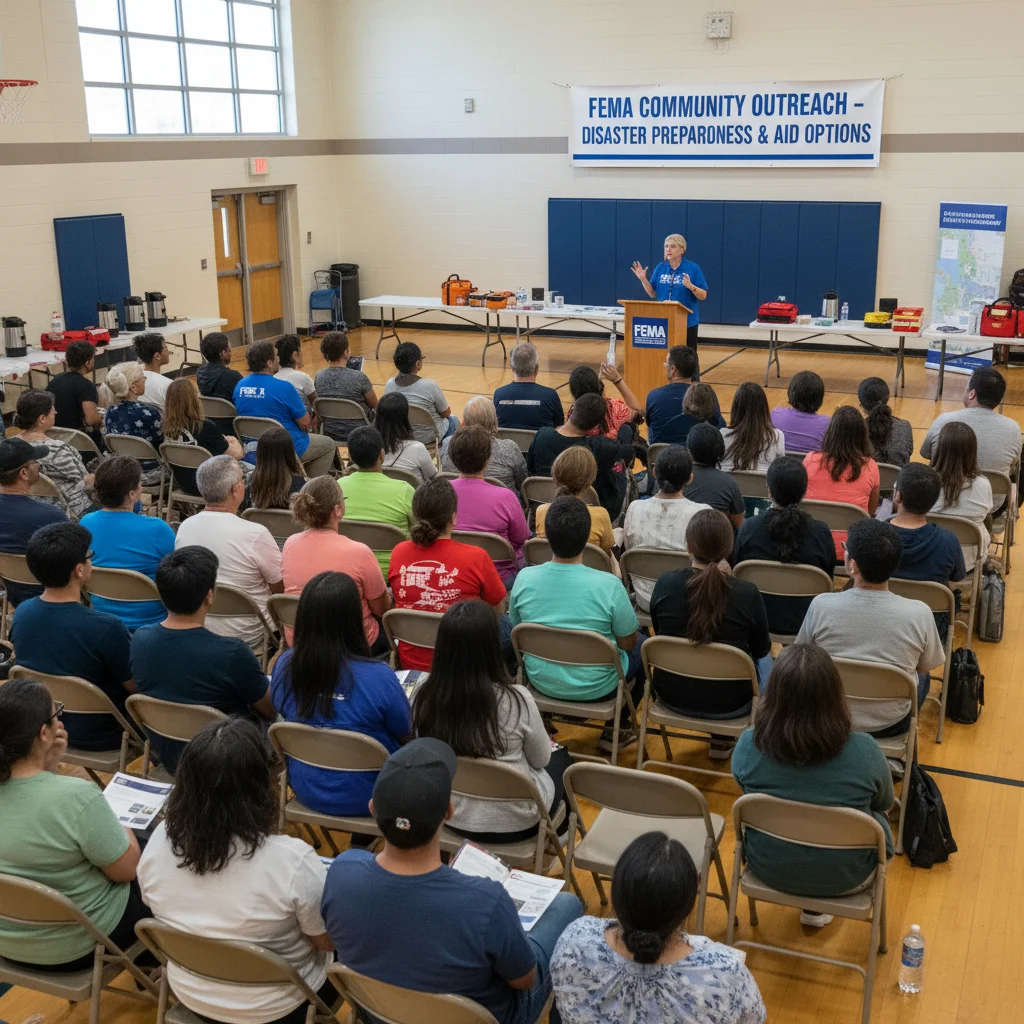
While FEMA Aid 2026 is a critical component of disaster recovery, it’s important to remember the vital role of local and state governments, non-profit organizations, and community support. These entities often provide immediate relief, short-term housing, food, and other essential services that complement federal assistance.
- Local Emergency Management Agencies: These agencies are your first point of contact for local resources and information during a disaster.
- American Red Cross: Provides shelter, food, and health services.
- Salvation Army: Offers food, shelter, and emotional and spiritual care.
- Volunteer Organizations Active in Disaster (VOAD): A coalition of organizations that coordinate efforts to provide services during and after disasters.
Establishing connections with these local resources before a disaster can provide additional layers of support, making your journey toward recovery smoother, even as you pursue FEMA Aid 2026.
Looking Ahead: Evolution of FEMA Aid and Disaster Preparedness
FEMA continuously adapts its programs and strategies based on lessons learned from past disasters and evolving climate patterns. While the core principles of FEMA Aid 2026 will likely remain consistent, there may be enhancements in technology, communication, and specific program offerings. For example, increased emphasis on climate resilience and mitigation efforts may translate into new or expanded programs aimed at reducing future disaster impacts.
Technology and Accessibility
Expect continued improvements in how FEMA leverages technology to streamline applications, communicate with survivors, and disseminate information. Mobile apps, enhanced online portals, and more accessible digital resources are likely to play an even larger role in accessing FEMA Aid 2026.
Focus on Mitigation
FEMA’s commitment to mitigation—actions taken to reduce or eliminate long-term risk to people and property from hazards—is growing. Programs like the Hazard Mitigation Grant Program (HMGP) help communities rebuild stronger and safer. Understanding these programs can help communities proactively reduce their vulnerability before the need for FEMA Aid 2026 arises for recovery.
Conclusion: Empowering Yourself with Knowledge for FEMA Aid 2026
The prospect of a disaster is unsettling, but being informed and prepared can significantly alleviate its impact. This guide to FEMA Aid 2026 has aimed to provide a clear roadmap for understanding eligibility, navigating the application process, and managing claims for federal disaster assistance. By taking proactive steps today—documenting your property, understanding your insurance, and creating an emergency plan—you empower yourself and your community to face future challenges with resilience.
Remember, FEMA is a resource designed to help you recover. By understanding how it works and fulfilling your responsibilities as an applicant, you can ensure that when disaster strikes in 2026 or beyond, you are ready to access the support you need to rebuild and move forward. Stay informed, stay prepared, and know that assistance is available.