Navigating the Future: A Deep Dive into the US Labor Market 2026 and the 4.1% Unemployment Forecast
The United States economy is a dynamic entity, constantly evolving and adapting to global shifts, technological advancements, and demographic changes. As we look towards 2026, understanding the trajectory of the US labor market 2026 becomes paramount for policymakers, businesses, and individuals alike. The forecast of a 4.1% unemployment rate signals a landscape that, while relatively stable, will be shaped by significant underlying trends. This comprehensive analysis will explore the key drivers, challenges, and opportunities that define the future of work in America, offering insights into what to expect and how to prepare.
Understanding the 4.1% Unemployment Rate Forecast for the US Labor Market 2026
The unemployment rate is a crucial indicator of economic health, reflecting the percentage of the labor force that is jobless but actively seeking employment. A forecast of 4.1% for the US labor market 2026 suggests a near full-employment scenario, indicative of a robust economy where most individuals seeking work can find it. Historically, unemployment rates around 4% are often associated with periods of sustained economic growth and stability. However, this figure doesn’t tell the whole story. It’s essential to dissect the factors contributing to this projection and understand what it implies for different sectors and demographics.
Factors Influencing the Unemployment Forecast
Several macroeconomic and microeconomic factors converge to shape the unemployment outlook. Economic growth, as measured by GDP, plays a direct role. A healthy and expanding economy typically generates more jobs, pushing unemployment rates down. Conversely, slowdowns can lead to job losses. Inflation, interest rates, and global trade dynamics also exert considerable influence. For 2026, the expectation of a 4.1% rate suggests a continued, albeit perhaps moderated, economic expansion following the post-pandemic recovery and any potential cyclical adjustments. Furthermore, government policies, including fiscal stimulus, infrastructure spending, and regulatory changes, can significantly impact job creation and labor force participation. Investments in new technologies like AI and automation, while sometimes displacing certain jobs, also create new roles and industries, contributing to a fluid labor market landscape.
Implications of a 4.1% Unemployment Rate
A 4.1% unemployment rate generally means a tight labor market. For workers, this often translates into increased bargaining power, higher wages, and more job opportunities. Employers, on the other hand, might face challenges in recruitment and retention, leading to increased competition for skilled talent. This environment can spur innovation in HR practices, greater investment in employee training and development, and a focus on creating attractive workplace cultures. While a low unemployment rate is broadly positive, it can also lead to wage inflation if productivity growth doesn’t keep pace, potentially prompting central banks to adjust monetary policy. Understanding these implications is crucial for strategic planning across all sectors of the US labor market 2026.
Key Trends Shaping the US Labor Market 2026
Beyond the headline unemployment figure, the US labor market 2026 will be characterized by several transformative trends. These shifts are not new but are accelerating, fundamentally altering the nature of work, the skills required, and the structure of industries.
Technological Advancements: AI, Automation, and Digital Transformation
Artificial intelligence (AI) and automation are perhaps the most significant disruptors. While fears of widespread job displacement persist, the reality is more nuanced. AI is increasingly augmenting human capabilities, automating repetitive tasks, and creating demand for new skills in areas like AI development, data science, machine learning engineering, and ethical AI oversight. Industries from manufacturing to healthcare are undergoing digital transformation, requiring a workforce proficient in digital tools and technologies. This trend necessitates continuous learning and upskilling for existing employees and a strong pipeline of digitally literate new entrants. The integration of these technologies will define efficiency and competitiveness within the US labor market 2026.
The Evolving Nature of Work: Remote, Hybrid, and Flexible Models
The pandemic irrevocably altered perceptions of work location and flexibility. By 2026, remote and hybrid work models are expected to be firmly entrenched in many industries, particularly knowledge-based sectors. This shift offers benefits like increased employee satisfaction, reduced overhead for businesses, and access to a wider talent pool. However, it also presents challenges related to fostering company culture, ensuring equitable access to technology, and managing productivity across distributed teams. Companies that effectively navigate these new models will gain a competitive edge in attracting and retaining talent in the tight US labor market 2026.
Demographic Shifts and Generational Dynamics
The aging of the baby boomer generation continues, leading to a significant wave of retirements and a potential skills gap. Meanwhile, Gen Z is increasingly entering the workforce, bringing with them new expectations regarding work-life balance, social responsibility, and technological fluency. These demographic shifts will necessitate strategies for knowledge transfer, succession planning, and creating inclusive workplaces that cater to a multi-generational workforce. Understanding these dynamics is critical for employers seeking to build sustainable teams in the US labor market 2026.
The Rise of the Gig Economy and Freelance Work
The gig economy, characterized by temporary, flexible jobs often facilitated by online platforms, is projected to continue its expansion. This model offers flexibility for workers and allows businesses to scale operations more efficiently. However, it also raises questions about worker benefits, job security, and regulatory frameworks. The balance between traditional employment and freelance work will be a defining characteristic of the US labor market 2026, requiring innovative approaches to talent management and social safety nets.
Sector-Specific Outlooks for the US Labor Market 2026
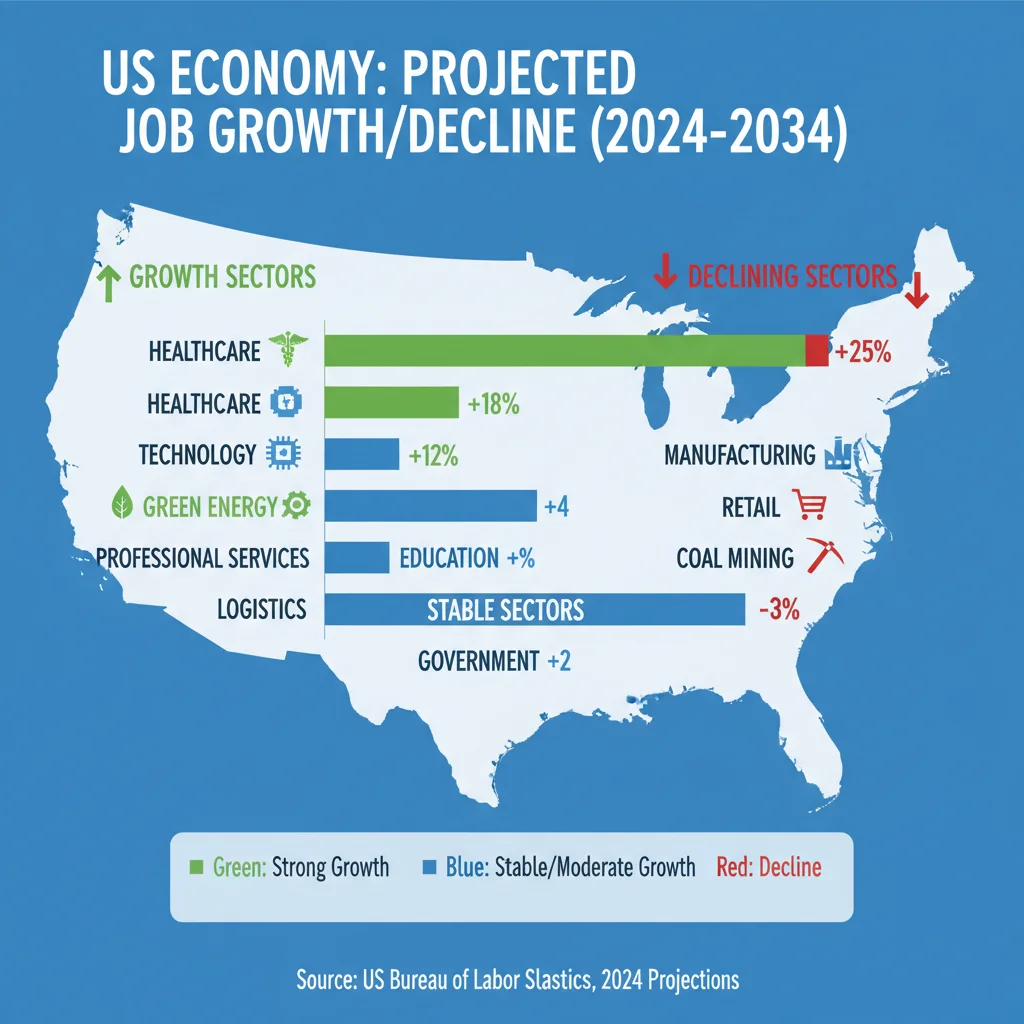
While the overall unemployment rate provides a macroeconomic view, a deeper understanding requires examining specific sectors. The US labor market 2026 will see varied growth and challenges across different industries.
Technology and Information Services
This sector is expected to remain a powerhouse of job creation, driven by continued innovation in AI, cloud computing, cybersecurity, and data analytics. Demand for software developers, data scientists, cybersecurity analysts, and AI/ML engineers will be exceptionally high. However, the rapid pace of technological change also means a constant need for upskilling and reskilling to keep pace with emerging tools and platforms. The tech sector will be a major driver of high-wage job growth in the US labor market 2026.
Healthcare and Social Assistance
An aging population and advancements in medical technology will continue to fuel robust growth in healthcare. Roles for registered nurses, home health aides, physical therapists, and medical assistants will be in high demand. The sector also faces challenges related to workforce shortages, burnout, and the need for increased efficiency through technology adoption. The expansion of telehealth services will also redefine certain aspects of healthcare delivery and create new job categories within the US labor market 2026.
Green Economy and Renewable Energy
As the nation transitions towards more sustainable practices, the green economy will emerge as a significant job creator. This includes roles in renewable energy installation and maintenance (solar panel installers, wind turbine technicians), energy efficiency, sustainable agriculture, and environmental engineering. Government incentives and growing consumer demand for eco-friendly products and services will accelerate this trend, making it a pivotal area for job growth in the US labor market 2026.
Manufacturing and Logistics
While traditional manufacturing jobs may continue to decline due to automation, advanced manufacturing, which incorporates robotics, AI, and data analytics, will see growth. There will be a strong demand for skilled technicians who can operate and maintain complex machinery. The logistics sector, driven by e-commerce, will also continue to expand, requiring workers in warehousing, supply chain management, and delivery services. The focus here will be on optimizing processes through technology, impacting the type of skills needed in the US labor market 2026.
Education and Training
The need for continuous learning and reskilling across all sectors will bolster demand in education and training. This includes traditional educators, vocational trainers, corporate learning and development specialists, and online course creators. As the skills gap widens in many areas, the education sector will play a critical role in preparing the workforce for the demands of the US labor market 2026.
Challenges and Opportunities in the US Labor Market 2026
Despite the positive unemployment forecast, the US labor market 2026 will not be without its challenges and opportunities.
Addressing the Skills Gap
One of the most persistent challenges is the widening skills gap. Many employers report difficulty finding candidates with the necessary technical and soft skills. This gap is exacerbated by rapid technological change and the evolving demands of various industries. Opportunities lie in strengthening vocational training programs, promoting lifelong learning, fostering partnerships between educational institutions and industries, and investing in internal corporate training initiatives. Bridging this gap is crucial for maintaining competitiveness in the US labor market 2026.
Ensuring Inclusivity and Equity
While the unemployment rate may be low, disparities in employment outcomes persist across different demographic groups. Ensuring that all segments of the population have equitable access to job opportunities, fair wages, and career advancement will be a critical challenge. This involves addressing systemic barriers, promoting diversity, equity, and inclusion (DEI) initiatives, and investing in workforce development programs that target underserved communities. An inclusive US labor market 2026 is a stronger and more resilient one.
The Impact of Global Economic Volatility
The US labor market is not immune to global economic fluctuations. Geopolitical events, international trade disputes, and global supply chain disruptions can all impact domestic employment. Businesses and policymakers will need to remain agile and adaptable to navigate these external pressures. Diversifying supply chains, fostering international cooperation, and building economic resilience are key strategies for mitigating these risks in the US labor market 2026.
Mental Health and Well-being in the Workplace
The increased pace of work, technological integration, and blurred lines between work and personal life can impact employee mental health and well-being. By 2026, companies will need to prioritize comprehensive wellness programs, foster supportive work environments, and recognize the importance of mental health support as a critical component of employee retention and productivity. A healthy workforce is a productive workforce, and this will be a key consideration for the US labor market 2026.

Strategies for Thriving in the US Labor Market 2026
For individuals, businesses, and policymakers, proactive strategies will be essential to thrive in the evolving US labor market 2026.
For Individuals: Continuous Learning and Adaptability
The most important asset for individuals will be a commitment to lifelong learning. Acquiring new skills, particularly in digital literacy, data analysis, critical thinking, and problem-solving, will be crucial. Embracing adaptability and being open to career transitions or upskilling within one’s current role will ensure relevance in a dynamic job market. Networking, building a personal brand, and leveraging online learning platforms will also be vital tools for career progression in the US labor market 2026.
For Businesses: Investing in Talent and Future-Proofing
Businesses must shift from a purely reactive hiring approach to a proactive talent strategy. This includes significant investment in employee training and development, fostering an internal culture of continuous learning, and exploring innovative recruitment strategies. Embracing flexible work models, prioritizing employee well-being, and leveraging technology to enhance productivity rather than solely replace human labor will be key. Companies that can effectively attract, develop, and retain talent will be best positioned for success in the US labor market 2026.
For Policymakers: Supportive Frameworks and Education Reform
Government policies will play a critical role in shaping the US labor market 2026. This includes investing in infrastructure, supporting research and development in emerging technologies, and reforming education systems to better align with industry needs. Policies that promote workforce development, offer retraining programs, and ensure adequate social safety nets for workers in transition will be essential. Additionally, regulatory frameworks that foster innovation while protecting worker rights will be crucial for a balanced and equitable labor market.
The Role of Economic Indicators Beyond Unemployment
While the 4.1% unemployment rate is a significant indicator, a holistic understanding of the US labor market 2026 requires examining other economic metrics. Wage growth, labor force participation rates, job vacancy rates, and underemployment figures provide a more complete picture of the labor market’s health and efficiency. For instance, strong wage growth indicates increasing demand for labor and potentially improved living standards, while a rising labor force participation rate suggests more people are entering or re-entering the workforce, which can be a sign of economic confidence. Analyzing these indicators in conjunction with the unemployment rate helps to identify areas of strength and potential weakness, allowing for more targeted interventions and strategic planning.
Wage Growth and Inflationary Pressures
In a tight labor market with a 4.1% unemployment rate, wage growth is often expected. This can be beneficial for workers, increasing their purchasing power. However, if wage growth outpaces productivity gains, it can contribute to inflationary pressures. Policymakers and businesses will closely monitor this balance, as sustained high inflation can erode the value of wages and savings. The interplay between wage growth, inflation, and interest rates will be a delicate dance in the US labor market 2026, influencing investment decisions and consumer behavior.
Labor Force Participation and Demographic Impact
The labor force participation rate, which measures the proportion of the population that is either employed or actively looking for work, provides insights into the overall engagement of the working-age population. Demographic shifts, such as an aging population, can naturally lead to a decline in this rate. However, policies that encourage older workers to remain in the workforce longer, or programs that bring marginalized groups into employment, can help mitigate these declines. A healthy participation rate is crucial for economic growth and ensuring adequate talent supply for the demands of the US labor market 2026.
Underemployment and Quality of Jobs
The unemployment rate alone does not capture underemployment – individuals working part-time who desire full-time work, or those employed in jobs that do not fully utilize their skills. While a 4.1% unemployment rate is low, understanding the extent of underemployment provides a more accurate picture of job quality and worker satisfaction. Addressing underemployment through upskilling initiatives and fostering creation of higher-value jobs will be important for the overall well-being of the US labor market 2026.
Conclusion: A Resilient and Evolving US Labor Market 2026
The forecast of a 4.1% unemployment rate for the US labor market 2026 paints a picture of a largely healthy and robust economy. However, beneath this stable surface lies a complex interplay of technological disruption, demographic shifts, and evolving work preferences. The future of work will be characterized by continuous learning, adaptability, and a strategic embrace of new technologies. While challenges like the skills gap and ensuring equitable opportunities remain, they also present significant opportunities for innovation and growth.
For individuals, the imperative is clear: invest in lifelong learning and cultivate a growth mindset. For businesses, the focus must be on talent development, fostering inclusive cultures, and embracing flexible work models. And for policymakers, the responsibility lies in creating supportive frameworks that enable economic growth, protect workers, and prepare the nation for the demands of a rapidly changing global economy. By understanding and proactively addressing these trends, the US labor market 2026 can continue to be a source of prosperity and opportunity for all Americans.