Social Innovation 2026: Addressing US Challenges with Emerging Models

Anúncios
The United States stands at a pivotal juncture, grappling with a complex web of societal challenges ranging from widening economic disparities and persistent healthcare inequities to the accelerating impacts of climate change and the need for robust educational reforms. These issues are not new, but their urgency and interconnectedness demand innovative, scalable, and sustainable solutions. As we look towards 2026 and beyond, the landscape of social innovation is rapidly evolving, offering promising new models and approaches designed to tackle these entrenched problems head-on. This comprehensive exploration delves into the emerging social innovation models that are reshaping how we conceive, develop, and implement solutions for a more equitable and resilient America.
Social innovation, at its core, is about developing and implementing new ideas, products, services, and models that simultaneously meet social needs and create new social relationships or collaborations. It’s about moving beyond traditional philanthropic or governmental responses to foster systemic change. The next few years will see a significant acceleration in the adoption and refinement of these models, driven by technological advancements, increased public awareness, and a growing recognition that conventional methods are often insufficient to address the scale and complexity of modern challenges.
Anúncios
The Shifting Paradigm: Why New Social Innovation Models are Crucial
The traditional pillars of social support – government, non-profits, and philanthropy – while vital, often face limitations in agility, funding, and the ability to scale solutions rapidly. This has created fertile ground for the emergence of hybrid models and cross-sector collaborations that leverage the strengths of various stakeholders. The challenges of today are too multifaceted for any single sector to solve in isolation. Climate change, for instance, requires technological innovation, policy changes, behavioral shifts, and community-level adaptation strategies. Similarly, addressing healthcare disparities demands not just medical advancements but also improvements in social determinants of health, accessible infrastructure, and culturally competent care delivery. This necessitates a new breed of social innovation models.
One of the primary drivers behind this shift is the increasing accessibility of data and technology. Artificial intelligence, blockchain, and advanced analytics are not just tools for the corporate world; they are becoming integral to identifying social needs, optimizing resource allocation, measuring impact, and fostering transparency in social programs. Furthermore, a new generation of social entrepreneurs and impact investors is bringing business acumen and market-based approaches to social problems, challenging the dichotomy between profit and purpose.
Anúncios
Another critical factor is the growing demand for accountability and demonstrable impact. Stakeholders, from individual donors to large institutional funders, are increasingly seeking evidence that their investments are creating meaningful and sustainable change. This has led to a greater emphasis on rigorous evaluation, data-driven decision-making, and outcome-based funding models, pushing social innovators to design programs with clear theories of change and measurable results. The focus is no longer just on inputs or activities, but on the tangible, long-term outcomes for individuals and communities.
Key Emerging Social Innovation Models for 2026
1. Impact Investing and Social Enterprises
Impact investing, a practice where investments are made with the intention to generate positive, measurable social and environmental impact alongside a financial return, is no longer a niche concept. By 2026, it is projected to become a significant force in channeling capital towards solutions for pressing US challenges. Social enterprises, businesses whose primary purpose is to solve a social problem, are the direct beneficiaries and drivers of this trend. These enterprises are developing innovative products and services in areas like affordable housing, renewable energy, sustainable agriculture, and accessible education.
For example, new models are emerging where impact funds invest in companies creating modular, energy-efficient housing solutions for low-income communities, offering both a return on investment and a measurable reduction in housing insecurity. Similarly, social enterprises are developing tech-enabled platforms to connect small farmers with urban markets, improving food access and economic opportunities while promoting sustainable practices. The blending of financial and social returns attracts a broader range of investors, from philanthropic foundations seeking more sustainable impact to mainstream financial institutions looking for ESG-compliant portfolios. This synergy is crucial for scaling effective social innovation models.
2. Collective Impact Initiatives
Collective impact is a structured approach to bringing together diverse stakeholders from different sectors – government, non-profits, businesses, philanthropy, and community members – to achieve a common agenda for solving complex social problems. Unlike traditional collaborations, collective impact initiatives emphasize a shared vision, continuous communication, mutually reinforcing activities, a common measurement system, and a backbone support organization. By 2026, we anticipate a proliferation of these initiatives addressing issues like early childhood development, workforce development, and chronic disease prevention at regional and national levels.
For instance, a collective impact initiative focused on improving educational outcomes in a specific city might bring together the school district, local businesses (offering internships and mentorship), community organizations (providing after-school programs), parents, and philanthropic partners. They would agree on shared goals (e.g., increasing high school graduation rates by X%), common metrics (e.g., attendance, test scores), and coordinate their efforts to achieve these goals. This model overcomes the fragmentation often seen in social service delivery, fostering a more holistic and efficient approach to complex problems. It’s a powerful example of how coordinated effort can lead to systemic change.
3. Technology-Enabled Community Solutions
The rapid advancement and widespread adoption of technology are catalyzing new forms of community-led social innovation. From civic tech platforms that empower citizens to participate in local governance to AI-driven tools that personalize learning experiences for underserved students, technology is democratizing access to information, resources, and opportunities. By 2026, we will see even more sophisticated applications of technology directly integrated into community solutions.
Consider the rise of telehealth and remote learning solutions, accelerated by recent global events. These are evolving into more robust, community-centric platforms that address specific needs. For example, AI-powered chatbots are being developed to provide mental health support in rural areas lacking access to traditional services, or virtual reality tools are used to train individuals for in-demand jobs, overcoming geographical barriers. Blockchain technology is also being explored for transparent and secure identity management for homeless populations or for tracking ethical supply chains in local economies. These are potent examples of how technology can amplify the reach and effectiveness of social innovation models.
4. Circular Economy and Sustainable Development Initiatives
With increasing awareness of environmental degradation and resource depletion, circular economy principles are becoming central to social innovation. A circular economy aims to eliminate waste and pollution, circulate products and materials, and regenerate nature. These principles are being applied to create new social innovation models that address environmental challenges while also generating social benefits.
Examples include community-led composting and waste reduction programs that create local jobs and improve soil health; businesses that repurpose waste materials into new products, providing employment for marginalized groups; and repair cafes that foster community skills and extend the lifespan of goods, reducing consumption. In the US, initiatives focused on local food systems, water conservation, and renewable energy cooperatives are gaining traction, demonstrating how environmental sustainability can be intrinsically linked to social equity and economic opportunity. These models often involve participatory design, engaging local communities in creating solutions that are tailored to their specific environmental and social contexts.
5. Participatory Governance and Citizen Engagement Platforms
Democracy thrives on participation, and new social innovation models are emerging to enhance citizen engagement in governance and decision-making. These models leverage digital tools and innovative methodologies to give a stronger voice to marginalized communities and ensure that policies are more responsive to public needs. By 2026, we expect to see more widespread adoption of participatory budgeting, deliberative democracy platforms, and co-creation initiatives.
For instance, cities are experimenting with digital platforms where residents can directly propose and vote on how a portion of the municipal budget is spent, fostering greater transparency and local ownership. Online deliberative forums bring together diverse citizens to discuss complex policy issues, facilitated by AI to synthesize arguments and identify common ground. These approaches move beyond traditional public hearings, creating more inclusive and effective mechanisms for civic participation. The goal is to build stronger, more responsive local democracies where citizens are not just recipients of services but active co-creators of their communities’ future. This is a critical aspect of evolving social innovation models.
Addressing Specific US Challenges through Innovation
Healthcare Equity
The US healthcare system faces significant challenges in terms of access, affordability, and equity. Emerging social innovation models are focused on addressing these disparities. This includes community health worker programs that connect individuals to care and social services, digital health platforms tailored for underserved populations, and value-based care models that incentivize preventative care and positive health outcomes rather than just volume of services. Telehealth, further refined, will play a crucial role in reaching rural and remote communities. Furthermore, social enterprises are developing innovative financial models to reduce the burden of medical debt and increase access to affordable prescription drugs.
Economic Opportunity and Workforce Development
Automation and globalization are reshaping the US labor market, necessitating new approaches to workforce development and economic inclusion. Social innovation is driving models such as skills-based training programs linked directly to employer needs, often leveraging virtual reality or augmented reality for immersive learning. Apprenticeship programs are being revitalized and expanded into new sectors, providing pathways to high-paying jobs for individuals without traditional college degrees. Additionally, cooperative ownership models and worker-owned businesses are emerging as ways to build wealth and foster economic resilience in communities, giving employees a direct stake in their enterprise’s success. These models are crucial for fostering inclusive economic growth.
Climate Change and Environmental Justice
The impacts of climate change disproportionately affect vulnerable communities. Social innovation in this area is focusing on climate resilience, renewable energy access, and sustainable resource management. This includes community solar projects that provide affordable clean energy to low-income households, green infrastructure initiatives that mitigate urban heat islands and manage stormwater, and local food systems that reduce carbon footprints while enhancing food security. Emphasis is also placed on environmental justice, ensuring that solutions to climate change do not further burden marginalized communities but instead empower them. These social innovation models are inherently collaborative, often involving partnerships between environmental organizations, local governments, and community groups.

Education and Lifelong Learning
Transforming education to meet the demands of the 21st century and ensure equitable access is a paramount challenge. Social innovation in education includes personalized learning platforms that adapt to individual student needs, mentorship programs that connect students with industry professionals, and alternative credentialing systems that recognize diverse forms of learning and skill acquisition. Micro-credentials and competency-based education are gaining traction, allowing individuals to acquire specific skills quickly and affordably. Furthermore, initiatives to bridge the digital divide and ensure equitable access to broadband internet and devices are fundamental to these educational social innovation models, particularly in remote and underserved areas.
The Role of Collaboration and Cross-Sector Partnerships
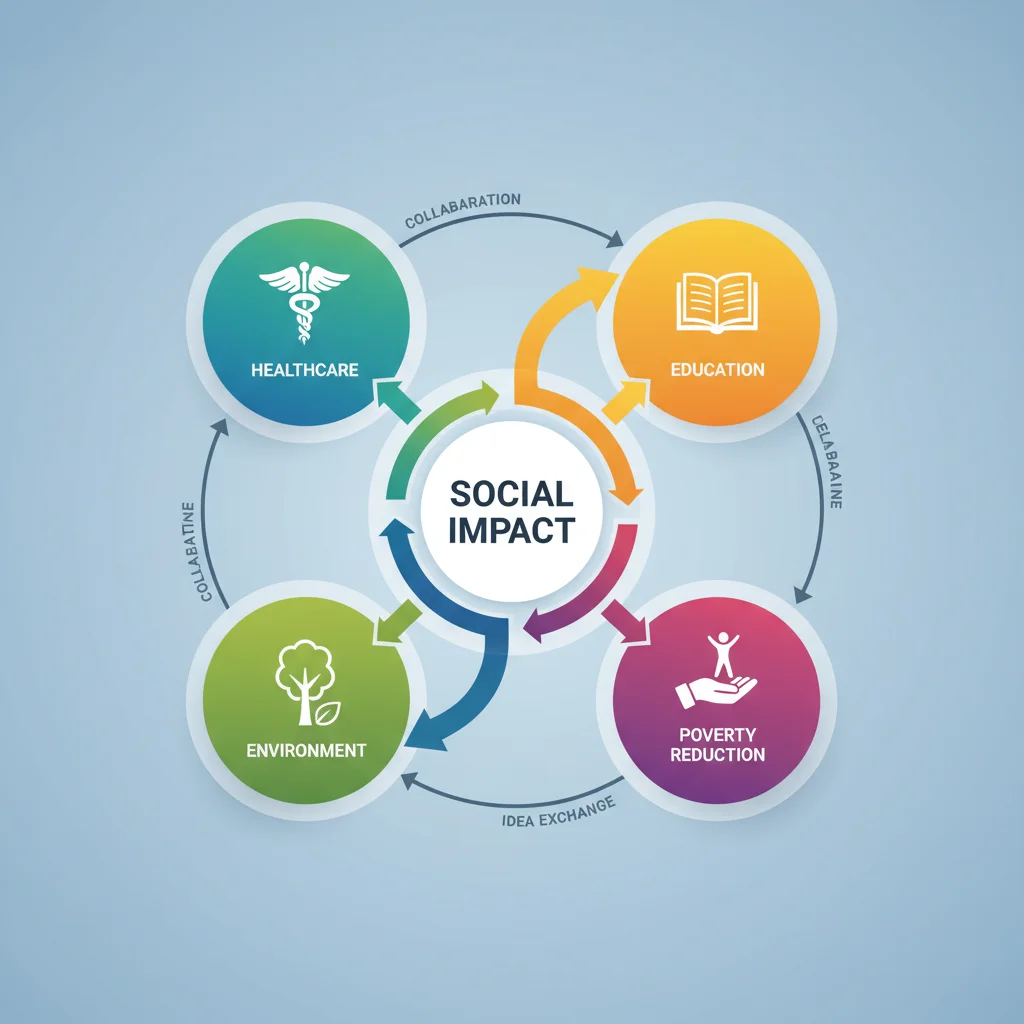
A recurring theme across all emerging social innovation models is the indispensable role of collaboration. The complexity of modern challenges demands that solutions transcend traditional silos. Government agencies are increasingly partnering with non-profits and private companies to leverage diverse expertise and resources. Philanthropic organizations are moving beyond grant-making to engage in impact investing and provide strategic support to social enterprises. Universities are becoming hubs for social innovation, fostering research, entrepreneurship, and community engagement.
Cross-sector partnerships enable the pooling of financial capital, human resources, technical expertise, and political will, creating a synergistic effect that amplifies impact. These partnerships are often characterized by shared risk, shared governance, and a commitment to long-term systemic change, rather than short-term fixes. The success of these collaborations hinges on effective communication, mutual trust, and a clear understanding of each partner’s unique contributions and limitations. As we approach 2026, the capacity to forge and sustain these complex alliances will be a defining characteristic of successful social innovators.
Measuring Impact and Scaling Solutions
One of the persistent challenges in social innovation has been the rigorous measurement of impact and the effective scaling of successful interventions. The new wave of social innovation models places a much stronger emphasis on these aspects. Advances in data analytics, impact assessment methodologies, and digital platforms are making it easier to track outcomes, understand what works, and make data-driven adjustments.
Social return on investment (SROI) frameworks, randomized controlled trials (RCTs) adapted for social programs, and integrated data systems are becoming more commonplace. This focus on evidence-based practice is crucial for attracting sustained funding and convincing policymakers to adopt successful models. Scaling, however, is not just about replicating a program in more locations; it often involves adapting solutions to new contexts, building local capacity, and influencing policy to create an enabling environment for change. Public-private partnerships and social franchising models are two ways in which successful social innovations are being scaled across the US.
Challenges and Opportunities Ahead
While the future of social innovation in the US looks promising, several challenges remain. Securing sustainable funding, overcoming bureaucratic inertia, building trust in diverse communities, and navigating complex regulatory environments are ongoing hurdles. There’s also the risk of ‘innovation theater’ – focusing on novel ideas without generating real, measurable impact. The need for robust evaluation and a commitment to long-term systemic change cannot be overstated.
However, the opportunities far outweigh the challenges. The growing recognition of interconnected global and local problems, coupled with technological advancements and an increasing appetite for purpose-driven work, creates a fertile environment for social innovation. The next few years will see a greater integration of social innovation principles into mainstream business, government, and educational institutions. The emphasis will shift from isolated projects to systemic interventions that address the root causes of social problems.
Conclusion: A Future Shaped by Collaborative Innovation
By 2026, the landscape of social innovation in the United States will be characterized by dynamic, collaborative, and technology-enabled approaches to addressing its most pressing challenges. The emerging social innovation models – from impact investing and collective impact to circular economy initiatives and participatory governance – represent a powerful shift towards more holistic, equitable, and sustainable solutions. These models are not just about doing good; they are about fundamentally rethinking how society functions, how resources are allocated, and how communities are empowered to shape their own futures.
The journey ahead requires sustained commitment, adaptive leadership, and a willingness to embrace new ways of working across sectors. As these innovative models gain traction and demonstrate their effectiveness, they will not only solve immediate problems but also build a more resilient, inclusive, and prosperous society for all Americans. The future of the US depends on our collective ability to foster, support, and scale these transformative social innovations.