Technological Disruption: Automation’s Role in U.S. Productivity Gains by 2026
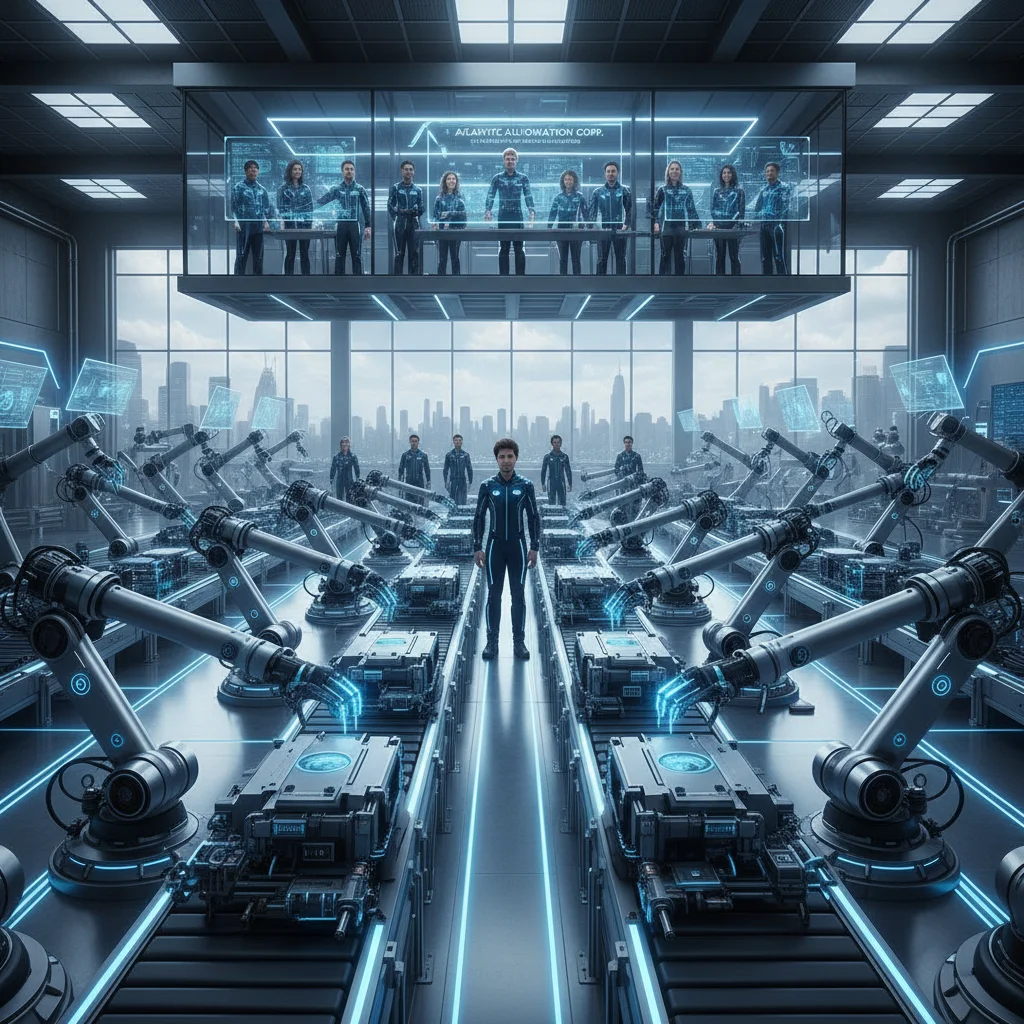
Technological Disruption: Analyzing Automation’s Role in U.S. Productivity Gains by 2026
The landscape of global economics is in constant flux, driven by an relentless wave of innovation that reshapes industries, redefines labor, and reconfigures national capabilities. At the forefront of this transformative era is technological disruption, with automation emerging as a pivotal force. The United States, a perennial leader in technological advancement, stands at a critical juncture, poised to harness the power of automation to unlock unprecedented levels of productivity. This article delves deep into the intricate relationship between technological disruption, automation, and the anticipated surge in automation U.S. productivity gains by 2026. We will explore the mechanisms through which automation contributes to these gains, analyze the key sectors most impacted, and discuss the broader economic and societal implications of this profound shift.
Understanding the Core Concept: Automation and Productivity
Before we project into the future, it’s crucial to establish a clear understanding of what we mean by automation and productivity in this context. Automation refers to the use of technology to perform tasks with minimal human intervention. This ranges from simple mechanical processes to complex artificial intelligence (AI) driven systems capable of learning and adapting. Productivity, on the other hand, is a measure of economic performance that compares the amount of goods and services produced (output) with the amount of inputs used to produce those goods and services. Increased productivity means more output with the same or fewer inputs, leading to greater efficiency and economic growth.
The link between automation and productivity is direct and multifaceted. By automating repetitive, dangerous, or time-consuming tasks, businesses can reduce labor costs, minimize errors, and accelerate production cycles. This isn’t merely about replacing human labor; it’s about augmenting human capabilities, allowing human workers to focus on higher-value, more creative, and strategic tasks that require critical thinking, emotional intelligence, and complex problem-solving skills that machines currently lack. The synergy between human ingenuity and automated efficiency is the bedrock of future automation U.S. productivity advancements.
The U.S. economy has already seen significant integration of automation across various sectors. Manufacturing has been an early adopter, with robotics transforming assembly lines and logistics. The service sector, too, is rapidly embracing automation, from customer service chatbots to automated data analysis tools in finance and healthcare. The COVID-19 pandemic further accelerated this trend, as businesses sought ways to maintain operations amidst labor shortages and social distancing requirements. This period highlighted the resilience and adaptability that automation can offer, pushing many companies to fast-track their digital transformation initiatives.
However, the adoption of automation is not uniform. Larger enterprises with substantial capital tend to lead the charge, while small and medium-sized businesses (SMBs) often face hurdles related to cost, expertise, and integration challenges. Government policies, investment in R&D, and educational initiatives play a crucial role in democratizing access to automation technologies and ensuring a broad-based uplift in automation U.S. productivity across all segments of the economy. Understanding these disparities is key to formulating effective strategies for future growth.
Projecting Productivity Gains: Why 2026 is a Pivotal Year
Why is 2026 highlighted as a significant year for U.S. productivity gains through automation? Several converging factors point to this timeframe. Firstly, the rapid pace of AI development, particularly in areas like machine learning and natural language processing, is reaching a maturity level where its applications are becoming more sophisticated and widely accessible. These advanced AI systems are capable of not just automating tasks but also optimizing complex processes, predicting outcomes, and generating insights that were previously impossible or highly labor-intensive to obtain.
Secondly, the widespread deployment of 5G technology is creating the necessary infrastructure for seamless connectivity and real-time data exchange, which are critical for advanced automation systems, including the Internet of Things (IoT) and autonomous operations. The ability for devices and systems to communicate instantly and reliably unlocks new possibilities for efficiency across supply chains, smart cities, and remote operations. Thirdly, ongoing global economic pressures and competitive landscapes are forcing U.S. businesses to continually seek efficiencies and innovations, making investment in automation not just an option but a strategic imperative for survival and growth.
Moreover, the investment cycles for major technological upgrades often span several years. The significant investments made in automation technologies over the past few years, spurred by the pandemic and ongoing digital transformation efforts, are expected to yield substantial returns in terms of productivity by the mid-2020s. By 2026, many of these implementations will have matured, their benefits fully realized and integrated into core business operations, thereby contributing significantly to overall automation U.S. productivity metrics.
Key Sectors Poised for Significant Automation-Driven Productivity Gains
While automation will influence nearly every sector, some are particularly ripe for substantial productivity enhancements by 2026. Understanding these sectors provides a clearer picture of where the most significant impacts of automation U.S. productivity will be felt.
Manufacturing and Logistics
These sectors have historically been at the forefront of automation adoption. By 2026, we anticipate even more sophisticated robotic systems capable of performing delicate tasks, collaborating with humans more seamlessly (cobots), and handling complex supply chain logistics with greater autonomy. AI-driven predictive maintenance will reduce downtime, while optimized routing and warehousing through automation will significantly cut operational costs and delivery times. The integration of IoT sensors will provide real-time data, enabling dynamic adjustments to production and logistics, leading to unprecedented levels of efficiency and responsiveness.
Healthcare
Automation in healthcare is moving beyond administrative tasks. By 2026, AI-powered diagnostic tools, robotic surgery assistants, and automated drug discovery platforms will become more prevalent. These technologies will not only improve the accuracy and speed of medical procedures but also free up healthcare professionals to focus on patient care that requires human empathy and complex decision-making. Telemedicine, further enhanced by AI and automation, will expand access to care, particularly in rural or underserved areas, contributing to a more efficient and equitable healthcare system. The impact on automation U.S. productivity in healthcare will be profound, enhancing both quality and accessibility.
Financial Services
The financial sector is already heavily digitized, but automation is set to deepen its impact. By 2026, AI algorithms will further enhance fraud detection, risk assessment, and personalized financial advice. Robotic Process Automation (RPA) will streamline back-office operations, from data entry to compliance checks, reducing operational costs and improving accuracy. Blockchain technology, while not strictly automation, complements it by providing secure and transparent transaction records, which can be leveraged by automated systems for faster settlements and audits. These advancements will allow financial institutions to deliver services more efficiently and securely, boosting automation U.S. productivity within the sector.
Retail and E-commerce
Automation is transforming the customer experience and operational efficiency in retail. Automated inventory management, personalized marketing driven by AI, and robotic fulfillment centers are already making strides. By 2026, we can expect even more sophisticated in-store robots for assistance and security, drone delivery services in certain areas, and hyper-personalized shopping experiences fueled by advanced analytics and AI. These innovations will lead to faster order fulfillment, reduced waste, and a more engaging customer journey, all contributing to increased automation U.S. productivity.

The Role of Artificial Intelligence (AI) in Driving Automation U.S. Productivity
It’s impossible to discuss modern automation without highlighting the central role of Artificial Intelligence. AI is not just a component of automation; it is often the brain that makes automation intelligent and adaptive. Machine learning algorithms enable systems to learn from data, improve performance over time without explicit programming, and make predictions or decisions. This capability is crucial for tasks that involve variability and complexity, moving automation beyond simple repetitive actions.
Generative AI, in particular, is an emerging frontier. While still in its nascent stages for widespread industrial application, its potential to automate creative and analytical tasks – from generating code to designing new products or even crafting marketing content – is immense. As these AI models become more refined and integrated into business processes, they will unlock new dimensions of automation U.S. productivity, particularly in knowledge-based industries. The ability of AI to process vast amounts of data, identify patterns, and make informed decisions at speeds impossible for humans is a game-changer for enhancing overall efficiency and innovation.
Challenges and Considerations for Maximizing Automation’s Impact
While the prospects for automation-driven productivity gains are exciting, there are significant challenges and considerations that need to be addressed to fully realize this potential.
Workforce Adaptation and Reskilling
One of the most pressing concerns is the impact on the workforce. Automation will undoubtedly displace some jobs, particularly those involving routine and predictable tasks. To mitigate this, massive investment in reskilling and upskilling programs is essential. The focus must shift towards training workers for roles that complement automation, such as managing AI systems, developing new technologies, or performing tasks that require uniquely human skills like creativity, critical thinking, and emotional intelligence. A proactive approach to workforce transformation is vital to ensure that the benefits of automation U.S. productivity are broadly shared and do not exacerbate social inequalities.
Ethical and Societal Implications
The rise of advanced automation also brings forth a host of ethical questions. Issues such as algorithmic bias, data privacy, and accountability in autonomous systems need careful consideration. Policies and regulations must evolve to address these concerns, ensuring that automation is developed and deployed responsibly, serving the greater good. Public trust in these technologies is paramount for their successful integration and for maximizing their contribution to automation U.S. productivity.
Investment and Infrastructure
Implementing advanced automation requires significant capital investment in hardware, software, and infrastructure. Ensuring that businesses, especially SMBs, have access to financing and support to adopt these technologies is crucial. Furthermore, robust digital infrastructure, including widespread high-speed internet and cybersecurity measures, is foundational for the effective deployment of automation across the nation. Government incentives and public-private partnerships can play a significant role in accelerating these investments.
Cybersecurity Risks
As more systems become interconnected and automated, the attack surface for cyber threats expands. A breach in an automated system could have cascading effects, disrupting critical infrastructure or compromising sensitive data. Robust cybersecurity protocols and continuous vigilance are essential to protect automated systems from malicious actors, ensuring their reliability and maintaining public confidence in the advancements in automation U.S. productivity.
Policy Recommendations for Fostering Automation-Driven Productivity
To ensure that the U.S. fully capitalizes on the potential of automation by 2026, a multi-pronged policy approach is necessary:
- Education and Workforce Development: Invest heavily in STEM education, vocational training, and lifelong learning programs. Create incentives for companies to offer reskilling opportunities to their employees. Focus on developing skills that are complementary to automation, such as AI literacy, data science, and advanced robotics.
- R&D Funding and Innovation Incentives: Increase government funding for AI and automation research. Offer tax credits and grants to businesses investing in automation technologies, particularly those that focus on responsible AI development and human-AI collaboration.
- Infrastructure Development: Accelerate the deployment of 5G and next-generation broadband infrastructure across the nation. Invest in smart city initiatives that leverage automation for public services and urban planning.
- Regulatory Frameworks: Develop agile and forward-looking regulatory frameworks for AI and automation that balance innovation with ethical considerations, privacy protection, and accountability. Foster international collaboration on setting global standards for responsible AI.
- Support for SMBs: Establish programs to help small and medium-sized businesses adopt automation, including subsidies, technical assistance, and access to shared automation resources.

The Future of Work: Human-Automation Collaboration
The narrative often frames automation as a threat to human jobs. However, a more accurate and productive perspective is that of human-automation collaboration. By 2026, we will see an increasing number of roles where humans and machines work side-by-side, each contributing their unique strengths. Humans will provide creativity, emotional intelligence, strategic thinking, and ethical oversight, while automation will handle repetitive, data-intensive, and physically demanding tasks.
This collaborative model will lead to a more productive, efficient, and potentially more fulfilling work environment. Workers will be freed from mundane tasks, allowing them to engage in more complex and rewarding activities. Businesses will benefit from increased output, reduced costs, and enhanced innovation. The key lies in designing work processes and technologies that facilitate this collaboration, ensuring that automation serves to augment human potential rather than merely replace it. This paradigm shift is essential for realizing the full promise of automation U.S. productivity.
Conclusion: A Productive Future Driven by Automation
The journey towards 2026 is marked by an accelerating pace of technological change, with automation at its core. The U.S. stands poised to achieve significant productivity gains by leveraging these advancements across key sectors like manufacturing, healthcare, finance, and retail. The integration of AI, coupled with robust digital infrastructure, will be the primary engine driving this transformation.
However, realizing this potential requires proactive measures to address challenges related to workforce adaptation, ethical considerations, and strategic investment. By fostering a culture of continuous learning, implementing supportive policies, and embracing human-automation collaboration, the United States can navigate this era of technological disruption successfully. The anticipated surge in automation U.S. productivity by 2026 is not merely a projection; it is a call to action for businesses, policymakers, and individuals to collectively shape a more efficient, innovative, and prosperous future.
The benefits of this transformation extend beyond economic metrics. Enhanced productivity can lead to higher living standards, more resources for public services, and ultimately, a more competitive and resilient nation. As we move closer to 2026, the strategic implementation of automation will be the defining factor in securing the U.S.’s position as a global leader in innovation and economic prosperity.