Interest Rate Hikes: Impact of 5.5% Federal Funds Rate on Borrowing Costs by 2026
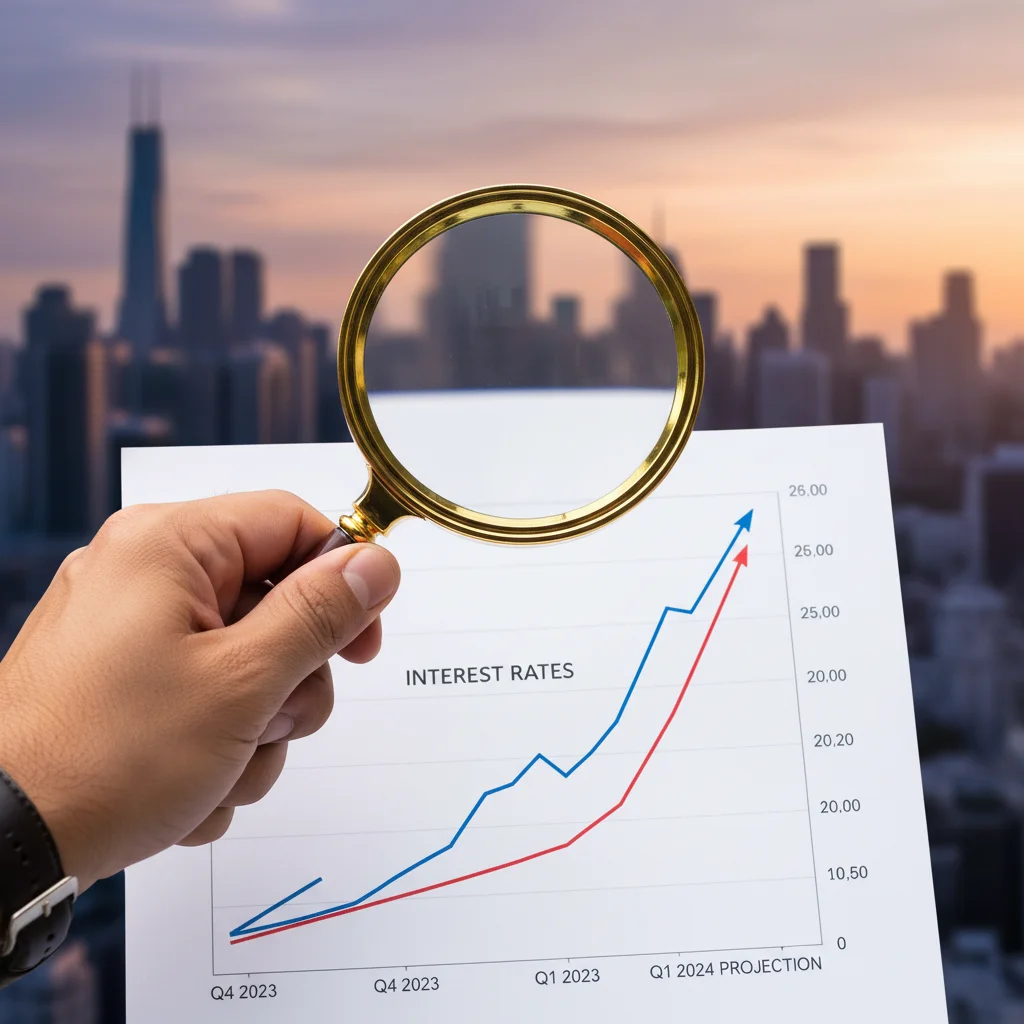
Understanding the Impact of the 5.5% Federal Funds Rate on Borrowing Costs by 2026
The financial landscape is constantly shifting, and one of the most pivotal factors influencing this dynamic is the Federal Funds Rate. As of recent discussions and projections, the Federal Funds Rate has reached significant levels, with a 5.5% benchmark rate having profound implications for borrowing costs across the economy. Understanding the nuances of the Federal Funds Rate Impact is crucial for individuals, businesses, and investors looking to navigate the economic currents of today and anticipate the trends leading up to 2026. This comprehensive guide will delve into how this elevated rate affects various forms of credit, from mortgages and auto loans to business financing and personal lines of credit, offering a forward-looking perspective on what to expect in the coming years.
The Federal Funds Rate is not merely an abstract number; it is the target rate set by the Federal Open Market Committee (FOMC) for overnight lending between banks. While it doesn’t directly dictate consumer interest rates, it serves as a foundational benchmark that influences a cascade of other rates throughout the financial system. When the Federal Reserve raises this rate, its primary goal is often to combat inflation by making borrowing more expensive, thereby slowing down economic activity and demand. Conversely, lowering the rate aims to stimulate economic growth. The current 5.5% rate reflects a period of aggressive monetary policy tightening, a response to persistent inflationary pressures that have been a hallmark of the post-pandemic economic recovery.
For the average consumer, the immediate question is: how does this translate into my daily financial life? The answer is multifaceted. Higher interest rates mean that the cost of borrowing money increases. This affects everything from the interest paid on credit card balances to the monthly payments on new mortgages and car loans. For businesses, higher rates can impact investment decisions, expansion plans, and overall profitability, as the cost of capital rises. By 2026, the cumulative effect of a sustained higher Federal Funds Rate Impact could reshape consumer spending patterns, business investment strategies, and the overall economic trajectory.
The Mechanics of the Federal Funds Rate and Its Ripple Effect
To truly grasp the Federal Funds Rate Impact, it’s essential to understand its mechanism. The Federal Funds Rate is the interest rate at which commercial banks borrow and lend their excess reserves to each other overnight. The Federal Reserve influences this rate through open market operations, primarily by buying or selling government securities. When the Fed raises its target rate, it effectively increases the cost for banks to borrow from each other. This increased cost is then passed on to consumers and businesses in the form of higher interest rates on loans and credit products.
This ripple effect is not instantaneous but rather a gradual transmission through the financial system. Banks, faced with higher borrowing costs, adjust their prime rate – the interest rate they charge their most creditworthy customers. The prime rate serves as a base for many variable-rate loans, such as credit cards, home equity lines of credit (HELOCs), and some adjustable-rate mortgages (ARMs). Therefore, a hike in the Federal Funds Rate directly translates to higher interest payments for those with variable-rate debt. For fixed-rate loans, the impact is less immediate but still significant, as new loans will be originated at higher rates.
Furthermore, the Federal Funds Rate influences investor expectations. When the Fed signals a hawkish stance (i.e., a tendency to raise rates), it can lead to higher yields on government bonds, which then serve as benchmarks for other long-term interest rates, including fixed-rate mortgages. The market anticipates future Fed actions, and these expectations are priced into current financial products. Thus, even if the Fed doesn’t make an immediate move, the mere expectation of a future rate hike can cause long-term rates to climb.
The sustained period of elevated rates, with the Federal Funds Rate at 5.5%, is a clear indication that the Fed is committed to its inflation-fighting mandate. This commitment signals to the market that borrowing costs are likely to remain elevated for the foreseeable future, potentially extending into 2026. This sustained high rate environment requires careful financial planning and strategic decision-making for both borrowers and lenders.
Mortgages and the Federal Funds Rate Impact: What Homeowners and Buyers Face
For many, the most significant financial decision is buying a home, and mortgages are highly sensitive to interest rate fluctuations. The Federal Funds Rate Impact on mortgages is profound, albeit with some nuances between fixed-rate and adjustable-rate products.
Fixed-Rate Mortgages
While fixed-rate mortgages don’t directly track the Federal Funds Rate, their rates are heavily influenced by the yield on long-term Treasury bonds, which in turn react to the Fed’s monetary policy and inflation expectations. When the Federal Funds Rate rises, and the market anticipates continued inflation, long-term Treasury yields tend to increase, pushing up fixed mortgage rates. A 5.5% Federal Funds Rate environment means that new 30-year fixed mortgage rates are significantly higher than they were during periods of lower benchmark rates. For someone looking to purchase a home or refinance, this translates to higher monthly payments and a reduced purchasing power.
Consider a scenario where a borrower qualified for a 3% interest rate on a $300,000 mortgage when rates were lower. Their monthly principal and interest payment would be approximately $1,265. If, under the current 5.5% Federal Funds Rate environment, the fixed mortgage rate rises to 7.5%, the same $300,000 mortgage would incur a monthly payment of roughly $2,098 – an increase of over $800 per month. This substantial difference can price many potential buyers out of the market or force them to consider smaller, less expensive homes. By 2026, if the Federal Funds Rate Impact remains elevated, the housing market could see continued cooling, with affordability challenges persisting.
Adjustable-Rate Mortgages (ARMs)
ARMs are more directly tied to short-term interest rate benchmarks, which are highly sensitive to the Federal Funds Rate. After an initial fixed period (e.g., 5 or 7 years), the interest rate on an ARM adjusts periodically based on an index like the Secured Overnight Financing Rate (SOFR) or the London Interbank Offered Rate (LIBOR, though largely phased out). As the Federal Funds Rate rises, these underlying indices also increase, leading to higher interest payments for ARM holders once their fixed period expires.
Homeowners with ARMs that are scheduled to adjust between now and 2026 could face significant payment shocks. The 5.5% Federal Funds Rate means that the variable portion of their mortgage will likely reset at a much higher rate than their initial fixed rate. This can put considerable strain on household budgets, potentially leading to increased defaults if homeowners are unable to absorb the higher payments.  It’s imperative for ARM holders to understand their loan terms and prepare for potential payment increases as the Federal Funds Rate Impact continues to be felt.
Auto Loans and Personal Loans: Immediate Effects on Consumer Spending
Beyond housing, the Federal Funds Rate Impact is acutely felt in the market for auto loans and personal loans. These are often shorter-term loans compared to mortgages, and their rates tend to respond more quickly to changes in the benchmark rate.
Auto Loans
For individuals looking to purchase a new or used vehicle, a 5.5% Federal Funds Rate environment means higher interest rates on auto loans. This translates to higher monthly payments and a greater total cost of the vehicle over the loan term. For example, a $30,000 car loan over five years at 4% interest would have a monthly payment of approximately $552. If the interest rate increases to 7%, the monthly payment jumps to about $594, an additional $42 per month, or over $2,500 over the life of the loan. While this might seem less dramatic than mortgage increases, it adds up, especially in an environment where consumers are already facing higher costs for other goods and services.
The higher cost of financing can lead to a decrease in demand for new vehicles, as consumers either delay purchases, opt for less expensive models, or choose to keep their current vehicles longer. Dealerships and auto manufacturers may feel the pinch, potentially leading to slower sales and adjustments in production. By 2026, a sustained high Federal Funds Rate Impact could contribute to a more subdued auto market, with consumers being more selective and price-sensitive.
Personal Loans
Personal loans, often used for debt consolidation, home improvements, or unexpected expenses, are also subject to the influence of the Federal Funds Rate. Lenders offering personal loans typically adjust their rates based on the prime rate, which, as discussed, is directly influenced by the Fed’s benchmark. A 5.5% Federal Funds Rate means that personal loans are more expensive, making it costlier for individuals to access unsecured credit.
This increased cost can deter some borrowers from taking out new personal loans, or it can make existing variable-rate personal loans more burdensome. For those struggling with high-interest credit card debt, a personal loan might still offer a lower rate, but the gap between personal loan rates and credit card rates may narrow, making consolidation less attractive than it once was. The Federal Funds Rate Impact on personal loans emphasizes the need for careful budgeting and debt management in a higher-rate environment.
Credit Cards and Lines of Credit: The Most Direct Hit
Among all forms of consumer credit, credit cards and home equity lines of credit (HELOCs) are perhaps the most directly and immediately impacted by changes in the Federal Funds Rate. This is because the vast majority of credit cards and HELOCs have variable interest rates that are explicitly tied to the prime rate.
Credit Cards
When the Federal Funds Rate goes up, the prime rate follows suit, and credit card annual percentage rates (APRs) typically adjust within one or two billing cycles. With the Federal Funds Rate at 5.5%, credit card APRs have seen multiple increases, pushing them to historically high levels. This means that carrying a balance on a credit card becomes significantly more expensive. For example, if a consumer has a $5,000 credit card balance at an initial 18% APR, their minimum payment might be around $150, with a substantial portion going towards interest. If the APR increases to 22%, the interest portion of that payment grows, making it harder to pay down the principal.
The cumulative effect of these increases can be substantial. Consumers who rely on credit cards for everyday expenses or who carry large balances will find their disposable income shrinking due to higher interest payments. This can lead to a cycle of debt, where minimum payments barely cover the interest, making it difficult to pay off the principal. The Federal Funds Rate Impact on credit cards serves as a strong incentive for consumers to pay down high-interest debt aggressively and avoid carrying balances.
Home Equity Lines of Credit (HELOCs)
HELOCs are also variable-rate products tied to the prime rate. They allow homeowners to borrow against the equity in their homes, often at a lower interest rate than credit cards or personal loans. However, with the Federal Funds Rate at 5.5%, HELOC rates have also risen considerably. Homeowners who have utilized HELOCs may see their monthly payments increase, potentially adding financial strain.
While HELOCs can be a valuable tool for home improvements or debt consolidation, the higher interest rate environment makes them a more expensive option than they were previously. Homeowners considering a new HELOC or those with existing lines of credit need to factor in these higher costs and understand how future rate movements might affect their payments. By 2026, the sustained high Federal Funds Rate Impact could lead to a re-evaluation of how homeowners use their equity, potentially shifting towards fixed-rate home equity loans for more payment predictability.
Business Lending and Investment: Capital Costs and Growth Prospects
The Federal Funds Rate Impact extends far beyond individual consumers, significantly influencing the cost of capital for businesses of all sizes. From small businesses seeking working capital to large corporations planning major investments, higher interest rates introduce a new set of challenges and opportunities.
Small Business Loans
Small businesses often rely on loans for startup costs, inventory, equipment purchases, and expansion. With a 5.5% Federal Funds Rate, the cost of these loans increases, making it more expensive to secure financing. This can deter new entrepreneurs from starting businesses or force existing small businesses to scale back their growth plans. Higher interest payments can also squeeze profit margins, especially for businesses operating on tight budgets.
For example, a small business seeking a $100,000 loan to purchase new machinery might face an interest rate several percentage points higher than it would have a few years ago. This directly impacts their cash flow and the overall profitability of their investment. The Federal Funds Rate Impact on small businesses underscores the importance of strong financial planning, efficient operations, and exploring alternative financing options.
Corporate Bonds and Investment
Larger corporations often raise capital by issuing corporate bonds. The yields on these bonds are influenced by government bond yields and overall market interest rates, which are sensitive to the Federal Funds Rate. When the Fed raises rates, it typically leads to higher corporate bond yields, meaning companies have to offer higher interest payments to attract investors. This increases the cost of borrowing for corporations, affecting their ability to fund new projects, research and development, and mergers and acquisitions.
Higher borrowing costs can lead companies to postpone or cancel capital-intensive projects, which can slow down economic growth and job creation. Investment decisions become more scrutinized, with a higher hurdle rate (the minimum acceptable rate of return on a project) often required to justify the increased cost of capital. 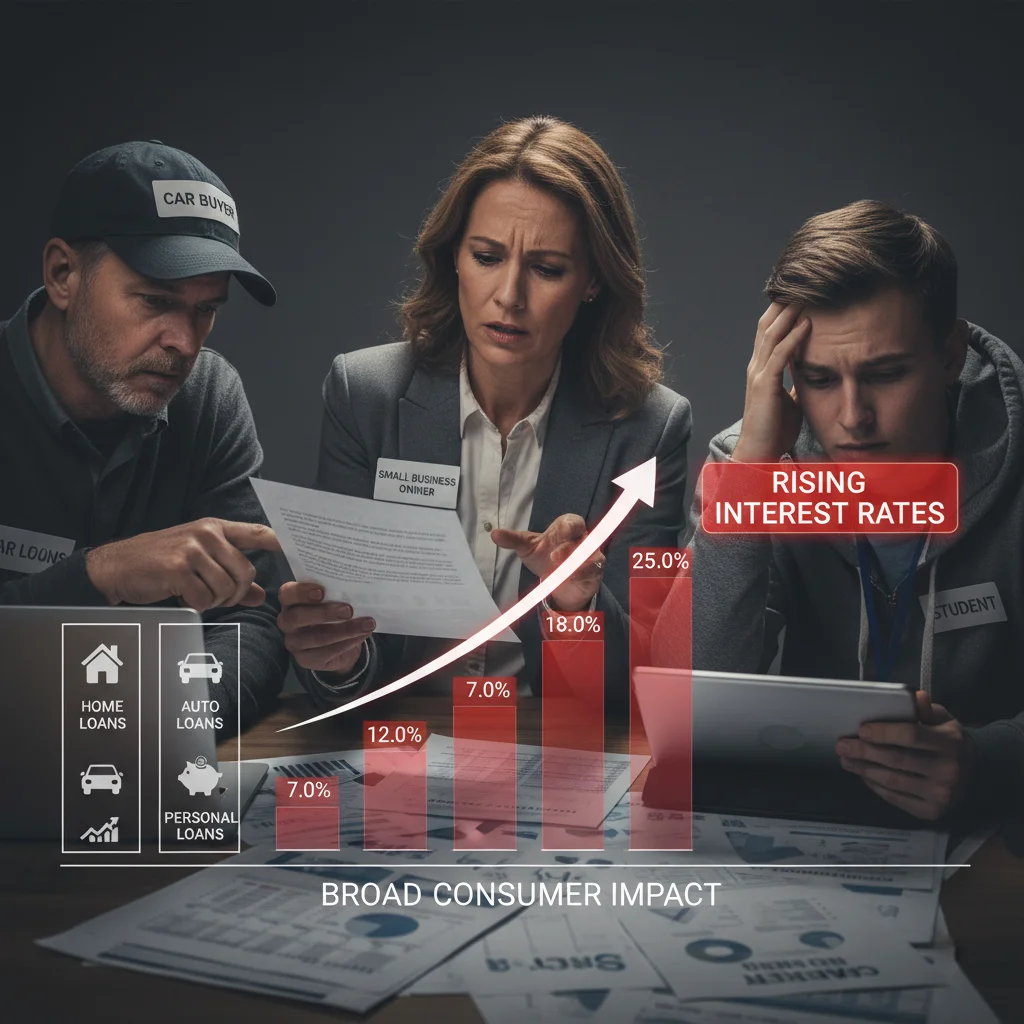 By 2026, if the Federal Funds Rate Impact remains restrictive, corporate investment patterns could reflect a more cautious approach, prioritizing efficiency and existing operations over aggressive expansion.
Economic Outlook and Projections for 2026 Under a 5.5% Federal Funds Rate
Looking ahead to 2026, the implications of a sustained 5.5% Federal Funds Rate are significant for the broader economy. The primary objective of such high rates is to bring inflation down to the Federal Reserve’s target of 2%. While higher rates are effective in cooling demand and price pressures, they also carry risks for economic growth.
Inflation and Economic Growth
The expectation is that the elevated Federal Funds Rate Impact will continue to dampen inflationary pressures. As borrowing becomes more expensive, consumer spending tends to slow, and businesses reduce investment, which collectively reduces aggregate demand. This slowdown in demand helps to bring prices down. However, there’s a delicate balance to strike; too much tightening can push the economy into a recession, characterized by widespread job losses and negative growth.
By 2026, if inflation is successfully brought under control, there’s a possibility that the Federal Reserve might begin to ease its monetary policy, potentially lowering the Federal Funds Rate. However, this is highly dependent on economic data, including inflation readings, employment figures, and global economic conditions. The path to 2% inflation is not guaranteed, and unexpected economic shocks could alter the trajectory.
Employment Market
A higher Federal Funds Rate Impact typically leads to a cooling labor market. As businesses face higher borrowing costs and reduced consumer demand, they may slow hiring, implement hiring freezes, or even resort to layoffs to cut costs. This can lead to an increase in the unemployment rate. While a moderate increase in unemployment might be seen as a necessary evil to curb inflation, a significant surge could signal a deeper economic downturn.
By 2026, the employment market will likely reflect the outcomes of current monetary policy. If the economy achieves a ‘soft landing’ – where inflation is tamed without a severe recession – the labor market might stabilize with a slightly higher but still healthy unemployment rate. However, if the tightening proves too aggressive, the job market could face more significant challenges.
Global Economic Implications
The U.S. Federal Funds Rate doesn’t operate in isolation. Its movements have global ramifications. A higher U.S. interest rate makes the dollar more attractive to international investors, strengthening the dollar against other currencies. While a stronger dollar makes U.S. imports cheaper, it makes U.S. exports more expensive, potentially hurting American companies that rely on international sales. It also makes dollar-denominated debt more expensive for foreign countries and corporations, which can lead to financial instability in other parts of the world.
By 2026, the global economic landscape will have adjusted to the sustained Federal Funds Rate Impact. This could mean continued pressure on emerging markets with dollar-denominated debt, shifts in global trade balances, and potentially coordinated monetary policy responses from other central banks to manage their own economies.
Strategies for Navigating the High Interest Rate Environment
Given the significant Federal Funds Rate Impact, both consumers and businesses need to adopt proactive strategies to mitigate risks and capitalize on potential opportunities. Understanding how to adapt to a 5.5% Federal Funds Rate environment is key to financial resilience.
For Consumers:
- Prioritize High-Interest Debt: Focus on paying down credit card balances and other variable-rate loans first to minimize interest accrual.
- Refinance if Possible (Strategic): While rates are high, if you have an ARM about to adjust dramatically, explore fixed-rate options, even if higher than previous lows, to lock in predictability.
- Build Emergency Savings: A robust emergency fund becomes even more critical to weather unexpected financial shocks without resorting to high-interest debt.
- Review Budget and Cut Expenses: Identify areas where spending can be reduced to free up funds for debt repayment or savings.
- Delay Large Purchases: Consider postponing major purchases like cars or homes if current interest rates make them unaffordable.
For Businesses:
- Optimize Cash Flow: Focus on efficient working capital management to reduce reliance on short-term borrowing.
- Re-evaluate Investment Projects: Prioritize projects with higher expected returns to justify the increased cost of capital.
- Explore Alternative Financing: Look into options like venture capital, equity financing, or government grants if traditional debt becomes too expensive.
- Hedge Against Rate Volatility: For businesses with significant variable-rate debt, consider financial instruments to hedge against future rate increases.
- Focus on Efficiency: Implement cost-cutting measures and improve operational efficiency to maintain profitability amidst higher expenses.
Conclusion: Preparing for the Future with a 5.5% Federal Funds Rate
The 5.5% Federal Funds Rate represents a significant shift in monetary policy, designed to bring inflation under control. Its far-reaching Federal Funds Rate Impact is evident in every corner of the financial system, from the cost of mortgages and auto loans to the viability of business investments. As we look towards 2026, the sustained effects of these higher borrowing costs will continue to shape economic behavior and financial decisions.
For consumers, this means a continued emphasis on debt management, savings, and careful budgeting. For businesses, it necessitates strategic capital allocation, operational efficiency, and an adaptive approach to financing. While the exact trajectory of interest rates beyond 2026 remains uncertain and subject to economic data, understanding the current environment and its implications is paramount. By staying informed and implementing sound financial strategies, individuals and businesses can better navigate the challenges and opportunities presented by a higher interest rate world, ensuring greater financial stability and resilience in the years to come.