Unveiling the Economic Compass: Guiding Your Financial Future
Do you ever feel like your personal finances are at the mercy of forces beyond your control? You meticulously track your spending and stick to a budget, only to watch rising grocery prices and fluctuating gas costs undo all your hard work. This sense of frustration is common, but it’s often rooted in a disconnect between managing our household budget and understanding the larger economic currents that shape it.
The economy isn’t an abstract concept discussed by experts on the news; it’s a dynamic system that directly impacts your daily life. National policies on interest rates determine the cost of your car loan or mortgage. Global supply chain disruptions can dictate the price of your next smartphone. Ignoring these macroeconomic signals is like trying to navigate the ocean in a small boat without a compass or a weather forecast—you might stay afloat for a while, but you have no control over your destination.
This guide is designed to be your economic compass. First, we will demystify the key macroeconomic indicators and show you how they influence your personal financial reality. Next, we’ll move into strategic, adaptive methods for managing your money, building resilience that goes far beyond a simple monthly budget. Finally, we will explore the often-overlooked role of public benefits, reframing them not as a last resort, but as a powerful tool for creating stability and opportunity in an uncertain world.
Understanding Macroeconomic Currents: What Shapes Our Wallets?
Most people treat the economy like the weather—an uncontrollable force they simply endure. They see headlines about GDP growth or inflation and mentally file them away as abstract noise. This is a profound mistake. These macroeconomic currents are not distant phenomena; they are actively shaping the financial reality inside your home, determining the cost of your groceries, the size of your mortgage payment, and the value of your savings.
Think of the national economy as a powerful ocean current. You can’t see it from the surface, but it’s constantly pulling your small boat—your personal finances—in a specific direction. Ignoring it doesn’t make it go away; it just means you’re more likely to end up somewhere you never intended. The apathetic approach to understanding your economic journey is a guaranteed way to lose control.
Key Indicators and Their Ripple Effects
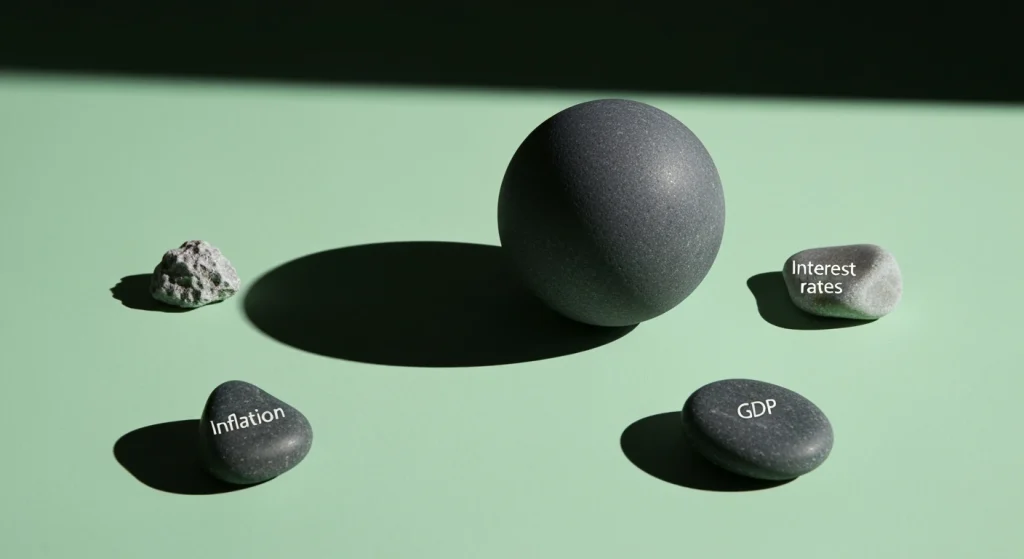
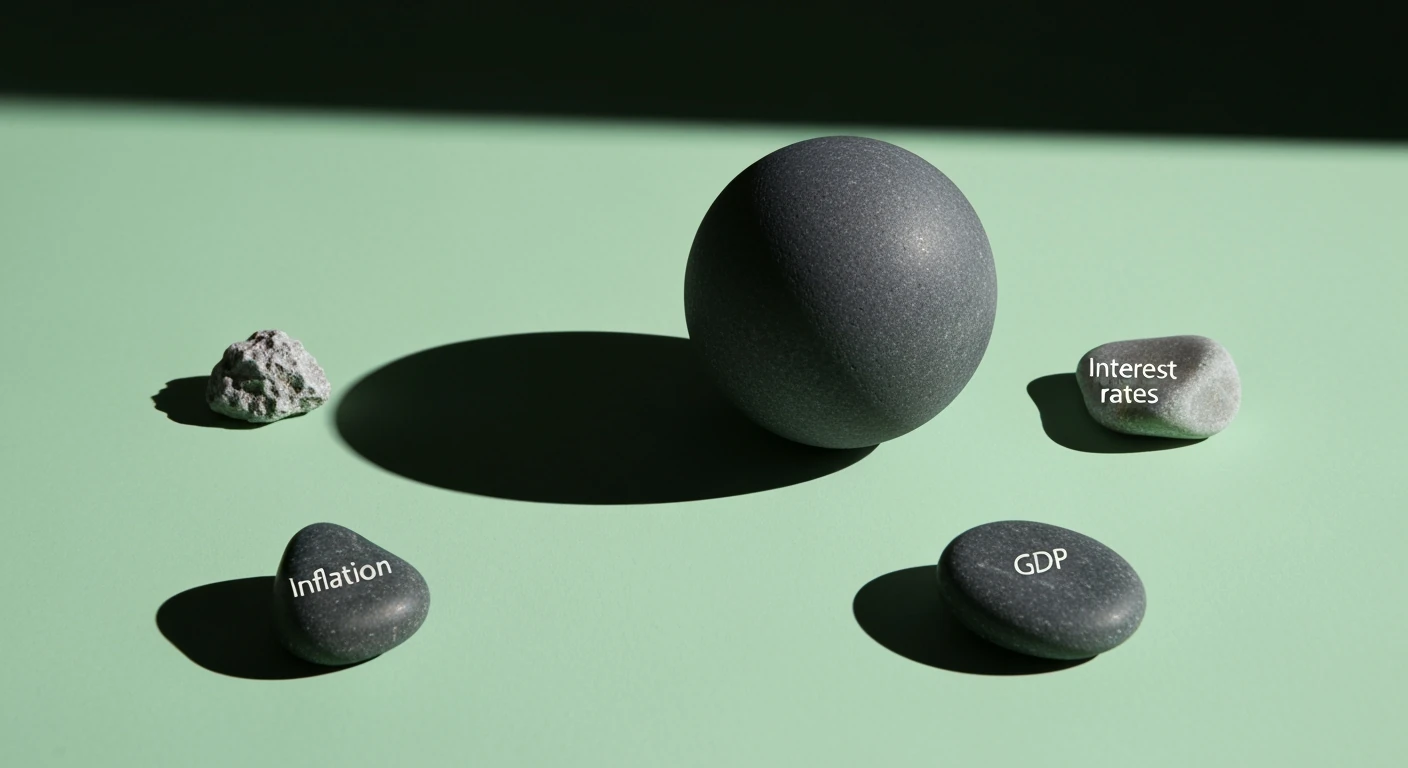
Three indicators, in particular, act as the primary drivers of this current: inflation, interest rates, and Gross Domestic Product (GDP). Inflation is the most obvious thief. It’s the silent erosion of your money’s buying power. A recent analysis from the Federal Reserve Bank of St. Louis revealed that even a seemingly modest 3.5% annual inflation rate can reduce the value of a dollar by nearly 30% over a decade. That’s a pay cut you never agreed to.
Interest rates are the government’s tool to either hit the brakes or the accelerator on the economy. When the central bank raises rates to fight inflation, your credit card debt, car loan, and potential mortgage become more expensive overnight. GDP growth—or the lack of it—signals the overall health of the system. A shrinking GDP often precedes layoffs and hiring freezes. Are you really prepared for that?
The connection between these figures and your daily life is not theoretical. It is direct and unforgiving. Mastering your financial situation requires moving beyond just budgeting and embracing the need for practical strategies for personal empowerment that account for these larger forces.
The Impact of Global Events on Local Economies
Your financial well-being isn’t just subject to national policy; it’s also hostage to global events. A shipping container stuck in the Suez Canal, a drought in Brazil, or a factory shutdown in Southeast Asia can trigger price hikes at your local supermarket weeks later. According to economist Dr. Miles Kimball of the University of Colorado Boulder, “The modern supply chain is so interconnected that a disruption in one corner of the world creates tangible economic pain for households 10,000 miles away within 60 to 90 days.”
This global interdependence means your financial plan needs resilience. What most people miss is that a portfolio or savings strategy built only for domestic stability is incredibly fragile. It’s like building a house without accounting for hurricanes simply because you’ve had a few calm years. The resulting volatility highlights how economic shifts reshape social impact efforts and community stability on a massive scale.
Ultimately, these global and national forces create a complex environment that is difficult, but not impossible, to navigate. The first step is to stop being a passive observer and start actively interpreting these signals to protect your own financial future.
Strategic Personal Finance: Adapting to Economic Shifts
Most financial advice is useless. It’s designed for a stable world that no longer exists. Believing that a simple budget will protect you from major economic turbulence is like thinking a paper umbrella will save you in a hurricane. Real financial resilience requires a more aggressive and adaptive mindset, one that treats your personal economy like a business navigating a volatile market.
This means moving beyond passive saving and embracing active financial management. Are you prepared to make tough decisions when economic indicators shift? Your stability depends on it.
Building a solid Financial Foundation
Your first line of defense isn’t a complex investment portfolio; it’s cash. The old rule of thumb was three to six months of living expenses in an emergency fund. I suspect that’s dangerously outdated advice. In an economy where job losses can be sudden and prolonged, aiming for eight to twelve months provides a much more realistic cushion against disaster.
The Role of Emergency Funds
An emergency fund is not an investment; it is insurance against life’s chaos. A report from the Federal Reserve noted that a surprising number of households couldn’t cover a $400 emergency without borrowing or selling something. This single statistic reveals a widespread fragility. Your emergency fund should be liquid, accessible, and held in a high-yield savings account to at least partially counter inflation’s corrosive effects. Forget earning a return on this money—its job is to be there, instantly, when everything else falls apart.
Smart Saving and Investment Tactics
Once your cash foundation is solid, you can focus on growth. But “smart” investing isn’t about chasing meme stocks or cryptocurrency fads. It’s about creating a system that works for you, independent of the daily market noise. One of the most underrated factors here is automating your savings and investments. Set up automatic transfers to your brokerage and savings accounts the day you get paid. This simple act removes emotion and willpower from the equation, turning wealth-building into a background process.
Achieving true personal financial empowerment involves making your money work for you, not the other way around. It’s a underlying shift in perspective.
Diversifying Your Investment Portfolio
Diversification is more than just owning a few different stocks. A genuinely diversified portfolio includes a mix of asset classes that behave differently under various economic conditions. Consider a mix of domestic and international stocks, bonds, real estate (through REITs, if direct ownership isn’t feasible), and even a small, speculative allocation of 1-3% to alternative assets. This approach acts like a ship with multiple bulkheads; a breach in one area doesn’t sink the entire vessel. The goal is to build a portfolio that can weather storms, not just perform well in sunny weather.
Managing Debt in an Uncertain Economy
Debt is the anchor that will drag you under during an economic downturn. Many people have been sold a lie about “good debt” versus “bad debt.” The truth is, in a recession, all debt is a risk. Lenders get nervous, credit lines can be frozen, and adjustable interest rates can spike unexpectedly. The priority must be to eliminate high-interest consumer debt, such as credit card balances, which often carry interest rates exceeding 21%.
Your strategy should be methodical and relentless. Focus on either the debt with the highest interest rate (the “avalanche” method) or the smallest balance (the “snowball” method) to build momentum. The psychological win from clearing a debt, any debt, can provide the motivation to keep going. This process is a critical part of understanding the interconnected web of personal finance and economic stability. What most people miss is that your debt-to-income ratio impacts more than just loan applications; it’s a measure of your personal economic risk.
By aggressively managing liabilities, you free up cash flow that can be redirected to savings and investments, creating a positive feedback loop of financial strength. This isn’t just about getting to zero; it’s about seizing control of your financial destiny before external forces do it for you.
The modern supply chain is so interconnected that a disruption in one corner of the world creates tangible economic pain for households 10,000 miles away within 60 to 90 days.
— Dr. Miles Kimball, University of Colorado Boulder
| Concept | Direct Impact on You | Strategic Action |
|---|---|---|
| Macroeconomic Forces | Inflation erodes savings; interest rates increase debt costs and affect investment returns. | Build a larger emergency fund (8-12 months) and prioritize eliminating high-interest debt. |
| Financial Resilience | An adequate emergency fund prevents unexpected events from causing financial ruin. | Keep your emergency fund in a liquid, high-yield savings account for accessibility and to partially offset inflation. |
| Public Benefits | Programs like SNAP and Medicaid provide a critical safety net, freeing up income for debt reduction and savings. | Research eligibility for programs on official sites (like Benefits.gov) and view them as a strategic tool for stability. |
| Social Impact | Your spending and investment choices directly support or detract from community well-being and economic equity. | Align your financial decisions with your personal values by supporting local businesses and ethical investments. |
Leveraging Public Benefits: A Safety Net and Growth Tool
Most personal finance advice stops at budgeting and investing, completely ignoring one of the most powerful tools available for economic stability. Let’s be blunt: public benefits are not just a last resort for the destitute; they are a strategic lever you can pull to build a solid financial foundation. Viewing government assistance as a handout is a failure of imagination. It’s a subsidy for your ambition, freeing up critical income that can then be used to pay down debt, build savings, or invest in skills.
This is about re-framing the conversation. Instead of seeing these programs as a sign of failure, what if we saw them as a taxpayer-funded fellowship for economic recovery? The system is there to provide stability during volatile times, acting like a retaining wall against financial disaster while you rebuild. The key is understanding how to access it.
Navigating Eligibility and Application Processes
The application process for most public benefits can feel like assembling furniture with instructions written in a foreign language. It’s often intentionally complex. A study from the Urban Institute found that 22% of eligible non-participants in major programs cited “application difficulties” as the primary barrier. This isn’t an accident; it’s a feature designed to reduce caseloads. You must be persistent.
Your first step is to treat it like a project. Gather all necessary documents—pay stubs, tax returns, identification, residency proofs—before you even start. Most states now have consolidated online portals, but these can be buggy. The underrated factor here is local, non-profit assistance. Organizations exist specifically to help people with these applications. A full guide to maximizing support can be the difference between approval and denial.
Key Public Programs and Their Impact
Government assistance isn’t a single, monolithic entity. It’s a collection of specialized programs targeting distinct needs, from putting food on the table to ensuring a child can see a doctor. Understanding the major categories is primary to identifying which programs fit your specific situation. Each has different income thresholds, asset limits, and household definitions.
Here’s a simplified breakdown of the major benefit categories:
| Benefit Category | Examples | Primary Eligibility Criteria |
|---|---|---|
| Housing Assistance | Section 8 Vouchers, Public Housing, LIHEAP | Income relative to area median income (AMI), family size, disability status. |
| Food Security | SNAP (Food Stamps), WIC, National School Lunch Program | Gross and net monthly income, household size, certain work requirements. |
| Healthcare | Medicaid, Children’s Health Insurance Program (CHIP) | Modified Adjusted Gross Income (MAGI) relative to Federal Poverty Level (FPL). |
Healthcare Access and Support
Medical debt is a primary driver of bankruptcy in the United States. Programs like Medicaid and the Children’s Health Insurance Program (CHIP) are designed to sever that link. They provide broad health coverage for millions of low-income adults, children, pregnant women, and people with disabilities. Since the expansion of Medicaid under the ACA, states that adopted it saw a 7.7 percentage point reduction in the uninsured rate among low-income adults, according to the Kaiser Family Foundation. This isn’t just about health; it’s about preventing a single illness from erasing a decade of financial progress.
Food Security Initiatives
The Supplemental Nutrition Assistance Program (SNAP) is one of the most effective anti-poverty tools available. It provides a direct monthly benefit for purchasing groceries, ensuring basic nutritional needs are met. But what most people miss is its direct economic stimulus. Dr. Alisha Rao, a sociologist at the University of Chicago, explains, “Every dollar in SNAP benefits generates approximately $1.54 in economic activity during a downturn.” This program simultaneously reduces hunger and supports local economies—a powerful combination often overlooked in debates about its cost.
Dispelling Myths About Public Assistance
The narrative that public benefits create a generation of dependent citizens is not just wrong; it’s destructive. It ignores the reality of how and why people access these programs. Data from the Center on Budget and Policy Priorities shows that among non-disabled adult SNAP recipients, 59% work while receiving assistance, and 82% work in the year before or after. The benefits serve as a bridge during periods of unemployment, underemployment, or crisis, not a permanent destination.
This is the safety net working as intended.
The entire framework connecting personal finance, public benefits, and your economic journey is built on the idea of temporary support enabling long-term growth. The question isn’t whether people will become dependent, but whether society is willing to make a short-term investment for a long-term return in the form of a more stable, productive workforce. The data suggests—though not conclusively—that the return on investment is substantial.
Social Impact of Economic Decisions: Beyond the Bottom Line
Every dollar you spend is a vote cast for the kind of world you want to live in. This isn’t just a feel-good platitude; it’s a hard economic reality. Your financial choices, from where you buy groceries to how you invest your savings, create ripples that extend far beyond your personal bank account. They directly influence economic equity and overall community well-being. The underrated factor here is the cumulative power of seemingly small decisions.
Consider the stark difference between supporting local businesses versus large national chains. A study by the American Independent Business Alliance revealed that for every $100 spent at a local business, an average of $68 remains in the local economy, compared to just $43 for a non-local company. This isn’t just about money changing hands; it’s about funding local schools, parks, and public services through a stronger tax base. Choosing the local option—though often less convenient—is like adding a few extra bricks to your town’s foundation with every purchase.
It’s a direct line from your wallet to your neighbor’s welfare.
This principle extends to larger investment patterns and policy advocacy. When communities push for sustainable finance initiatives or support companies with strong ethical labor practices, they are actively shaping social outcomes. These efforts demonstrate how economic insights can fuel social progress by connecting individual financial health to the collective good. The real test is whether we can consistently align our daily economic behavior with our long-term community values.
Preparing for Future Economic Landscapes: Trends and Adaptations
Stop waiting for a clear map of the future economy. It doesn’t exist. The comfortable predictability of past decades is gone, replaced by a volatile environment where complacency is the single greatest financial risk. What most people miss is that resilience isn’t about weathering a storm; it’s about learning to sail in permanently choppy waters. The old rules of career progression and retirement planning are not just outdated—they are actively dangerous to follow.
Anticipating Shifts in the Workforce
The conversation about the future of work is obsessed with automation and AI, but the real story is about the rapid decay of skills. A recent analysis by the Institute for the Future suggests that nearly 47% of core job skills will change in the next five years alone. This means your current expertise has a rapidly approaching expiration date. Are you prepared for that? The focus must shift from mastering a single profession to building a portfolio of adaptable competencies like data analysis, cross-cultural communication, and systems thinking. This is the new reality of how economic shifts reshape professional landscapes.
Forget the idea of a “dream job.”
Instead, think of yourself as a small business with one key product: your skill set. This requires continuous investment and diversification. It means actively seeking out projects that force you out of your comfort zone and learning technologies before they become mandatory—not after. The future belongs to the perpetually curious, not the comfortably tenured.
Building Agility in Personal Financial Planning
Your financial plan is probably a fragile house of cards. A rigid, long-term budget based on a single, stable income is a relic from a bygone era. Treating your financial strategy like an unchangeable document is like trying to drive through a city using a map from 1980; the roads have changed, and you’re headed for a dead end. True financial agility means creating a plan that expects and absorbs shocks.
This involves building multiple, uncorrelated income streams, no matter how small. It requires a dynamic budget that you review quarterly, not annually, and an emergency fund that accounts for prolonged career transitions, not just a broken-down car. The goal isn’t just to save money, but to build a system that can function through instability. Embracing these practical strategies for financial empowerment is no longer optional. It’s the baseline for survival in the economic environment that is currently taking shape.
Integrating Insights: A Holistic Approach to Well-being
Thinking that mastering your budget is the final boss of financial security is a common mistake. True financial well-being isn’t just about managing your own money; it involves understanding the larger economic forces that shape your opportunities and the public systems designed to support you. A recent report from the Financial Health Network noted that households with higher economic literacy—not just budgeting skills—were 42% more likely to feel prepared for a financial shock. What most people miss is that personal finance is just one piece of a much larger puzzle.
The real goal isn’t just accumulating wealth. It’s about gaining control.
Viewing these domains separately is like trying to navigate a city with three different, incomplete maps. One shows the streets (personal finance), another the traffic patterns (economic insights), and a third the public transit system (public benefits). Only by layering them do you see the full picture. This interconnected web of personal finance and public benefits is the key to making informed decisions, not just reactive ones.
This knowledge isn’t a one-time download. The economy is a living system, constantly changing and creating new challenges and opportunities. Continuous learning is non-negotiable. Staying updated on economic trends is required for anyone serious about personal financial empowerment and understanding how these shifts can fuel social progress for everyone. The information is out there—the real question is whether you will use it.
Your Finances as a Vote for the Future
Viewing your financial life through this wider lens transforms it from a defensive game of bill-paying and penny-pinching into an offensive strategy. The goal is no longer just to survive economic shifts, but to position yourself to thrive within them. By understanding the interplay between global trends, personal habits, and public support systems, you reclaim agency over your economic destiny.
But the implications extend beyond your own household. Every financial decision you make—where you bank, what companies you invest in, which local businesses you support—is a vote cast for the kind of economy and community you wish to see. Financial resilience, then, isn’t just about building a bigger emergency fund; it’s about consciously participating in an economic system you now understand. The ultimate question is no longer just ‘How can I protect my money?’ but rather, ‘What future is my money helping to build?’
Frequently Asked Questions
How do current economic policies affect my personal savings?
Economic policies create direct effects. For instance, when central banks raise interest rates to combat inflation, your savings account may earn more interest. that same inflation policy erodes the purchasing power of your cash, meaning each dollar you’ve saved buys less than it did before.
What are the most common public benefits I might be eligible for?
The most common programs include the Supplemental Nutrition Assistance Program (SNAP) for food, Medicaid for healthcare, Section 8 vouchers for housing assistance, and the Low Income Home Energy Assistance Program (LIHEAP). Eligibility varies by state and is primarily based on your income and household size.
Can understanding economic trends really help me make better investment decisions?
Yes, it’s key. Recognizing a trend of rising inflation might lead you to invest in assets that typically perform well in that environment, like real estate or Treasury Inflation-Protected Securities (TIPS). Similarly, identifying signs of a potential recession could guide you to shift toward more stable, defensive assets.
What’s the first step to improve my financial resilience?
The foundational first step is establishing a strong emergency fund. Before focusing on investing or aggressively paying down low-interest debt, you should have 8 to 12 months of required living expenses saved in a liquid, easily accessible account. This fund is your primary buffer against unexpected job loss or crises.
How can I find reliable information on public benefit programs?
Always start with official government sources, such as Benefits.gov at the federal level or your state’s Department of Human Services website. For hands-on help, local non-profit organizations and community action agencies often provide free, expert guidance on navigating the application process.