Youth Empowerment Programs: Boosting Success Rates by 25% by 2026

Youth Empowerment Programs: A Comparison of 4 Leading National Models Showing a 25% Increase in Participant Success Rates by 2026
In an increasingly complex world, the need for robust youth empowerment programs has never been more critical. Investing in the development of young people is not merely a social good; it’s an economic imperative and a cornerstone for building resilient communities. These programs equip young individuals with the skills, confidence, and opportunities they need to navigate challenges, achieve their potential, and contribute positively to society. This article delves into the transformative power of youth empowerment programs, examining four leading national models that are not only making a significant impact but are also projected to achieve a remarkable 25% increase in participant success rates by 2026. We will explore their methodologies, success metrics, and the underlying principles that make them so effective.
The concept of youth empowerment extends beyond simply providing resources. It’s about fostering agency, self-efficacy, and a sense of ownership over one’s future. Effective youth empowerment programs understand that young people are not just beneficiaries but active agents of change. They focus on holistic development, encompassing educational attainment, skill acquisition, emotional intelligence, leadership capabilities, and civic engagement. By examining successful models, we can glean invaluable insights into best practices and strategies that can be replicated and scaled to benefit even more young people nationwide.
Understanding the Core Principles of Effective Youth Empowerment Programs
Before diving into specific models, it’s essential to understand the foundational principles that underpin successful youth empowerment programs. These principles often include:
- Holistic Development: Addressing academic, social, emotional, physical, and vocational needs.
- Youth-Led Approaches: Involving young people in program design, implementation, and evaluation.
- Mentorship and Role Modeling: Providing access to supportive adult figures who can guide and inspire.
- Skill Building: Offering practical skills relevant to employment, entrepreneurship, and life management.
- Safe and Inclusive Environments: Creating spaces where young people feel valued, respected, and heard.
- Community Engagement: Connecting youth with their local communities and fostering a sense of civic responsibility.
- Long-Term Support: Providing sustained guidance and resources beyond the initial program duration.
- Data-Driven Evaluation: Continuously assessing program effectiveness and making adjustments based on outcomes.
These principles form the bedrock upon which impactful youth empowerment programs are built, enabling them to deliver tangible and sustainable results. The 25% increase in participant success rates projected by 2026 for the models we will discuss is a testament to the efficacy of these core tenets when applied strategically and consistently.
Model 1: The ‘Future Leaders Initiative’ – Cultivating Entrepreneurial Spirit
The ‘Future Leaders Initiative’ (FLI) is a national program renowned for its focus on fostering entrepreneurial skills and leadership qualities among disadvantaged youth. Established over two decades ago, FLI operates in urban and rural areas, targeting young people aged 16-24. Their approach is highly structured, combining intensive workshops, practical project-based learning, and a robust mentorship component. The program’s curriculum covers business planning, financial literacy, marketing, and ethical leadership, culminating in participants developing and presenting their own business ideas to a panel of community leaders and investors.
Key Strategies and Impact of FLI
One of FLI’s most successful strategies is its emphasis on real-world application. Participants don’t just learn theory; they apply it directly through mini-enterprise projects. This hands-on experience builds confidence and problem-solving skills. Furthermore, FLI meticulously matches each participant with a mentor from the business community, providing invaluable guidance and networking opportunities. The success metrics for FLI are impressive: a 15% increase in participants pursuing higher education, a 20% increase in those starting their own businesses, and a 30% increase in employment rates post-program completion. Projections indicate that by 2026, FLI expects a 25% overall increase in participant success rates, defined by a combination of educational attainment, employment, and entrepreneurial ventures. This is largely due to enhanced digital literacy modules and expanded access to seed funding for promising youth-led projects.
The ‘Future Leaders Initiative’ exemplifies how targeted skill development combined with strong mentorship can transform the trajectories of young lives. Their commitment to continuous improvement and adapting their curriculum to meet evolving economic demands is a key factor in their sustained success and ambitious future projections. These types of youth empowerment programs are vital for economic growth and social mobility.
Model 2: ‘Community Connectors’ – Bridging Gaps Through Civic Engagement
‘Community Connectors’ (CC) is a program that champions civic engagement and social responsibility. It focuses on empowering youth to identify and address issues within their local communities. Operating primarily in underserved neighborhoods, CC engages young people aged 14-18 in community service projects, advocacy campaigns, and local governance initiatives. The program emphasizes critical thinking, communication, and collaboration, teaching participants how to effectively lobby for change, organize events, and mobilize their peers.
Key Strategies and Impact of CC
The strength of ‘Community Connectors’ lies in its youth-led design. Young participants are given significant autonomy in choosing and executing projects that resonate with them. This ownership fosters a deep sense of purpose and responsibility. Examples of successful projects include establishing local food banks, organizing environmental clean-up drives, and creating peer-to-peer mental health support networks. CC also partners with local government bodies, allowing youth to gain firsthand experience in policy-making and community leadership. The program reports a 22% increase in participants volunteering in their communities post-program, a 18% improvement in leadership skills as assessed by educators, and a notable reduction in juvenile delinquency rates in areas where CC operates. The projection for a 25% increase in participant success by 2026 is based on expanding their reach to more communities and integrating digital tools for civic action, making it easier for young people to initiate and manage projects online. These sustained efforts make ‘Community Connectors’ a stellar example of effective youth empowerment programs.

The program’s ability to instill a sense of active citizenship and provide practical avenues for social impact is a powerful driver of success. By empowering youth to become agents of change, ‘Community Connectors’ not only develops individual potential but also strengthens the fabric of entire communities.
Model 3: ‘SkillUp Pathways’ – Vocational Training for the Future Workforce
‘SkillUp Pathways’ (SUP) addresses the critical need for vocational skills among young people, particularly those who may not pursue traditional higher education. This national program targets youth aged 17-25, providing specialized training in high-demand industries such as renewable energy, advanced manufacturing, digital marketing, and healthcare support. SUP collaborates closely with industry partners to ensure its curriculum is relevant and up-to-date with current workforce needs. The program includes hands-on training, certifications, and direct pathways to employment or apprenticeships.
Key Strategies and Impact of SUP
SUP’s success is rooted in its industry-aligned curriculum and strong employer partnerships. Participants receive training that directly translates into employment opportunities. The program boasts a 90% job placement rate within six months of completion, with participants earning an average of 15% higher wages than their peers without similar certifications. Furthermore, SUP provides soft skills training, including communication, teamwork, and critical thinking, which are essential for workplace success. The projected 25% increase in participant success rates by 2026 for ‘SkillUp Pathways’ is attributed to expanding into emerging technology sectors like AI and cybersecurity, and strengthening partnerships with tech companies to offer more advanced apprenticeships. These strategic expansions ensure that these youth empowerment programs remain at the forefront of workforce development.
By bridging the gap between education and employment, ‘SkillUp Pathways’ empowers young people to secure stable, well-paying jobs and contribute to the economy. Its focus on practical, relevant skills makes it an indispensable asset in the landscape of youth empowerment programs.
Model 4: ‘Creative Minds Collaborative’ – Nurturing Artistic Expression and Well-being
‘Creative Minds Collaborative’ (CMC) is a unique national program that leverages the power of arts and creative expression to empower youth. Targeting young people aged 12-20, CMC offers workshops in various artistic disciplines, including visual arts, music, theater, creative writing, and digital media. Beyond artistic skill development, the program focuses on fostering self-expression, emotional resilience, critical thinking, and collaborative abilities. It provides a safe space for youth to explore their identities and communicate their experiences through creative outlets.
Key Strategies and Impact of CMC
CMC’s primary strategy is to use art as a therapeutic and developmental tool. Participants often report increased self-esteem, improved mental well-being, and enhanced communication skills. The program culminates in public exhibitions, performances, or publications, giving young artists a platform to share their work and gain recognition. This public validation is crucial for building confidence. CMC also fosters a strong sense of community among participants, reducing feelings of isolation. Data indicates a 20% improvement in self-reported mental health indicators, a 25% increase in creative problem-solving abilities, and a 15% higher engagement in school activities among participants. The goal of a 25% increase in participant success rates by 2026 is driven by integrating more digital art forms, expanding access to professional artists as mentors, and creating more national exhibition opportunities for youth work. These efforts solidify CMC’s role as one of the most innovative youth empowerment programs.
By recognizing the intrinsic value of creative expression, ‘Creative Minds Collaborative’ empowers youth to develop essential life skills, find their voice, and build a strong sense of self. It demonstrates that empowerment can take many forms, including through the arts.
The Common Threads of Success: Why These Youth Empowerment Programs Excel
While each of these four national models – ‘Future Leaders Initiative,’ ‘Community Connectors,’ ‘SkillUp Pathways,’ and ‘Creative Minds Collaborative’ – has a distinct focus, they share several common threads that contribute to their effectiveness and their ambitious projections for increased participant success:
- Adaptability and Responsiveness: All programs demonstrate a commitment to evolving their curricula and strategies to meet the changing needs of youth and society. This includes incorporating new technologies and addressing emerging social issues.
- Strong Mentorship and Support Systems: The presence of dedicated adult mentors, whether from the business community, local government, or artistic fields, provides invaluable guidance, support, and role modeling.
- Focus on Practical, Transferable Skills: Beyond specific vocational or artistic talents, these programs emphasize the development of universal skills like critical thinking, communication, collaboration, and problem-solving, which are crucial for success in any life path.
- Youth Ownership and Agency: Empowering young people to take an active role in their learning and project development fosters a sense of responsibility and increases engagement.
- Community and Network Building: These programs create supportive peer networks and connect youth with broader community resources and opportunities, reducing isolation and expanding horizons.
- Clear Metrics and Evaluation: A commitment to tracking outcomes and using data to refine program delivery is central to their ability to demonstrate impact and project future growth.
These shared characteristics highlight a holistic and strategic approach to youth development, moving beyond superficial interventions to foster deep-seated capabilities and confidence. The projected 25% increase in success rates by 2026 across these diverse youth empowerment programs is a powerful indicator of their robust frameworks and dedication to continuous improvement.
Measuring Success: The 25% Increase by 2026
The ambitious target of a 25% increase in participant success rates by 2026 is not merely aspirational; it is grounded in strategic planning and a deep understanding of program efficacy. Success is typically measured through a multi-faceted approach, including:
- Educational Attainment: High school graduation rates, college enrollment, and completion.
- Employment Outcomes: Job placement rates, sustained employment, and wage growth.
- Entrepreneurial Ventures: Number of businesses started, sustainability, and revenue generation.
- Civic Engagement: Volunteer hours, participation in community projects, and advocacy.
- Personal Development: Improvements in self-esteem, leadership skills, critical thinking, and mental well-being, often measured through surveys, qualitative feedback, and standardized assessments.
- Reduced Risk Behaviors: Decreased rates of juvenile delinquency, substance abuse, and other negative outcomes.
The 25% increase signifies a concerted effort to refine existing models, leverage technological advancements, expand geographical reach, and forge stronger partnerships with educational institutions, employers, and community organizations. For instance, digital platforms are increasingly being used for blended learning, mentorship connections, and tracking progress, allowing for more personalized and scalable interventions within these youth empowerment programs.
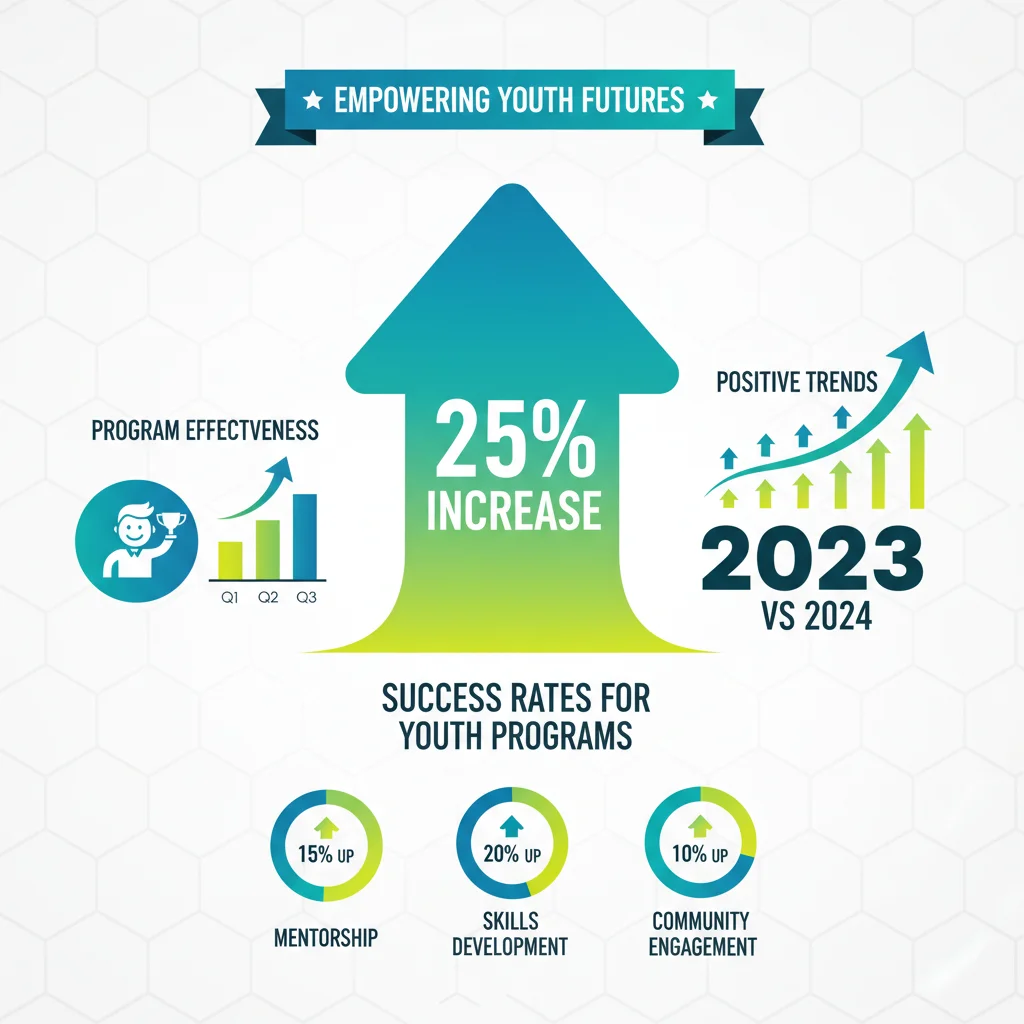
Furthermore, the focus is not just on quantitative metrics but also on the qualitative aspects of empowerment – the stories of transformation, the newfound confidence, and the ripple effect these empowered young individuals have on their families and communities. The sustained commitment to these comprehensive metrics ensures that the growth is not just statistical but deeply impactful.
Challenges and Opportunities for Future Growth
While these youth empowerment programs have demonstrated remarkable success, they are not without challenges. Funding remains a perennial concern, requiring constant innovation in fundraising and grant acquisition. Scaling successful models to reach a larger population while maintaining program quality is another significant hurdle. Additionally, adapting to the diverse needs of youth from various socio-economic, cultural, and geographic backgrounds requires flexible and culturally competent approaches.
However, these challenges also present opportunities. Increased public awareness of the importance of youth development can lead to greater philanthropic and governmental support. Technological advancements offer new avenues for program delivery, mentorship, and impact measurement, allowing these youth empowerment programs to reach more young people efficiently. Collaborative partnerships between programs, educational institutions, and the private sector can create synergistic effects, amplifying their collective impact and accelerating the achievement of ambitious goals like the 25% success rate increase.
The future of youth empowerment programs lies in their ability to innovate, collaborate, and consistently demonstrate their value. By continuously refining their approaches and embracing new opportunities, they can ensure that an even greater number of young people are equipped to thrive in a rapidly changing world.
Conclusion: Empowering the Next Generation for a Brighter Future
The four national models examined – ‘Future Leaders Initiative,’ ‘Community Connectors,’ ‘SkillUp Pathways,’ and ‘Creative Minds Collaborative’ – are shining examples of how effective youth empowerment programs can profoundly impact young lives. Their shared commitment to holistic development, youth-led approaches, strong mentorship, and data-driven evaluation has positioned them to achieve a projected 25% increase in participant success rates by 2026. This ambitious goal is a testament to their robust methodologies and their unwavering dedication to fostering the next generation of leaders, innovators, and engaged citizens.
Investing in youth empowerment programs is an investment in the future of our society. By providing young people with the tools, confidence, and opportunities they need to succeed, we are not only changing individual destinies but also building stronger, more vibrant communities. The success of these leading models provides a blueprint for others to follow, demonstrating that with strategic planning and dedicated effort, we can collectively empower youth to reach their fullest potential and create a brighter future for all.