Federal Affordable Housing Investment: $10 Billion Impact on Disadvantaged Communities
Federal Affordable Housing Investment: $10 Billion Impact on Disadvantaged Communities
The housing crisis in the United States has reached a critical juncture, with millions of individuals and families struggling to find safe, stable, and affordable housing. In response to this pressing challenge, the federal government has announced a monumental $10 billion investment specifically earmarked for affordable housing projects in disadvantaged communities this year. This substantial financial injection represents a pivotal moment in the nation’s efforts to address housing inequities and foster sustainable community development. Understanding the full scope of this affordable housing investment, its mechanisms, and its anticipated impacts is crucial for policymakers, community leaders, and the public alike.
The Genesis of the $10 Billion Affordable Housing Investment
The decision to commit such a significant sum to affordable housing investment stems from a recognition of the severe and widening gap between housing costs and household incomes, particularly in historically underserved areas. Decades of underinvestment, discriminatory housing policies, and economic shifts have exacerbated the problem, leaving countless communities grappling with displacement, homelessness, and a lack of access to essential services. This $10 billion allocation is not merely a financial transaction; it’s a strategic move to rectify past injustices and build a more equitable future. It acknowledges that housing is not just a commodity but a fundamental human right and a cornerstone of economic stability and social well-being.
The federal government’s commitment is a multi-faceted approach, encompassing various programs and initiatives designed to target different aspects of the housing crisis. From direct funding for new construction and rehabilitation to rental assistance programs and support for innovative housing solutions, the investment aims to create a comprehensive safety net and stimulate long-term growth. The focus on disadvantaged communities ensures that the funds are directed where they are most needed, empowering those who have been historically marginalized and disproportionately affected by housing shortages and unaffordability. This targeted approach is vital for maximizing the impact of the affordable housing investment and ensuring that it reaches the individuals and families who stand to benefit most.
Moreover, this initiative is a testament to a broader shift in federal policy, emphasizing community-led development and sustainable practices. The investment is expected to catalyze local economies, create jobs, and foster a sense of ownership and pride within these communities. By providing stable housing, the government aims to improve health outcomes, educational attainment, and overall quality of life, demonstrating a holistic understanding of the challenges faced by disadvantaged populations. The ripple effects of this substantial affordable housing investment are anticipated to extend far beyond the immediate provision of housing units, contributing to a more resilient and equitable society.
Deconstructing the $10 Billion: Where the Funds Will Go
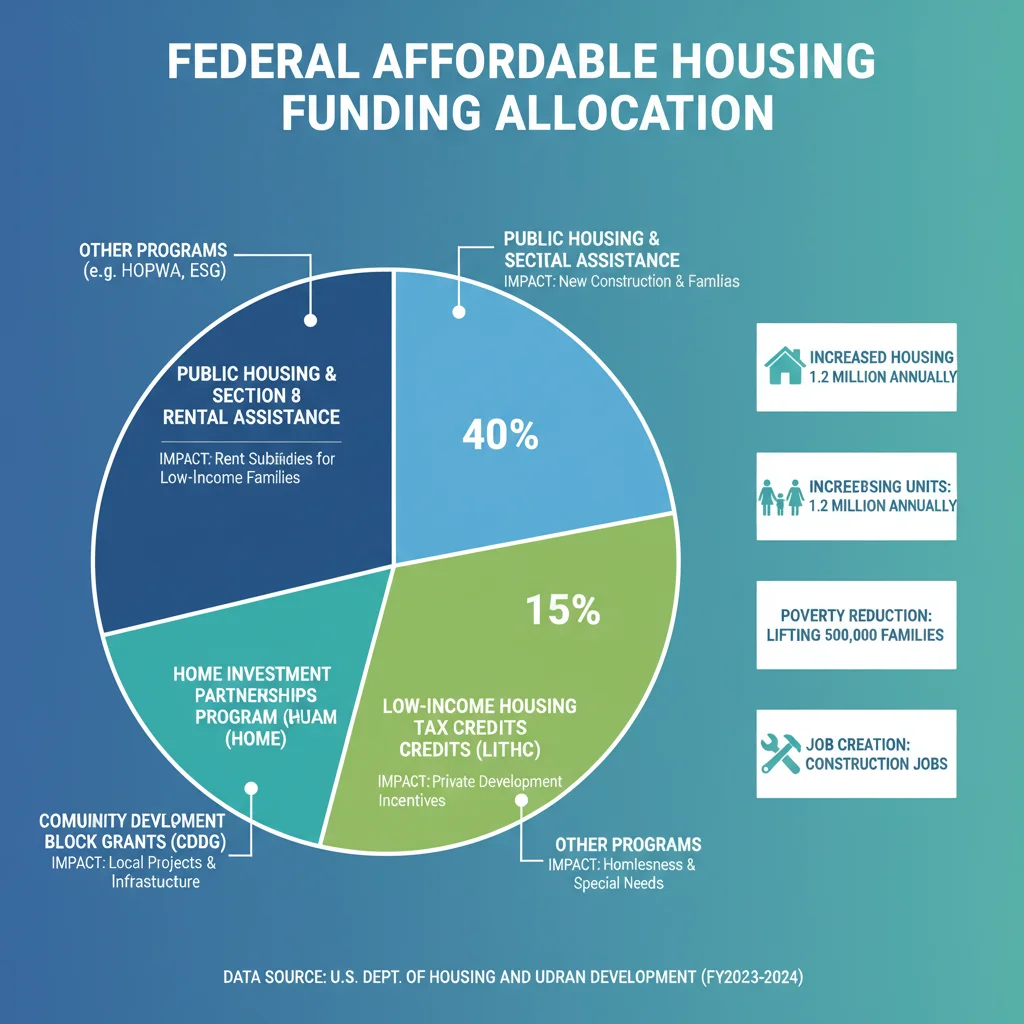
A detailed breakdown of how the $10 billion affordable housing investment will be distributed reveals a strategic allocation across several key areas, each designed to address specific aspects of the housing crisis. While the exact proportions may vary based on ongoing needs assessments and program efficacy, the general framework includes:
- Direct Development and Construction: A significant portion of the funds will be directed towards financing the construction of new affordable housing units and the substantial rehabilitation of existing properties. This is crucial for increasing the overall supply of affordable homes, especially in areas with severe housing shortages. These projects will often involve partnerships with local housing authorities, non-profit organizations, and private developers committed to affordable housing goals. The emphasis will be on creating sustainable, energy-efficient, and resilient housing that can withstand future environmental challenges.
- Rental Assistance Programs: Expanding and strengthening rental assistance programs, such as Section 8 vouchers, will be another critical component. These programs provide direct financial aid to low-income individuals and families, enabling them to afford market-rate housing or reduce their housing cost burden. This aspect of the affordable housing investment is vital for preventing homelessness and housing instability in the short term, offering immediate relief to those most in need.
- Support for Special Populations: A portion of the investment will be specifically allocated to address the unique housing needs of vulnerable populations, including the elderly, individuals with disabilities, veterans, and those experiencing chronic homelessness. This may involve funding specialized housing developments with integrated support services, ensuring that these groups have access to safe and appropriate living environments tailored to their specific requirements.
- Community Development Block Grants (CDBG): The CDBG program, a long-standing federal initiative, will likely see an increase in funding. These grants provide communities with flexibility to address local housing and community development needs, including affordable housing activities, infrastructure improvements, and economic development. This allows for a more localized and responsive approach to the affordable housing investment.
- Innovative Housing Solutions: The investment will also support pilot programs and initiatives exploring innovative housing solutions, such as modular construction, tiny homes, and adaptive reuse of existing buildings. These forward-thinking approaches can help reduce construction costs and accelerate the delivery of affordable housing, offering scalable models for future development.
- Land Acquisition and Infrastructure: Funds will also be used to acquire land for affordable housing development and to invest in necessary infrastructure improvements, such as water, sewer, and transportation, that support new housing projects. This ensures that new developments are integrated into existing communities and have access to essential services.
The strategic distribution of this affordable housing investment is designed to create a synergistic effect, addressing both the immediate need for housing and the underlying systemic issues that contribute to housing unaffordability. By combining direct construction with rental assistance and targeted support, the federal government aims to build a more robust and equitable housing system for all.
Economic Multipliers: Beyond Bricks and Mortar
The $10 billion affordable housing investment is not merely an expenditure; it’s a powerful economic stimulus with significant multiplier effects. The construction and rehabilitation of housing units generate a cascade of economic activity that extends far beyond the immediate project sites. This investment is expected to create tens of thousands of jobs across various sectors, including construction, manufacturing, engineering, and related services. These jobs provide stable incomes, contribute to local tax bases, and stimulate demand for goods and services, further bolstering local economies.
Moreover, an increase in affordable housing options frees up household income that would otherwise be spent on exorbitant rents. This disposable income can then be redirected towards other essential needs, such as food, healthcare, education, and local retail, further stimulating economic activity within disadvantaged communities. When families are not burdened by unsustainable housing costs, they are more likely to thrive economically, leading to increased savings, investment in their children’s futures, and greater participation in the local economy. This direct injection of purchasing power is a crucial aspect of the economic benefit derived from the affordable housing investment.
The investment also has a profound impact on property values and neighborhood revitalization. By stabilizing communities and attracting new residents, affordable housing projects can deter blight, increase property values in surrounding areas, and encourage further private investment. This creates a virtuous cycle of development and improvement, transforming neglected areas into vibrant, thriving neighborhoods. The long-term economic benefits include increased tax revenues for local governments, which can then be reinvested into public services, infrastructure, and educational programs, further enhancing the quality of life in these communities.
Furthermore, the affordable housing investment can lead to reduced public spending in other areas. When people have stable housing, the costs associated with homelessness – such as emergency services, healthcare for uninsured individuals, and social welfare programs – tend to decrease. This reallocation of resources allows governments to invest in preventive measures and long-term solutions, ultimately leading to more efficient and effective public spending. The economic argument for affordable housing is compelling, demonstrating that it is not just a social expenditure but a strategic investment with significant returns.
Social Equity and Community Empowerment
Beyond the tangible economic benefits, the $10 billion affordable housing investment holds immense promise for advancing social equity and empowering disadvantaged communities. Access to safe, stable, and affordable housing is a foundational element for individual and community well-being. Without it, opportunities for education, employment, and health are severely limited. This investment aims to dismantle systemic barriers that have historically prevented marginalized groups from accessing quality housing, thereby fostering greater social justice.
One of the most immediate impacts will be on health outcomes. Studies consistently show a strong correlation between housing stability and improved physical and mental health. Individuals living in stable, affordable homes are less likely to experience chronic stress, exposure to environmental hazards, and infectious diseases. They also have better access to healthcare services and are more likely to adhere to medical treatments. This affordable housing investment, therefore, functions as a public health intervention, leading to healthier communities and reducing the burden on emergency healthcare systems.
Education is another area poised for significant improvement. Children from stably housed families tend to perform better in school, exhibit fewer behavioral problems, and have higher graduation rates. The stability provided by affordable housing allows children to attend the same schools consistently, build stronger relationships with teachers and peers, and access educational resources without interruption. This investment in housing is, in essence, an investment in the future educational attainment and economic mobility of the next generation, breaking cycles of poverty and disadvantage.
Community empowerment is also a key objective. Many of these projects will prioritize community engagement in the planning and development phases, ensuring that the housing solutions are tailored to the specific needs and desires of the residents. This participatory approach fosters a sense of ownership and strengthens community ties. When residents have a voice in shaping their living environments, they become more invested in their neighborhoods’ success, leading to increased civic participation, reduced crime rates, and stronger social networks. The affordable housing investment is designed not just to build structures, but to build stronger, more resilient communities from the ground up.

Challenges and Opportunities in Implementation
While the $10 billion affordable housing investment presents an unprecedented opportunity, its successful implementation will not be without challenges. Navigating complex bureaucratic processes, securing suitable land in competitive markets, and overcoming NIMBYism (Not In My Backyard) opposition are just a few of the hurdles that will need to be addressed. Effective coordination between federal, state, and local governments, as well as private and non-profit sectors, will be paramount to ensure efficient and impactful deployment of funds.
One significant challenge lies in the rising cost of construction materials and labor. Inflationary pressures could potentially reduce the number of units that can be built or rehabilitated with the allocated funds. Innovative financing mechanisms, public-private partnerships, and streamlined regulatory processes will be essential to mitigate these cost pressures and maximize the reach of the affordable housing investment. Leveraging technology, such as prefabrication and modular construction, could also offer cost-effective solutions for scaling up production.
Another critical aspect is ensuring equitable distribution and preventing gentrification. While the investment targets disadvantaged communities, there’s a risk that new affordable housing developments could inadvertently trigger gentrification, displacing existing residents who may not qualify for the new units or cannot keep up with rising costs in the surrounding area. Robust anti-displacement policies, community land trusts, and inclusionary zoning practices will be vital to protect current residents and ensure that the benefits of the affordable housing investment are truly realized by those it intends to serve.
However, these challenges also present opportunities for innovation and collaboration. The scale of this investment encourages new partnerships and creative solutions. It provides a platform for experimenting with different models of affordable housing delivery, from mixed-income developments to supportive housing for specific populations. The focus on disadvantaged communities also offers an opportunity to rectify historical inequities and build truly inclusive neighborhoods where all residents have the chance to thrive. This comprehensive affordable housing investment can serve as a blueprint for future initiatives, demonstrating the power of targeted funding to address complex social problems.
Measuring Success and Long-Term Sustainability
To ensure the efficacy and accountability of this substantial affordable housing investment, robust mechanisms for measuring success and ensuring long-term sustainability will be critical. This goes beyond simply counting the number of units built or rehabilitated. Success must be evaluated based on the broader impact on communities and the lives of residents.
Key performance indicators (KPIs) will likely include reductions in homelessness rates, improvements in housing affordability indexes, increases in household incomes, enhanced educational outcomes for children, and better health indicators within the target communities. Data collection and analysis will be essential to track progress, identify areas for improvement, and demonstrate the tangible benefits of the federal intervention. Transparency in reporting will also be crucial to maintain public trust and garner continued support for affordable housing initiatives.
Long-term sustainability requires not only the initial construction but also ongoing maintenance, management, and funding for these affordable housing projects. Strategies for ensuring sustainability may include:
- Operating Subsidies: Providing ongoing operating subsidies to ensure that housing remains affordable for residents, even as operating costs fluctuate.
- Resident Services: Integrating supportive services, such as job training, childcare, and healthcare navigation, to help residents achieve economic stability and improve their quality of life.
- Community Land Trusts: Utilizing community land trusts to separate land ownership from housing ownership, thereby keeping housing permanently affordable for future generations.
- Energy Efficiency and Green Building Practices: Investing in energy-efficient designs and renewable energy sources to reduce utility costs for residents and minimize the environmental footprint of the developments. This also contributes to the long-term economic viability of the projects.
- Capacity Building: Strengthening the capacity of local housing organizations and community development corporations to manage and maintain affordable housing portfolios effectively.
- Policy Advocacy: Continued advocacy for policies that support affordable housing at all levels of government, ensuring a consistent and robust framework for future investments.
The $10 billion affordable housing investment is not a one-time fix but rather a foundational step towards building a more resilient and equitable housing system. Its long-term success will hinge on a sustained commitment to these principles and a willingness to adapt strategies based on empirical evidence and community feedback. By focusing on both immediate relief and enduring solutions, this investment has the potential to transform the landscape of disadvantaged communities for generations to come, proving that strategic federal funding can indeed lead to profound and lasting positive change.
Conclusion: A New Horizon for Affordable Housing
The $10 billion federal affordable housing investment represents a landmark commitment to addressing one of the most pressing social and economic challenges of our time. By strategically targeting disadvantaged communities, this initiative aims to not only alleviate housing insecurity but also to catalyze broader economic development, advance social equity, and empower historically marginalized populations. The ripple effects of this investment are expected to be far-reaching, improving health outcomes, boosting educational attainment, creating jobs, and fostering stronger, more resilient communities.
While significant challenges lie ahead in implementation, the opportunities for innovation, collaboration, and transformative change are immense. The success of this endeavor will depend on diligent planning, transparent execution, and a sustained commitment to the principles of equity and community empowerment. As this crucial affordable housing investment unfolds, it promises to usher in a new era of housing stability and opportunity, demonstrating the profound impact that targeted federal action can have on the well-being of the nation.
This initiative is more than just a financial allocation; it is a statement of national values, recognizing that safe and affordable housing is a fundamental right and a prerequisite for a thriving society. The journey ahead will require continued dedication and partnership, but with this significant federal push, the horizon for affordable housing in disadvantaged communities appears brighter than ever before.