New FAFSA Guidelines 2026: 7 Crucial Updates for College Financial Aid
Understanding the New FAFSA Guidelines for 2026: 7 Crucial Updates for College Financial Aid
The landscape of college financial aid is constantly evolving, and staying informed is paramount for students and families navigating the path to higher education. As we look towards the 2026 academic year, significant changes to the Free Application for Federal Student Aid (FAFSA) are on the horizon. These updates are designed to streamline the application process, expand eligibility, and potentially alter the amount of aid students receive. Understanding these new FAFSA 2026 Updates is not just beneficial; it’s essential for maximizing your financial aid opportunities.
For decades, the FAFSA has been the gateway to federal grants, scholarships, work-study programs, and federal student loans. It’s the primary tool colleges use to determine a student’s eligibility for institutional aid as well. With the upcoming changes, prospective students and their families must familiarize themselves with the revised guidelines to avoid surprises and ensure they are well-prepared. This comprehensive guide will delve into the seven most crucial updates to the FAFSA for the 2026 cycle, offering insights and actionable advice to help you navigate these reforms successfully.
The modifications to FAFSA are part of a broader effort to simplify the application process and make college more accessible. While the intent is positive, the transition requires careful attention to detail. From changes in how parental contributions are calculated to new terminology and expanded eligibility criteria, each update carries implications that could significantly impact your financial aid package. Let’s explore these pivotal changes to ensure you’re fully equipped for the 2026 application cycle.
1. The Shift to the Student Aid Index (SAI) from EFC
One of the most fundamental changes introduced by the FAFSA 2026 Updates is the replacement of the Expected Family Contribution (EFC) with the Student Aid Index (SAI). The EFC has long been a familiar term for families, representing the amount they are expected to contribute towards college costs. However, the EFC often caused confusion, as it wasn’t always the exact amount families paid. The new Student Aid Index (SAI) aims to be a more accurate and transparent measure of a student’s ability to pay for college.
The key difference lies in the calculation methodology and the terminology itself. The SAI can be a negative number, ranging from -1500 to a high positive figure, indicating a student’s higher financial need. A negative SAI signifies that a student has a greater financial need than their cost of attendance, potentially leading to more federal and institutional aid. This change is particularly beneficial for students from low-income backgrounds, as it could unlock access to more grant aid, such as the Pell Grant.
The calculation for SAI will consider fewer variables, making the process simpler. Assets, for instance, will be treated differently, and the number of family members in college will no longer be a factor in the direct SAI calculation. This simplification, while intended to make the process fairer, could have varying impacts depending on individual family circumstances. Families with multiple children in college, who previously benefited from the EFC calculation, might see a slight reduction in their aid eligibility under the new SAI model. However, the overall goal is to better target aid to those with the greatest financial need.
Understanding your potential SAI is crucial for early financial planning. While the exact formula can be complex, resources will be available to help families estimate their SAI. This shift represents a significant move towards a more student-centered approach to financial aid, focusing on the individual student’s need rather than solely on the family’s ability to contribute. It’s imperative for all applicants to familiarize themselves with the new SAI concept and how it might impact their eligibility for various aid programs.
2. Expanded Pell Grant Eligibility and Other Federal Aid
The FAFSA 2026 Updates bring exciting news for students seeking federal aid, particularly regarding the Pell Grant. The changes aim to expand Pell Grant eligibility, making this vital source of aid accessible to more students. Historically, Pell Grant eligibility has been tied to a student’s EFC and the federal poverty level. With the introduction of the SAI, the criteria for Pell Grant eligibility will be broadened.
Under the new guidelines, more students will qualify for the maximum Pell Grant award. This is partly due to the ability of the SAI to be a negative number, which directly correlates to a higher financial need. Additionally, the formula for determining Pell Grant eligibility will be simplified, making it easier for students to understand if they qualify and for how much. The goal is to ensure that a greater number of low-income students receive the support they need to pursue higher education without incurring excessive debt.
Beyond Pell Grants, these updates are expected to influence other federal aid programs. While the specifics for each program may vary, the general principle of simplifying the application and expanding access is likely to extend across various federal grants, loans, and work-study opportunities. Students should be aware that while the FAFSA itself is federal, the information is also used by states and institutions to award their own aid. Therefore, changes to the federal methodology can have a ripple effect on other aid sources.
It’s crucial for students to complete the FAFSA thoroughly and accurately to ensure they receive all the federal aid they are entitled to. Even if you didn’t qualify for a Pell Grant in previous years, the new FAFSA 2026 Updates might change your eligibility status. Don’t assume anything; always complete the FAFSA to see what aid you qualify for. This expanded eligibility is a significant step towards making college more affordable for a wider range of students, particularly those from disadvantaged backgrounds.
3. Changes to Parental Contribution Calculations
The way parental contributions are assessed is another area undergoing substantial revision with the FAFSA 2026 Updates. The new methodology for calculating the Student Aid Index (SAI) includes several key adjustments that will impact how a family’s financial strength is evaluated. One of the most notable changes is the elimination of the discount for the number of children in college. Previously, the EFC was divided by the number of children attending college, which effectively reduced the expected contribution per student. Under the new SAI, this division will no longer occur.
While this might initially seem disadvantageous for families with multiple children in college, it’s important to consider the broader context of the SAI calculation. The overall aim is to simplify the formula and make it more equitable. Families with multiple children in college should still complete the FAFSA for each child, as individual circumstances and other factors within the SAI calculation could still lead to significant aid eligibility. Colleges may also have their own institutional policies to account for multiple children, so it’s always worth checking with individual financial aid offices.
Another significant change relates to the treatment of assets. While certain assets will continue to be considered, the methodology aims to be less punitive towards families who have saved diligently. For instance, small business and farm assets will now be included in the calculation, which was not always the case previously. However, the overall approach to asset protection allowances and how assets contribute to the SAI is being refined to ensure a more balanced assessment of a family’s financial capacity.
Divorced or separated parents will also see changes. The FAFSA will now require financial information from the parent who provides the most financial support, regardless of which parent the student lives with. This is a departure from the previous rule, which focused on the parent the student lived with for the majority of the time. This change could significantly alter the SAI for some students, depending on the financial circumstances of each parent. It’s crucial for families to understand these specific nuances to accurately complete the FAFSA and avoid delays or incorrect aid determinations.

4. Simplified Application Process and Fewer Questions
One of the most anticipated aspects of the FAFSA 2026 Updates is the commitment to simplifying the application process. For years, the FAFSA has been criticized for its length and complexity, often deterring eligible students from applying. The updated form is designed to be more user-friendly, with a significant reduction in the number of questions applicants need to answer.
The total number of questions on the FAFSA will be reduced from over 100 to approximately 36. This streamlining will make the application process quicker and less daunting, encouraging more students to complete it. Many of the eliminated questions were deemed redundant or unnecessary for determining financial need effectively. This simplification is a direct response to feedback from students, families, and financial aid administrators who advocated for a more accessible application.
Furthermore, the integration with IRS data retrieval will be enhanced. The new FAFSA will require applicants to consent to the direct sharing of their tax information with the Department of Education. This mandatory consent will allow for a more seamless and accurate transfer of financial data directly from the IRS, reducing the need for manual input and minimizing errors. This automation is a major step forward in making the FAFSA process more efficient and less prone to mistakes that could delay aid disbursements.
While the simplified form is a welcome change, it’s still essential for applicants to read all instructions carefully and ensure all information is accurate. Even with fewer questions, precision is key. The goal of these simplifications is to remove barriers to financial aid, ensuring that students from all backgrounds have an equal opportunity to access the resources they need for college. This user-centric approach is a significant improvement that will benefit countless prospective college students.
5. New Terminology and Definitions
Along with the shift from EFC to SAI, the FAFSA 2026 Updates introduce several other new terms and revised definitions that applicants need to understand. Familiarizing yourself with this new vocabulary is crucial for accurately completing the form and comprehending your financial aid offers. For example, the term ‘contributor’ will now be used to refer to anyone who is required to provide information on the FAFSA. This could include the student, the student’s spouse, a biological or adoptive parent, or a parent’s spouse.
The concept of ‘family size’ will also be redefined. Instead of simply counting the number of people in the household, the FAFSA will now pull family size directly from the applicant’s federal tax return. This change aims to align the FAFSA more closely with tax reporting standards, simplifying the process for many families. However, it also means that families need to ensure their tax returns accurately reflect their household composition, as this will directly impact their SAI.
Another important change is related to the reporting of cash support and gifts. Under the new guidelines, cash support, gifts, and payments made on behalf of the student (such as rent or utility payments) will no longer be considered untaxed income. This is a significant relief for many students, particularly those who receive financial assistance from relatives or friends, as it will prevent these funds from negatively impacting their aid eligibility.
Understanding these new terms and definitions is not merely an exercise in vocabulary; it’s about ensuring you can correctly interpret the FAFSA questions and the subsequent financial aid offers. Resources will be provided by the Department of Education and financial aid offices to help applicants navigate these linguistic changes. Taking the time to learn this new terminology will empower you to complete the FAFSA with confidence and maximize your potential aid.
6. Impact on Undocumented Students and DACA Recipients
The FAFSA 2026 Updates bring some positive news and clarifications for undocumented students and DACA (Deferred Action for Childhood Arrivals) recipients, though federal aid remains largely unavailable for this group. While federal student aid is still restricted to U.S. citizens and eligible non-citizens, the new FAFSA aims to make the application process clearer for all applicants, including those who do not qualify for federal aid but may be eligible for state or institutional aid.
The updated FAFSA will better distinguish between students who are eligible for federal aid and those who are not, yet still need to complete the form for state or institutional aid purposes. This clarification is important because many states and colleges offer their own financial aid programs to undocumented students or DACA recipients. By completing the FAFSA, even if they don’t qualify for federal aid, these students can provide the necessary financial information to be considered for non-federal assistance.
Furthermore, the simplified application process and reduced number of questions will benefit all applicants, including those who are completing the FAFSA for state or institutional aid only. The changes in terminology, such as the clear definition of ‘contributor,’ will also help ensure that these students and their families provide the correct information without confusion.
It is crucial for undocumented students and DACA recipients to research the financial aid policies of their specific state and the colleges they are interested in. Many states have passed legislation allowing these students to receive state-funded financial aid, and numerous institutions offer scholarships and grants regardless of immigration status. The new FAFSA guidelines, while not directly providing federal aid to these groups, facilitate the process for them to access other forms of financial support, making college a more attainable goal.
7. Important Deadlines and Preparing for the 2026 Cycle
Staying on top of deadlines is always critical for financial aid, and the FAFSA 2026 Updates underscore the importance of early preparation. While the FAFSA traditionally opens on October 1st for the following academic year, the new FAFSA Simplification Act has led to some adjustments in the release schedule. For the 2026-2027 academic year, it’s essential to monitor official announcements from the Department of Education and your prospective colleges for the exact opening date.
The earlier you complete your FAFSA, the better. Many financial aid programs, especially institutional grants and some state aid, are awarded on a first-come, first-served basis. Submitting your FAFSA as soon as it becomes available maximizes your chances of receiving these limited funds. Even with a simplified form, gathering all necessary documents beforehand will save you time and stress.
Key documents to prepare include:
- Your Social Security number (and parents’ if dependent)
- Your Alien Registration number (if you are not a U.S. citizen)
- Federal income tax returns for the relevant tax year (e.g., for the 2026-2027 FAFSA, you’ll likely use 2024 tax information)
- Records of untaxed income (though less will be reported under new rules)
- Information on cash, savings, and checking account balances
- Information on investments, real estate (excluding your primary residence), and business/farm assets
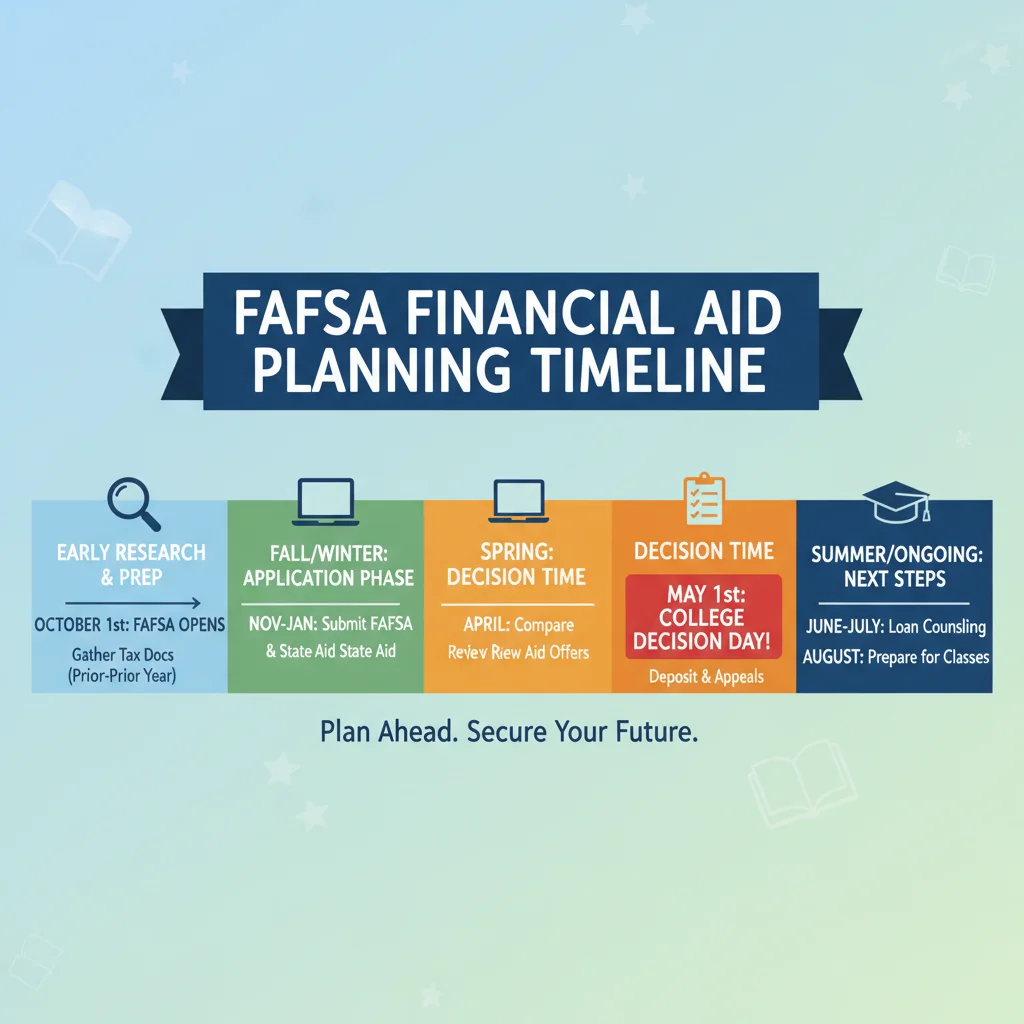
It’s also highly recommended to create a Federal Student Aid (FSA) ID well in advance. Both the student and one parent (if the student is dependent) will need an FSA ID to access and sign the FAFSA electronically. This ID serves as your legal signature and grants you access to federal student aid websites. Creating it early ensures there are no last-minute delays.
Finally, utilize the resources available. Your high school guidance counselor, college financial aid offices, and the Federal Student Aid website (studentaid.gov) are invaluable sources of information and assistance. Don’t hesitate to reach out with questions or for help navigating the new process. Proactive planning and timely submission are your best strategies for securing the financial aid you need for college.
Conclusion: Navigating the Future of Financial Aid with FAFSA 2026 Updates
The FAFSA 2026 Updates represent a significant overhaul of the federal financial aid system, with the overarching goal of simplifying the application process and expanding access to higher education. From the introduction of the Student Aid Index (SAI) to broadened Pell Grant eligibility and a more streamlined application, these changes are designed to benefit a wider range of students and families.
While the transition may require some adjustment, the long-term benefits of these reforms are promising. Students from low-income backgrounds are particularly poised to gain from the expanded Pell Grant access and a more equitable assessment of financial need. The simplification of the form itself should reduce barriers and encourage more eligible students to apply for the aid they deserve.
For families and students preparing for the 2026 academic year, the key takeaways are clear: stay informed, prepare early, and utilize all available resources. Understand the shift from EFC to SAI, familiarize yourself with the new terminology, and gather your financial documents well in advance of the application opening. The mandatory consent for IRS data retrieval will make the process more efficient, but accurate initial information remains vital.
The journey to college is an exciting one, and financial aid plays a critical role in making that dream a reality. By understanding and adapting to the new FAFSA guidelines, you can confidently navigate the application process and secure the financial support needed to achieve your educational goals. Embrace these changes as an opportunity to simplify your path to college affordability and unlock a brighter future.