Ethical AI for Social Good: Principles & Practices for US Organizations in 2026

In the rapidly evolving landscape of artificial intelligence, the conversation has shifted beyond mere technological capability to encompass a crucial, overarching theme: ethics. As we stand on the cusp of 2026, US organizations are increasingly recognizing that the true potential of AI lies not just in its power to innovate and optimize, but in its capacity to contribute positively to society. This is where the concept of Ethical AI Practices for social good comes into sharp focus. The imperative to develop and deploy AI systems that are fair, transparent, accountable, and beneficial to all stakeholders is no longer a niche concern but a fundamental requirement for sustainable growth and public trust.
The journey towards integrating Ethical AI Practices into the core operations of US organizations is multifaceted, involving a careful balance of technological advancement, regulatory compliance, and a deep understanding of societal impact. This comprehensive guide will delve into the foundational principles, practical frameworks, and real-world applications that define ethical AI for social good in the contemporary American context. We will explore how organizations can navigate the complexities of AI development to ensure their innovations serve humanity, foster inclusivity, and uphold democratic values.
The stakes are incredibly high. AI systems, if not carefully governed by robust Ethical AI Practices, have the potential to exacerbate existing inequalities, perpetuate biases, and erode privacy. Conversely, when designed with a clear commitment to social good, AI can be a powerful catalyst for progress, addressing some of the world’s most pressing challenges, from climate change and healthcare disparities to educational access and economic empowerment. For US organizations, embracing Ethical AI Practices is not just about mitigating risks; it’s about unlocking new opportunities for innovation that genuinely make a difference.
The Foundational Pillars of Ethical AI for Social Good
At the heart of any successful implementation of AI for social good are a set of core ethical principles. These principles serve as a moral compass, guiding developers, policymakers, and organizations in their pursuit of responsible AI. Understanding and internalizing these foundational pillars is the first step towards embedding robust Ethical AI Practices within any US organization.
1. Fairness and Non-Discrimination
One of the most critical aspects of Ethical AI Practices is ensuring fairness and preventing discrimination. AI algorithms learn from data, and if that data reflects historical or societal biases, the AI system will inevitably perpetuate and even amplify those biases. This can lead to unfair outcomes in areas such as hiring, lending, healthcare, and criminal justice. US organizations must commit to rigorous data auditing, bias detection, and mitigation strategies throughout the AI lifecycle. This includes using diverse and representative datasets, employing techniques to identify and correct algorithmic bias, and regularly assessing the impact of AI decisions on different demographic groups.
Achieving fairness is not a one-time task but an ongoing commitment. It requires a deep understanding of the societal context in which AI operates and a proactive approach to identifying and addressing potential sources of bias. Organizations must also consider the various definitions of fairness (e.g., individual fairness, group fairness) and choose the most appropriate metrics and interventions based on the specific application and its potential impact on vulnerable populations.
2. Transparency and Explainability
For AI systems to be trusted, their decision-making processes must be understandable to humans. This principle, often referred to as explainable AI (XAI), is a cornerstone of Ethical AI Practices. Users, regulators, and affected individuals need to comprehend how an AI system arrived at a particular conclusion, especially when those decisions have significant consequences. Opaque ‘black box’ models, while powerful, can foster distrust and make it difficult to identify and rectify errors or biases.
Transparency extends beyond just explainability; it also involves being open about the capabilities and limitations of AI systems, how they are trained, and what data they use. US organizations should strive to provide clear documentation, user-friendly interfaces that explain AI outputs, and mechanisms for users to challenge or seek clarification on AI-driven decisions. This level of openness builds confidence and empowers individuals, aligning with the broader goal of using AI for social good.
3. Accountability and Governance
Who is responsible when an AI system makes a mistake or causes harm? Establishing clear lines of accountability is paramount for effective Ethical AI Practices. Organizations must implement robust governance structures that define roles, responsibilities, and oversight mechanisms for the entire AI development and deployment process. This includes establishing ethical review boards, designating AI ethics officers, and creating channels for reporting and addressing ethical concerns.
Accountability also implies the ability to audit AI systems, trace their decisions, and hold individuals or entities responsible for their impact. This requires meticulous record-keeping, version control for models and data, and the implementation of robust monitoring systems. For US organizations, navigating the evolving regulatory landscape surrounding AI accountability will be crucial in 2026 and beyond, necessitating proactive engagement with policymakers and industry best practices.
4. Privacy and Data Security
AI systems are voracious consumers of data, making privacy and data security fundamental components of Ethical AI Practices. Protecting sensitive personal information from unauthorized access, use, or disclosure is not only a legal requirement but an ethical imperative. Organizations must adhere to stringent data protection regulations, such as GDPR and various state-level privacy laws in the US, and implement state-of-the-art cybersecurity measures.
Beyond compliance, ethical data practices involve minimizing data collection to only what is necessary, anonymizing or pseudonymizing data where possible, and ensuring individuals have control over their personal information. The responsible handling of data builds trust and prevents the misuse of AI for surveillance, manipulation, or discriminatory profiling, thereby safeguarding individual rights and promoting social well-being.
5. Human Oversight and Control
While AI can automate complex tasks and enhance decision-making, human judgment and oversight remain indispensable. Ethical AI Practices emphasize the importance of keeping humans in the loop, especially when AI systems are deployed in high-stakes environments. This means designing AI systems that augment human capabilities rather than replace them entirely, and ensuring that humans retain the ultimate authority to intervene, override, or refine AI decisions.
Human oversight also extends to understanding the limitations of AI, recognizing when an AI system might be operating outside its intended parameters, or when its outputs are unreliable. Training and educating human operators to effectively manage and interpret AI systems are crucial for maintaining control and preventing unintended consequences. This collaborative approach between humans and AI is essential for maximizing the social good while mitigating risks.
Frameworks and Methodologies for Implementing Ethical AI Practices in US Organizations
Translating ethical principles into actionable strategies requires robust frameworks and methodologies. US organizations looking to embed Ethical AI Practices effectively need more than just good intentions; they need structured approaches to guide their development and deployment processes. Several models and tools are emerging to assist in this endeavor.
1. AI Ethics Impact Assessments (AIEIA)
Similar to privacy impact assessments, an AI Ethics Impact Assessment (AIEIA) is a systematic process for identifying, evaluating, and mitigating the ethical risks and societal impacts of an AI system throughout its lifecycle. This proactive approach is a cornerstone of effective Ethical AI Practices. An AIEIA should consider potential biases, fairness implications, privacy risks, issues of transparency, and the broader societal consequences of the AI’s deployment.
Conducting an AIEIA involves engaging diverse stakeholders, including ethicists, legal experts, affected communities, and technical developers. The assessment should be iterative, starting early in the design phase and continuing through deployment and monitoring. The findings from an AIEIA can inform design choices, highlight areas for further mitigation, and provide a documented record of an organization’s commitment to responsible AI.
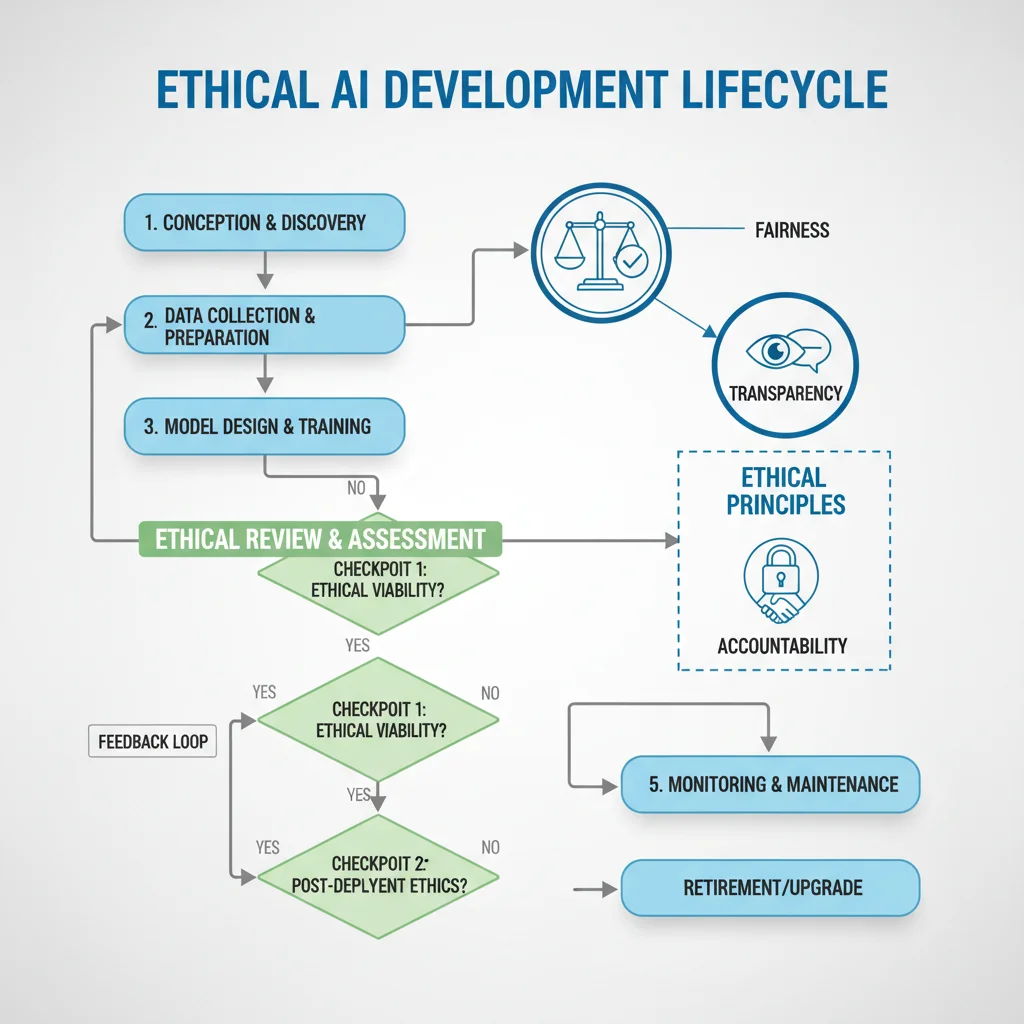
2. Ethical AI Review Boards and Committees
Many leading US organizations are establishing dedicated AI ethics review boards or committees. These interdisciplinary bodies are tasked with providing oversight, guidance, and approval for AI projects, ensuring they align with the organization’s Ethical AI Practices and broader values. Such boards typically comprise experts from various fields, including technology, law, ethics, social sciences, and relevant domain specialists.
The role of an ethical AI review board is to critically evaluate AI proposals, assess potential risks and benefits, and offer recommendations for ethical design and deployment. They serve as a crucial check and balance, preventing purely technical considerations from overshadowing ethical imperatives. For these boards to be effective, they must have real authority, independence, and access to all necessary information.
3. AI Ethics Guidelines and Codes of Conduct
To standardize Ethical AI Practices across an organization, developing clear internal guidelines and codes of conduct is essential. These documents articulate the organization’s stance on AI ethics, define expected behaviors for employees involved in AI development, and provide practical advice on how to apply ethical principles in day-to-day work. They can cover topics such as data handling, bias mitigation, transparency requirements, and the responsible use of AI outputs.
These guidelines should be regularly reviewed and updated to reflect technological advancements, evolving societal expectations, and new regulatory requirements. Effective implementation requires comprehensive training programs to ensure all relevant personnel are aware of and understand their ethical responsibilities when working with AI.
4. ‘Privacy by Design’ and ‘Ethics by Design’
Integrating ethical considerations from the very outset of the AI development process is a powerful strategy. ‘Privacy by Design’ and ‘Ethics by Design’ are methodologies that advocate for embedding privacy and ethical safeguards into the fundamental architecture and design of AI systems, rather than treating them as afterthoughts. This proactive approach minimizes risks and ensures that ethical considerations are not merely reactive fixes but integral components of the AI’s functionality.
For US organizations, this means considering the ethical implications of data collection, algorithm design, model training, and deployment strategies at every stage. It involves asking critical questions early on: What are the potential negative impacts? How can fairness be built in? How can transparency be maximized? This approach fosters a culture where Ethical AI Practices are an inherent part of innovation.
Challenges and Opportunities for US Organizations in 2026
While the commitment to Ethical AI Practices is growing, US organizations face several challenges in their implementation. However, these challenges also present significant opportunities for leadership and differentiation.
Challenges:
- Regulatory Uncertainty: The US regulatory landscape for AI is still evolving, with a patchwork of state and federal initiatives. This uncertainty can make it difficult for organizations to ensure compliance and plan long-term strategies for Ethical AI Practices.
- Technical Complexity of Bias Mitigation: Detecting and mitigating complex biases in large datasets and sophisticated AI models is technically challenging and often requires specialized expertise and advanced tools.
- Resource Constraints: Implementing comprehensive Ethical AI Practices requires significant investment in personnel (ethicists, legal experts, specialized engineers), tools, and training, which can be a barrier for smaller organizations.
- Defining ‘Social Good’: The concept of ‘social good’ can be subjective and context-dependent. Reaching consensus on what constitutes a positive societal impact and how to measure it can be challenging, especially for AI systems operating across diverse communities.
- Talent Gap: There is a growing demand for professionals with expertise in AI ethics, responsible AI governance, and interdisciplinary skills that bridge technology and humanities. This talent gap can hinder the effective implementation of Ethical AI Practices.
Opportunities:
- Enhanced Public Trust and Brand Reputation: Organizations demonstrating strong Ethical AI Practices can build greater trust with consumers, partners, and employees, enhancing their brand reputation and competitive advantage.
- Innovation and New Markets: Developing ethical AI solutions can open up new markets and create innovative products and services that address unmet social needs, contributing to both profit and purpose.
- Risk Mitigation and Legal Compliance: Proactive engagement with Ethical AI Practices helps organizations anticipate and mitigate legal, reputational, and financial risks associated with unethical AI deployment, potentially reducing future litigation and regulatory fines.
- Attracting and Retaining Talent: A strong commitment to ethical AI can make an organization more attractive to top talent, especially younger professionals who prioritize social impact and responsible technology.
- Shaping Policy and Standards: Organizations that lead in Ethical AI Practices can play a significant role in shaping industry standards, best practices, and future regulatory frameworks, positioning themselves as thought leaders.
Real-World Applications of Ethical AI for Social Good in the US
Beyond theoretical discussions, numerous US organizations are already demonstrating how Ethical AI Practices can be applied to create tangible social good. These examples highlight the transformative potential of AI when guided by ethical principles.
1. Healthcare: Improving Diagnostics and Access Equitably
In healthcare, AI is being used to analyze medical images, predict disease outbreaks, and personalize treatment plans. Ethical AI Practices in this sector focus on ensuring fairness in diagnostic tools across diverse patient populations, preventing algorithmic bias from exacerbating health disparities, and protecting patient data privacy. For example, AI models trained on ethnically diverse datasets are being developed to ensure accurate skin cancer detection for all skin types, addressing historical biases in medical imaging. Furthermore, AI-powered telemedicine platforms are being designed with accessibility and privacy at their core, expanding healthcare access to underserved rural communities while adhering to strict data protection standards.
2. Education: Personalized Learning and Bridging the Digital Divide
AI can revolutionize education by offering personalized learning experiences, identifying students at risk, and automating administrative tasks. Ethical AI Practices in education prioritize student privacy, prevent algorithmic discrimination in academic assessments, and ensure equitable access to AI-powered educational tools. US initiatives are exploring how AI can adapt content to individual learning styles without tracking excessive personal data, and how AI tutors can be deployed to provide supplementary support in under-resourced schools, ensuring that the benefits of advanced technology are shared broadly and fairly.

3. Environmental Sustainability: Climate Modeling and Resource Optimization
AI is a powerful tool for environmental protection, from optimizing energy grids and predicting climate patterns to managing waste and conserving biodiversity. Ethical AI Practices in this domain focus on ensuring that AI solutions are developed with minimal environmental footprint themselves (e.g., energy consumption of large models) and that their deployment does not inadvertently harm vulnerable communities or ecosystems. For instance, AI algorithms are being used to optimize logistics and reduce carbon emissions for delivery services, with transparent reporting on their environmental impact and careful consideration of job displacement effects in relevant sectors.
4. Public Safety and Justice: Enhancing Efficiency Responsibly
While the use of AI in public safety and justice is often fraught with ethical concerns, careful application guided by strong Ethical AI Practices can yield positive outcomes. This includes using AI for predictive policing without perpetuating racial bias, optimizing emergency response, and improving forensic analysis. The focus here is on strict oversight, transparency regarding AI’s limitations, and robust mechanisms for human review and intervention to prevent wrongful accusations or discriminatory enforcement. Organizations are actively working on AI systems that can help allocate resources more efficiently to emergency services, ensuring that these tools are rigorously tested for fairness and accountability.
5. Economic Empowerment: Fair Access to Opportunity
AI has the potential to democratize access to economic opportunities, such as job matching, financial services, and entrepreneurial support. Ethical AI Practices are crucial to ensure these systems do not perpetuate or create new forms of economic inequality. This involves designing AI-powered hiring platforms that are free from gender or racial bias, developing credit scoring models that consider alternative data responsibly for underserved populations, and creating AI tools that support small businesses in marginalized communities. The goal is to use AI to expand access and create a more inclusive economy, rather than reinforcing existing power structures.
The Future of Ethical AI Practices in US Organizations Beyond 2026
Looking beyond 2026, the landscape of Ethical AI Practices will continue to evolve. As AI becomes more sophisticated and integrated into every facet of life, the demands on organizations to act responsibly will only intensify. Several trends are likely to shape this future:
- Increased Regulatory Convergence: While the US currently has a fragmented regulatory approach, there is a growing push towards more comprehensive federal guidelines for AI ethics and governance. This will provide greater clarity for organizations but also necessitate stricter adherence to compliance standards.
- Standardization and Certification: We can expect to see the emergence of widely accepted industry standards and possibly even certification programs for ethical AI, similar to ISO standards for quality management. This will help organizations demonstrate their commitment to responsible AI.
- AI for AI Ethics: Paradoxically, AI itself will likely play a more significant role in monitoring and enforcing ethical AI. AI-powered tools will be developed to detect bias, ensure transparency, and audit the performance of other AI systems.
- Global Collaboration on AI Ethics: Given the transnational nature of AI, international cooperation on ethical guidelines and best practices will become increasingly important. US organizations will need to engage with global frameworks to ensure their AI systems are ethically sound across borders.
- Emphasis on Human-Centric AI: The focus will increasingly shift towards designing AI systems that are truly human-centric, prioritizing human well-being, autonomy, and societal flourishing. This will require a deeper integration of social sciences and humanities perspectives into AI development.
Conclusion: A Call to Action for Responsible AI Leadership
The year 2026 marks a pivotal moment for Ethical AI Practices within US organizations. The opportunity to harness AI for profound social good is immense, but it comes with an equally profound responsibility. By embracing the foundational principles of fairness, transparency, accountability, privacy, and human oversight, and by implementing robust frameworks like AI Ethics Impact Assessments and review boards, organizations can navigate the complexities of AI development with integrity and purpose.
The challenges are real, but the opportunities for innovation, trust-building, and positive societal impact are even greater. US organizations that proactively embed Ethical AI Practices into their core strategies will not only mitigate risks but will emerge as leaders in the global AI landscape, demonstrating that technological advancement and social responsibility are not mutually exclusive but deeply intertwined. The future of AI for social good depends on the collective commitment of every organization to build a more equitable, transparent, and beneficial AI-powered world.
It is a call to action for every leader, developer, and policymaker to prioritize ethics alongside innovation, ensuring that the AI revolution serves all of humanity. The time to act on Ethical AI Practices is now, laying the groundwork for a future where technology truly elevates the human experience.