Future of Work 2026: Automation’s Economic Impact on Industries
The landscape of employment is in a constant state of flux, driven by technological advancements and evolving economic paradigms. As we hurtle towards 2026, the discussion around the future work automation impact intensifies, particularly concerning its profound economic implications across various industries. Automation, once a distant concept relegated to science fiction, has become an undeniable force, reshaping job roles, demanding new skill sets, and fundamentally altering how businesses operate. This comprehensive analysis will delve into the anticipated economic shifts by 2026, focusing on three pivotal sectors: manufacturing, healthcare, and finance.
The integration of automation technologies, from artificial intelligence (AI) and machine learning (ML) to robotics and advanced analytics, is not merely about replacing human labor. It’s about augmenting human capabilities, creating efficiencies, and unlocking unprecedented levels of productivity. However, this transformative wave also brings with it challenges, including the need for workforce reskilling, ethical considerations, and the imperative for businesses to adapt or risk obsolescence. Understanding these dynamics is crucial for policymakers, educators, business leaders, and individuals preparing for the future of work.
Our journey into the future work automation landscape will explore how these technologies are specifically influencing each chosen industry, examining both the opportunities they present and the obstacles they create. We will analyze the economic drivers behind automation adoption, the types of jobs most affected, and the strategies being employed to navigate this complex transition. The goal is to provide a clear, insightful perspective on what 2026 holds for the global workforce and economy.
The Economic Imperative of Automation: Why Now?
The push for automation isn’t a whimsical trend; it’s an economic imperative. Businesses worldwide are grappling with increasing global competition, rising labor costs, and the need for higher productivity and precision. Automation offers a compelling solution to these challenges, promising enhanced efficiency, reduced operational expenses, and improved quality control. By 2026, these pressures will only intensify, making the adoption of automation strategies non-negotiable for many sectors.
Increased Productivity and Efficiency
One of the primary economic benefits of automation is its ability to significantly boost productivity and efficiency. Machines can operate continuously without breaks, perform repetitive tasks with unwavering accuracy, and process vast amounts of data far quicker than humans. This translates into faster production cycles, higher output, and ultimately, greater profitability for businesses. In manufacturing, automated assembly lines can produce goods at a rate unimaginable a few decades ago. In finance, AI algorithms can analyze market trends and execute trades in milliseconds. In healthcare, robotic surgery systems can perform complex procedures with unparalleled precision.
Cost Reduction and Resource Optimization
Beyond productivity, automation also offers substantial cost reduction. While the initial investment in automation technology can be significant, the long-term savings on labor costs, reduced waste, and optimized resource allocation often outweigh the upfront expenditure. Companies can reallocate human capital to more complex, creative, and strategic roles, where human judgment and problem-solving skills are indispensable. Furthermore, automation can minimize errors, leading to fewer reworks and warranty claims, further contributing to cost savings.
Enhanced Quality and Consistency
Human error is an inevitable part of any manual process. Automation, however, can perform tasks with near-perfect consistency and accuracy, leading to a significant improvement in product or service quality. This is particularly critical in industries like manufacturing, where defects can lead to costly recalls, and in healthcare, where precision can be a matter of life and death. The consistent output of automated systems builds trust with customers and strengthens brand reputation, which are invaluable economic assets.
Addressing Labor Shortages and Demographic Shifts
Many developed economies face aging populations and declining birth rates, leading to persistent labor shortages in various sectors. Automation provides a viable solution to bridge this gap, allowing businesses to maintain production levels and service quality even with a smaller human workforce. This demographic shift makes the future work automation integration not just an option, but a necessity for economic stability and growth.
Manufacturing in 2026: The Rise of Smart Factories
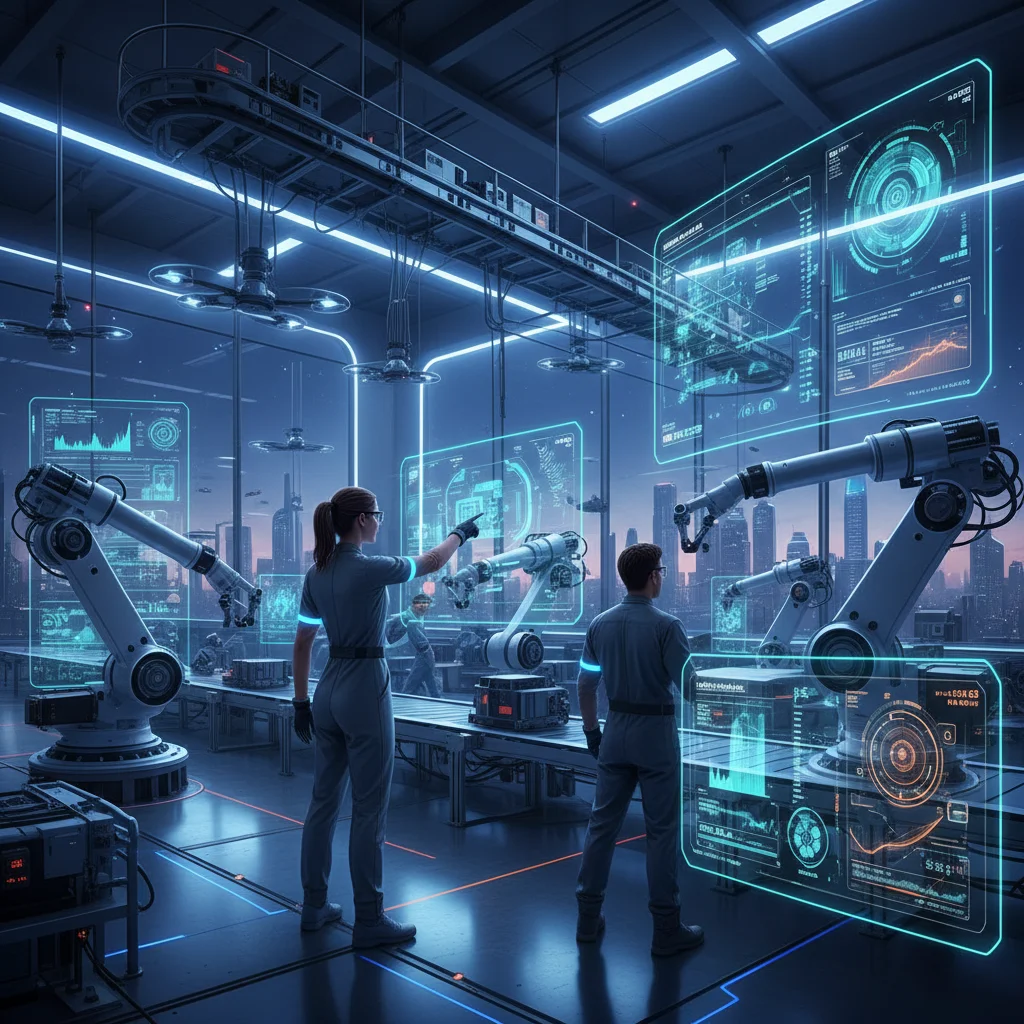
The manufacturing sector has historically been at the forefront of automation, and by 2026, it will be almost unrecognizable from its past. The concept of the ‘smart factory’ will be mainstream, characterized by highly integrated, interconnected, and intelligent systems. This evolution will have profound economic consequences, affecting everything from supply chains to employment structures.
Impact on Job Roles and Skill Requirements
The most immediate and visible impact of automation in manufacturing is on job roles. Repetitive, physically demanding, and hazardous tasks are increasingly being taken over by robots and automated machinery. While this may lead to a reduction in certain manual labor positions, it simultaneously creates a demand for new, higher-skilled roles. These include robotics engineers, data scientists, AI specialists, and technicians capable of operating, maintaining, and programming sophisticated automated systems. The focus shifts from manual dexterity to cognitive skills, problem-solving, and critical thinking.
Economically, this means a significant investment in workforce reskilling and upskilling programs will be essential. Governments and businesses must collaborate to provide training that equips the existing workforce with the necessary competencies for the jobs of the future. Those who adapt will thrive, while those who don’t may face significant employment challenges. The economic health of manufacturing regions will depend heavily on their ability to manage this transition effectively.
Optimized Supply Chains and Customization
Automation will revolutionize manufacturing supply chains by 2026. AI-powered predictive analytics will enable more accurate demand forecasting, minimizing inventory costs and reducing waste. Robotic process automation (RPA) will streamline logistics, optimize warehouse operations, and accelerate delivery times. This leads to more agile and resilient supply chains, better equipped to handle disruptions and respond quickly to market changes.
Furthermore, automation facilitates mass customization. With flexible robotic systems and advanced manufacturing techniques like 3D printing, companies can produce highly personalized products at scale and at a lower cost. This opens up new market opportunities and allows businesses to cater to niche demands, creating economic value through tailored offerings.
Increased Competitiveness and Global Shifts
Nations and companies that embrace smart factory technologies will gain a significant competitive edge. Access to advanced automation can level the playing field, allowing smaller businesses to compete with larger enterprises. It can also lead to a resurgence of manufacturing in developed countries, as the cost advantages of cheap labor in other regions become less significant compared to the efficiency and quality offered by automation. This could trigger shifts in global economic power and trade balances, making the future work automation narrative a central theme in international economic discussions.
Healthcare in 2026: Precision, Efficiency, and Accessibility
The healthcare sector, traditionally slower to adopt radical technological changes, is now experiencing an accelerated transformation driven by automation. By 2026, AI, robotics, and data analytics will be integral to diagnostics, treatment, and administrative processes, leading to a more efficient, precise, and potentially more accessible healthcare system.
Revolutionizing Diagnostics and Treatment
AI algorithms are already proving superior to humans in tasks like analyzing medical images (X-rays, MRIs) for signs of disease, often detecting abnormalities imperceptible to the human eye. By 2026, AI-powered diagnostic tools will be widespread, leading to earlier and more accurate disease detection, which is crucial for effective treatment and improved patient outcomes. This has immense economic value, reducing the burden of advanced-stage diseases and lowering long-term healthcare costs.

Robotics will also play a larger role in surgery, offering enhanced precision, minimizing invasiveness, and speeding up patient recovery times. Automated drug discovery platforms, powered by AI, will accelerate the development of new treatments and vaccines, bringing life-saving innovations to market faster. This translates into significant economic returns through improved public health and pharmaceutical breakthroughs.
Enhancing Operational Efficiency and Patient Care
Beyond clinical applications, automation will streamline many administrative and operational tasks in healthcare. Robotic Process Automation (RPA) can handle appointment scheduling, insurance claims processing, and medical record management, freeing up healthcare professionals to focus more on direct patient care. Virtual assistants and chatbots can provide initial patient triage, answer common questions, and manage follow-ups, improving patient engagement and reducing the workload on human staff.
The economic impact here is substantial: reduced administrative overheads, faster service delivery, and a more personalized patient experience. This allows healthcare providers to serve more patients with existing resources, addressing the growing demand for healthcare services in many regions. The future work automation in healthcare is about optimizing every facet of the system.
Ethical Considerations and Job Evolution
While automation brings immense benefits to healthcare, it also raises critical ethical questions concerning data privacy, algorithmic bias, and accountability for AI-driven decisions. Striking a balance between technological advancement and ethical oversight will be paramount. In terms of employment, healthcare professionals will need to adapt to working alongside AI and robotics, developing skills in data interpretation, human-robot collaboration, and empathetic patient communication, where the human touch remains irreplaceable. The economic value of these uniquely human skills will only increase.
Finance in 2026: Algorithmic Trading and Personalized Services
The financial services industry has been an early adopter of digital technologies, and by 2026, automation will have fundamentally reshaped its operational core, customer interactions, and strategic decision-making. From algorithmic trading to AI-powered financial advisors, the sector is experiencing a rapid transformation.
Algorithmic Trading and Risk Management
Algorithmic trading, already prevalent, will become even more sophisticated by 2026. AI and machine learning will enable algorithms to analyze vast datasets, identify complex patterns, and execute trades at speeds and scales impossible for humans. This leads to more efficient markets, potentially higher returns, and reduced transaction costs. However, it also introduces new forms of systemic risk, requiring advanced AI-powered risk management systems to monitor and mitigate potential market instabilities.
In risk management, automation will allow financial institutions to continuously monitor for fraud, assess creditworthiness with greater accuracy, and comply with increasingly complex regulatory requirements. This reduces financial losses, enhances trust, and strengthens the overall stability of the financial system, generating significant economic benefits.
Personalized Financial Advice and Robo-Advisors
Robo-advisors, automated platforms that provide financial advice and manage investments, will become more sophisticated and widely adopted. Powered by AI, they can analyze individual financial situations, risk tolerance, and goals to provide personalized recommendations. This democratizes access to financial planning, making it affordable for a broader segment of the population, which traditionally lacked access to such services. The economic impact is a more financially literate and secure populace, leading to greater wealth accumulation and economic stability.

Human financial advisors will not disappear but will evolve into roles focusing on complex financial planning, relationship management, and addressing unique client needs that require empathy and nuanced understanding. The future work automation in finance emphasizes a hybrid model of human and machine collaboration.
Operational Efficiency and Cybersecurity
Back-office operations in finance, traditionally labor-intensive, will be heavily automated by 2026. RPA will handle data entry, reconciliation, and compliance checks, significantly reducing operational costs and improving accuracy. Blockchain technology, often coupled with automation, will further enhance transparency and security in transactions, reducing the risk of fraud and cyberattacks.
However, the increased reliance on technology also means a heightened focus on cybersecurity. Financial institutions will need to invest heavily in AI-powered security systems to protect sensitive data and financial assets from increasingly sophisticated cyber threats. The economic cost of breaches can be devastating, making robust automated security solutions an absolute necessity.
Navigating the Transition: Strategies for the Future Work Automation
The economic shifts brought about by automation are undeniable, but they are not insurmountable. Navigating this transition successfully requires proactive strategies from governments, businesses, and individuals alike. The goal is to harness the benefits of automation while mitigating its negative consequences.
Government Policies and Education Reform
Governments have a crucial role to play in shaping the future work automation landscape. This includes investing in education and vocational training programs that focus on STEM fields (Science, Technology, Engineering, and Mathematics), digital literacy, and critical soft skills like creativity, emotional intelligence, and complex problem-solving. Policies that support lifelong learning and provide safety nets for displaced workers will be essential.
Furthermore, governments need to foster an environment conducive to innovation and technological adoption while also addressing ethical concerns and ensuring fair competition. Tax incentives for companies investing in workforce upskilling and research and development in automation can accelerate positive economic outcomes.
Business Adaptation and Innovation
For businesses, the imperative is clear: embrace automation, but do so strategically. This means not just implementing new technologies but also rethinking organizational structures, fostering a culture of continuous learning, and prioritizing employee development. Companies that view automation as an opportunity to augment their workforce rather than simply replace it will be more successful.
Investing in R&D, collaborating with academic institutions, and exploring new business models that leverage automation will be key to maintaining competitiveness. Businesses must also be prepared to manage the social impact of automation, ensuring a just transition for their workforce and contributing positively to their communities.
Individual Resilience and Skill Development
Individuals, too, must take ownership of their career development in the face of automation. This involves cultivating a mindset of continuous learning, identifying in-demand skills, and actively seeking out training and educational opportunities. Skills that are uniquely human, such as creativity, critical thinking, emotional intelligence, and complex communication, will become increasingly valuable.
Adaptability and resilience will be crucial. The idea of a single, lifelong career path is becoming outdated. Instead, individuals should prepare for a future where career transitions, reskilling, and even starting new ventures are common. The economic well-being of individuals will depend on their ability to evolve with the changing demands of the job market.
Conclusion: A Future of Collaborative Automation
By 2026, the future work automation will be less about machines replacing humans entirely and more about intelligent collaboration between them. While specific tasks and job roles will undoubtedly be automated, the overall economic impact is likely to be a net positive if managed thoughtfully. Productivity gains, new industries, and higher-skilled jobs will emerge, driving economic growth and improving living standards.
The manufacturing sector will continue its journey towards smart factories, characterized by efficiency and customization. Healthcare will see unprecedented precision in diagnostics and treatment, alongside streamlined operations. Finance will leverage AI for sophisticated trading, personalized advice, and robust risk management. Each sector will face its unique challenges and opportunities, but the overarching theme is adaptation and innovation.
The key to thriving in this automated future lies in proactive planning, continuous learning, and a collaborative approach involving governments, businesses, and individuals. By investing in education, fostering ethical technological development, and prioritizing human-centric automation, we can ensure that the economic benefits of this revolution are widely shared, leading to a more prosperous and equitable future for all.