Mastering 2026 Tax Brackets: Your Ultimate Guide to Personal Income Tax Savings
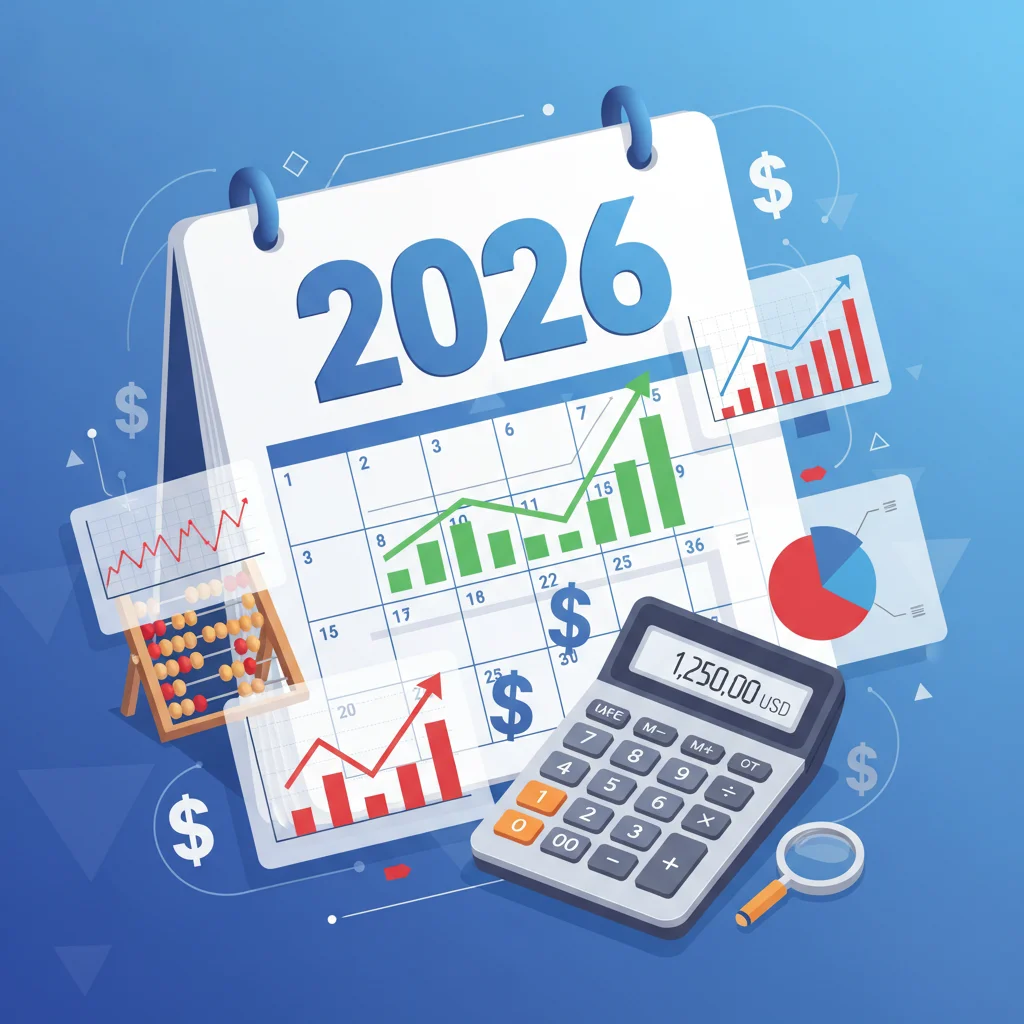
The landscape of personal finance is ever-evolving, and perhaps no aspect is as critical to long-term financial health as understanding and adapting to changes in tax law. As we look towards 2026, a significant shift in the federal income tax structure is on the horizon. The Tax Cuts and Jobs Act (TCJA) of 2017, which brought about substantial changes to individual income tax rates and brackets, is set to expire at the end of 2025. This means that for the 2026 tax year, we will likely see a reversion to, or a modified version of, the pre-TCJA tax code, impacting millions of taxpayers across the United States. Understanding these impending changes to the 2026 tax brackets is not just about compliance; it’s about strategic financial planning and optimizing your personal income tax savings.
For many, the idea of tax changes evokes a sense of dread or confusion. However, with proper preparation and a proactive approach, these changes can be navigated effectively, potentially even leading to new opportunities for savings. This comprehensive guide is designed to demystify the upcoming alterations to the 2026 tax brackets and equip you with five actionable strategies to optimize your personal income tax savings. We’ll delve into what these changes might mean for your income, investments, and overall financial strategy, ensuring you’re well-prepared for the tax year ahead.
The expiration of the TCJA provisions implies a return to higher individual income tax rates, a reduction or elimination of certain deductions, and potentially significant alterations to the standard deduction and personal exemptions. These shifts will undoubtedly affect various income levels differently, making personalized planning more crucial than ever. Whether you’re a high-income earner, a middle-class family, or just starting your career, understanding the nuances of the 2026 tax brackets will be paramount to safeguarding your financial future.
Let’s embark on this journey to understand the future of taxation and empower you with the knowledge to make informed decisions for your personal income tax savings.
Understanding the Impending Changes to 2026 Tax Brackets
Before we dive into strategies, it’s essential to grasp the fundamental changes expected for the 2026 tax brackets. The TCJA temporarily lowered individual income tax rates, increased the standard deduction, eliminated personal exemptions, and capped state and local tax (SALT) deductions, among other provisions. When these provisions sunset on December 31, 2025, the tax code is largely expected to revert to its pre-2018 form, albeit with adjustments for inflation.
What to Expect: Key Reversions
The most immediate and impactful change will likely be the individual income tax rates. The current seven tax brackets (10%, 12%, 22%, 24%, 32%, 35%, and 37%) are expected to revert to the pre-TCJA rates, which were 10%, 15%, 25%, 28%, 33%, 35%, and 39.6%. This means many taxpayers could find themselves in higher tax brackets, leading to a greater portion of their income being taxed at a higher rate.
Another significant change will be the standard deduction. The TCJA nearly doubled the standard deduction, simplifying tax filing for many. Post-2025, the standard deduction amounts are projected to decrease significantly, potentially pushing more taxpayers to itemize deductions if their itemized totals exceed the new, lower standard deduction. Concurrently, personal exemptions, which were eliminated under the TCJA, are expected to return. These exemptions allowed taxpayers to reduce their taxable income by a specific amount for themselves, their spouse, and each dependent, offering a valuable deduction for larger families.
The state and local tax (SALT) deduction cap, currently limited to $10,000, is also slated for expiration. This cap has disproportionately affected residents in high-tax states. Its removal could provide substantial relief for many, allowing them to deduct the full amount of their state and local taxes paid, thereby reducing their federal taxable income. However, the political landscape surrounding the SALT cap is complex, and its future remains subject to potential legislative action.
Furthermore, changes to the Child Tax Credit (CTC) could also be on the horizon. While the TCJA expanded the CTC, making it more generous and partially refundable, its provisions are also set to expire. This could mean a reduction in the credit amount and stricter eligibility requirements, impacting families with children.
Understanding these shifts is the first step in preparing for the 2026 tax brackets. It’s not just about higher rates; it’s about a fundamental restructuring of how taxable income is calculated and how deductions and credits are applied. Staying informed about legislative developments between now and the end of 2025 will be crucial, as Congress could still intervene to modify or extend certain provisions.
Strategy 1: Proactive Income Shifting and Timing
One of the most effective strategies to optimize your personal income tax savings under the new 2026 tax brackets involves proactive income shifting and timing. This strategy is particularly relevant if you anticipate being in a higher tax bracket in 2026 compared to 2025, or vice-versa.
Accelerating Income and Deferring Deductions (Pre-2026)
If you expect to be in a lower tax bracket in 2025 than in 2026, consider accelerating income into 2025. This could include:
- Bonus Payments: If you have control over when you receive a bonus, try to have it paid out in 2025.
- Capital Gains Realization: If you’re planning to sell appreciated assets, realizing capital gains in 2025 could be beneficial if capital gains rates are expected to increase in 2026.
- IRA/401(k) Distributions: If you’re nearing retirement and have flexibility, consider taking distributions from traditional IRAs or 401(k)s in 2025, especially if you anticipate higher marginal tax rates in 2026.
- Roth Conversions: Performing a Roth conversion in 2025, while tax rates might be lower, can be a powerful move. You pay taxes on the converted amount in 2025, but all future qualified distributions from the Roth IRA are tax-free, potentially saving you significantly if rates rise.
Conversely, deferring deductions into 2026 could be advantageous if you expect to be in a higher tax bracket then. For instance, if you have control over charitable contributions, or can delay certain medical expenses, pushing these into 2026 might yield a greater tax benefit.
Deferring Income and Accelerating Deductions (Post-2026)
If the opposite is true, and you anticipate being in a lower tax bracket in 2026, then deferring income into 2026 and accelerating deductions into 2025 would be the preferred approach. This might involve:
- Delaying Bonus Payments or Commissions: If possible, arrange for income to be paid in early 2026.
- Postponing Asset Sales: If you expect capital gains rates to decrease, hold off on selling appreciated assets until 2026.
- Maximizing 2025 Deductions: Prepay deductible expenses, such as property taxes (if not subject to the SALT cap), or make larger charitable contributions in 2025 to offset higher income in that year.
This strategy requires careful planning and a clear understanding of your projected income and expenses for both years. Consulting with a financial advisor or tax professional can help you model these scenarios and make the most informed decisions.
Strategy 2: Maximizing Retirement Account Contributions
Maximizing contributions to tax-advantaged retirement accounts remains a cornerstone of effective tax planning, and it becomes even more critical with the impending changes to the 2026 tax brackets. These accounts not only help you save for retirement but also offer significant tax benefits that can reduce your current taxable income.
Traditional IRAs and 401(k)s
Contributions to traditional IRAs and 401(k)s are typically made pre-tax, meaning they reduce your taxable income in the year the contribution is made. If you anticipate being in a higher tax bracket in 2026, maximizing your contributions in 2025 can be particularly beneficial. By reducing your taxable income in a potentially lower-tax year, you effectively defer taxes until retirement, when you might be in a lower tax bracket. The money grows tax-deferred, and you only pay taxes on withdrawals in retirement.
Ensure you contribute at least enough to get any employer match, as this is essentially free money. Beyond that, aim to contribute the maximum allowable amount to truly optimize your personal income tax savings. For 2025, be aware of the contribution limits for both 401(k)s and IRAs, including catch-up contributions for those aged 50 and over.
Roth IRAs and Roth 401(k)s
Roth accounts operate differently. Contributions are made with after-tax dollars, meaning they do not provide an upfront tax deduction. However, qualified withdrawals in retirement are entirely tax-free. This makes Roth accounts incredibly powerful if you expect tax rates to be higher in the future, which is a strong possibility with the 2026 tax brackets.
Consider contributing to a Roth IRA or Roth 401(k) if you believe you are currently in a relatively low tax bracket or if you expect your income to grow significantly in the future, pushing you into higher tax brackets during retirement. The tax-free growth and withdrawals can be a tremendous advantage. If your income exceeds the limits for direct Roth IRA contributions, explore the ‘backdoor Roth’ strategy, which involves contributing to a non-deductible traditional IRA and then converting it to a Roth IRA.
Health Savings Accounts (HSAs)
Often overlooked, Health Savings Accounts (HSAs) offer a triple tax advantage: tax-deductible contributions, tax-free growth, and tax-free withdrawals for qualified medical expenses. If you are enrolled in a high-deductible health plan (HDHP), contributing to an HSA is a highly effective way to reduce your taxable income and save for future healthcare costs.
Maximizing your HSA contributions can significantly reduce your taxable income, especially given the expected changes in the 2026 tax brackets. The funds can be invested and grow tax-free, providing a powerful long-term savings vehicle. Many consider an HSA to be one of the most tax-advantaged accounts available, making it a crucial component of any tax optimization strategy.

Strategy 3: Strategic Use of Itemized Deductions and Credits
As the standard deduction is expected to decrease significantly with the return of pre-TCJA rules for the 2026 tax brackets, more taxpayers may find it advantageous to itemize deductions. Understanding and strategically utilizing itemized deductions and available tax credits will be crucial for optimizing personal income tax savings.
Revisiting Itemized Deductions
With the potential return of lower standard deduction amounts, it’s time to re-evaluate whether itemizing will benefit you. Key itemized deductions to consider include:
- Mortgage Interest: The deduction for home mortgage interest is a significant one for many homeowners.
- State and Local Taxes (SALT): If the $10,000 SALT cap expires, this deduction could become a major factor for those in high-tax states, allowing them to deduct the full amount of property, income, or sales taxes paid.
- Medical Expenses: You can deduct medical expenses exceeding a certain percentage of your adjusted gross income (AGI). This threshold might also revert to a higher level, so keep track of all medical costs.
- Charitable Contributions: Deductions for cash and non-cash contributions to qualified charities can significantly reduce taxable income. Consider ‘bunching’ charitable contributions – making two years’ worth of donations in one year to exceed the standard deduction in that year, and then taking the standard deduction in the alternate year.
It’s important to keep meticulous records of all potential deductible expenses throughout the year. Reviewing your past tax returns and consulting with a tax professional can help you determine if itemizing will be more beneficial than taking the standard deduction under the new 2026 tax brackets.
Leveraging Tax Credits
Tax credits are particularly valuable because they directly reduce your tax liability dollar-for-dollar, unlike deductions which only reduce your taxable income. Be aware of the various credits available, as some may be expanded or modified for 2026:
- Child Tax Credit (CTC): As mentioned, changes to the CTC are expected. Stay informed about the new eligibility requirements and credit amounts.
- Earned Income Tax Credit (EITC): This credit helps low-to moderate-income individuals and families.
- Education Credits: Credits like the American Opportunity Tax Credit and Lifetime Learning Credit can help offset educational expenses.
- Energy Efficiency Credits: Look for credits related to home energy improvements or the purchase of electric vehicles, which are often subject to periodic changes and extensions.
- Dependent Care Credit: If you pay for childcare, this credit can help reduce your tax burden.
Understanding which credits you qualify for and ensuring you meet all requirements is a key part of maximizing your personal income tax savings. Tax credits are a powerful tool to reduce your overall tax bill, especially in a year where tax rates might increase.
Strategy 4: Optimizing Investment Strategies for Tax Efficiency
The impending changes to the 2026 tax brackets will also have implications for your investment portfolio. A tax-efficient investment strategy can significantly impact your after-tax returns. This involves not only where you invest but also how you manage your gains and losses.
Tax-Loss Harvesting
Tax-loss harvesting is a strategy where you sell investments at a loss to offset capital gains and, potentially, a limited amount of ordinary income. If you have realized capital gains during the year, you can sell other investments at a loss to offset those gains. If your capital losses exceed your capital gains, you can deduct up to $3,000 of those losses against your ordinary income, and carry forward any remaining losses to future tax years.
This strategy becomes particularly valuable if capital gains tax rates are expected to increase with the 2026 tax brackets. By strategically harvesting losses in 2025, you can reduce your tax liability on gains realized in that year or carry them forward to offset future gains when rates might be higher. Remember to adhere to the wash-sale rule, which prevents you from buying a substantially identical security within 30 days before or after selling it at a loss.
Asset Location Strategy
Asset location refers to the practice of placing different types of investments into different types of accounts (taxable vs. tax-advantaged) to minimize taxes. For example:
- Tax-Efficient Investments in Taxable Accounts: Place investments that generate qualified dividends or long-term capital gains (which are taxed at lower rates) in taxable brokerage accounts. Examples include broad market index funds or ETFs.
- Tax-Inefficient Investments in Tax-Advantaged Accounts: Place investments that generate ordinary income, such as bonds (which pay interest taxed at ordinary income rates) or actively managed funds with high turnover (which generate frequent short-term capital gains), in tax-deferred accounts like 401(k)s or IRAs. This allows them to grow without annual taxation until withdrawal.
With potential higher ordinary income tax rates in 2026, shielding interest income and short-term capital gains within tax-advantaged accounts becomes even more important. Conversely, if long-term capital gains rates are expected to increase, realizing some gains in 2025 might be a prudent move.
Rebalancing and Reconsideration of Investment Vehicles
The changes to the 2026 tax brackets might also be a good time to rebalance your portfolio and reconsider your investment vehicles. For instance, if municipal bonds become more attractive due to higher ordinary income tax rates (as their interest is typically federal tax-exempt), you might consider increasing your allocation to them. Similarly, if you’re a high-income earner, certain tax-advantaged investments like annuities or certain real estate investments could offer enhanced benefits.
Always align your investment strategy with your financial goals and risk tolerance. Tax efficiency is one component, but it should not override sound investment principles. Consulting with a financial advisor who specializes in tax-aware investing can provide invaluable guidance.

Strategy 5: Professional Guidance and Ongoing Review
Navigating the complexities of the 2026 tax brackets and optimizing your personal income tax savings is not a one-time event. It requires ongoing attention, and perhaps the most critical strategy is to seek professional guidance and regularly review your financial plan.
The Value of a Qualified Tax Professional
Tax laws are intricate and constantly subject to change. A qualified tax professional, such as a Certified Public Accountant (CPA) or an Enrolled Agent (EA), possesses the expertise to interpret these laws and apply them to your unique financial situation. They can:
- Provide Personalized Advice: What works for one person may not work for another. A professional can assess your income, deductions, credits, and investment portfolio to create a tailored tax strategy.
- Identify Overlooked Opportunities: Tax laws contain numerous nuances, and a professional can often identify deductions or credits you might miss, leading to significant personal income tax savings.
- Assist with Projections: They can help you project your income and tax liability under the new 2026 tax brackets, allowing for proactive adjustments to your financial plan.
- Ensure Compliance: Avoiding errors and ensuring compliance with tax regulations is crucial to prevent penalties and audits.
- Stay Updated: Tax professionals are continually educated on the latest tax laws and legislative changes, ensuring your plan remains current and effective.
Even if you’ve always handled your own taxes, the impending changes make 2026 a prime year to consider professional assistance. The cost of a good tax advisor can often be offset by the savings they help you achieve.
Regular Financial Plan Review and Adjustment
Your financial situation is dynamic, and so are tax laws. What was optimal for 2025 might not be for 2026. Therefore, it’s essential to conduct regular reviews of your financial plan, ideally at least annually, and certainly in light of significant tax changes. During these reviews, consider:
- Income Changes: Has your income significantly increased or decreased?
- Life Events: Have there been major life events like marriage, divorce, birth of a child, home purchase, or retirement? These all have significant tax implications.
- Investment Performance: How have your investments performed, and do they align with your tax-efficiency goals?
- Legislative Updates: Stay informed about any new tax legislation or extensions of existing provisions that could impact the 2026 tax brackets.
By regularly reviewing and adjusting your plan, perhaps in conjunction with your tax professional and financial advisor, you can ensure your strategies for optimizing personal income tax savings remain effective and aligned with your evolving financial goals. This proactive approach will empower you to navigate the 2026 tax landscape with confidence and maximize your financial well-being.
Conclusion: Preparing for the 2026 Tax Brackets
The expiration of key provisions from the Tax Cuts and Jobs Act at the end of 2025 marks a significant turning point for individual income taxation. The return to a potentially higher-rate, lower-deduction environment under the 2026 tax brackets necessitates a proactive and strategic approach to personal financial planning. This isn’t just about understanding the changes; it’s about implementing intelligent strategies to mitigate their impact and even uncover new opportunities for savings.
We’ve explored five crucial strategies to prepare you for this shift:
- Proactive Income Shifting and Timing: Strategically accelerating or deferring income and deductions between 2025 and 2026 to take advantage of differing tax rate environments.
- Maximizing Retirement Account Contributions: Fully utilizing traditional and Roth IRAs, 401(k)s, and HSAs to reduce current taxable income and benefit from tax-deferred or tax-free growth.
- Strategic Use of Itemized Deductions and Credits: Re-evaluating the benefit of itemizing deductions, especially if the standard deduction decreases, and leveraging all available tax credits to directly reduce your tax liability.
- Optimizing Investment Strategies for Tax Efficiency: Implementing tax-loss harvesting and smart asset location to minimize taxes on investment gains and income.
- Professional Guidance and Ongoing Review: Engaging with qualified tax professionals for personalized advice and regularly reviewing your financial plan to adapt to legislative changes and personal circumstances.
The journey to optimizing your personal income tax savings in the face of the 2026 tax brackets requires diligence, foresight, and often, expert assistance. By taking these steps now, you can transform what might seem like a daunting challenge into a strategic advantage, ensuring your financial plan remains robust and resilient. Don’t wait until the last minute; start planning today to secure your financial future and maximize your tax efficiency for 2026 and beyond.