SNAP Benefits 2026: Your Guide to Maximizing Food Assistance & EBT Card Strategies
SNAP Benefits 2026: A Comprehensive Guide to Maximizing Your Food Assistance with New EBT Card Strategies
For millions of Americans, the Supplemental Nutrition Assistance Program (SNAP), often referred to as food stamps, serves as a vital lifeline, ensuring access to nutritious food. As we look ahead to 2026, understanding the nuances of SNAP Benefits 2026 becomes crucial for current recipients and those who may become eligible. This comprehensive guide will delve into everything you need to know, from eligibility requirements and the application process to effective strategies for maximizing your food assistance and navigating potential changes.
The landscape of government assistance programs is ever-evolving. Policy adjustments, economic shifts, and technological advancements can all impact how SNAP benefits are administered and utilized. Our aim is to provide you with a clear, actionable roadmap to ensure you are well-prepared and informed about SNAP Benefits 2026.
Understanding SNAP: The Foundation of Food Security
The Supplemental Nutrition Assistance Program (SNAP) is the largest federal nutrition assistance program. It provides benefits to eligible low-income individuals and families via an Electronic Benefits Transfer (EBT) card, which functions much like a debit card. These benefits can be used to purchase eligible food items at authorized retail food stores. The program’s primary goal is to alleviate food insecurity and improve the nutritional well-being of participants.
Historically, SNAP has played a critical role in reducing poverty and improving health outcomes. Its effectiveness is constantly evaluated, leading to periodic adjustments in benefit levels, eligibility criteria, and administrative procedures. Understanding these foundational aspects is the first step in successfully navigating SNAP Benefits 2026.
Who is SNAP For?
SNAP is designed for individuals and families with low incomes who struggle to afford adequate food. While the specific eligibility criteria can vary slightly by state, the core requirements are federally mandated. These typically revolve around:
- Income Limits: Gross and net income must be below certain percentages of the federal poverty level.
- Household Size: The number of people in your household directly impacts income limits and benefit amounts.
- Assets: While many households are exempt from asset limits, some non-exempt assets may be considered.
- Work Requirements: Able-bodied adults without dependents (ABAWDs) may have work requirements, though these can be subject to waivers in certain circumstances.
- Citizenship/Immigration Status: Most recipients must be U.S. citizens or qualified non-citizens.
It’s important to remember that these are general guidelines. Each state’s SNAP agency will have precise figures and specific rules that apply to residents within its jurisdiction. Staying informed about your state’s particular requirements will be key for SNAP Benefits 2026.
Eligibility for SNAP Benefits in 2026: What to Expect
As we approach 2026, it’s natural to wonder if there will be significant changes to SNAP eligibility. While major overhauls are less common, minor adjustments to income thresholds, deductions, and work requirements can occur. These changes are often tied to the annual update of the federal poverty level and state-specific policy decisions.
Income Thresholds and Deductions
The primary determinant of SNAP eligibility is your household’s income. For most households, both gross income (before deductions) and net income (after certain allowable deductions) must fall below specific federal poverty guidelines. In 2026, these guidelines will likely be updated to reflect inflation and economic changes. Key deductions that can help lower your countable income include:
- Standard Deduction: A fixed amount based on household size.
- Earned Income Deduction: A percentage of your earned income.
- Dependent Care Deduction: Costs associated with childcare or care for other dependents.
- Medical Expense Deduction: For elderly or disabled household members with out-of-pocket medical costs exceeding a certain amount.
- Excess Shelter Deduction: Housing costs (rent/mortgage, utilities) that exceed a certain percentage of your income.
Understanding and accurately reporting all eligible deductions is crucial for determining your eligibility and maximizing your SNAP Benefits 2026. Even small changes in these deductions can impact your monthly allocation.
Asset Limits and Exemptions
For most households, asset limits are not a barrier to SNAP eligibility. However, some households, particularly those without elderly or disabled members, may be subject to asset tests. Exempt assets typically include your home, one vehicle, and certain retirement or educational savings accounts. Non-exempt assets might include cash on hand, bank accounts (above a certain threshold), and other liquid assets.
It’s important to check your state’s specific asset limits for 2026, as these can vary and may be adjusted. Many states have adopted broad-based categorical eligibility, which often waives asset limits for most households, simplifying the application process for SNAP Benefits 2026.
Work Requirements and Exemptions
Able-bodied adults without dependents (ABAWDs) often face work requirements, meaning they must work, participate in a work program, or volunteer for a certain number of hours per week to maintain eligibility. However, there are numerous exemptions and waivers, especially in areas with high unemployment. These requirements can also be temporarily suspended during economic downturns or public health emergencies.
If you are an ABAWD, it is vital to understand the specific work requirements and any available exemptions or waivers in your state for SNAP Benefits 2026. Non-compliance can lead to a loss of benefits.
The Application Process for SNAP Benefits in 2026
Applying for SNAP benefits can seem daunting, but understanding the steps involved can make the process smoother. While the specifics may vary by state, the general outline remains consistent.
Step-by-Step Application Guide
- Gather Documentation: Before you even begin, collect all necessary documents. This typically includes proof of identity (driver’s license, state ID), proof of residency (utility bill, lease agreement), income verification (pay stubs, tax returns, benefit letters), asset information (bank statements), and verification of expenses (rent receipts, utility bills, medical bills).
- Submit an Application: Most states offer multiple ways to apply: online through a state portal, in person at a local SNAP office, by mail, or sometimes by phone. Online applications are often the quickest and most convenient option.
- Interview: After submitting your application, you will typically be required to have an interview with a SNAP caseworker. This can be in person or over the phone. During the interview, the caseworker will review your application, ask questions to clarify information, and explain your rights and responsibilities.
- Verification: The caseworker will verify the information you provided. This might involve contacting employers, landlords, or other agencies. Be prepared to submit additional documents if requested.
- Decision: Once all information is verified, the state agency will make a decision on your eligibility. You will receive a written notice informing you whether your application has been approved or denied, and if approved, your monthly benefit amount.
It’s crucial to be honest and thorough throughout the application process. Providing accurate information ensures a quicker determination of your SNAP Benefits 2026 eligibility.
Tips for a Smooth Application
- Start Early: Don’t wait until you’re in a crisis to apply. The process can take several weeks.
- Be Organized: Keep all your documents in one place and be ready to provide them promptly.
- Communicate: Respond quickly to any requests for additional information from your caseworker.
- Ask Questions: If you don’t understand something, don’t hesitate to ask your caseworker for clarification.
- Keep Records: Maintain copies of your application, submitted documents, and any correspondence.
Being proactive and organized will significantly improve your experience when applying for SNAP Benefits 2026.
Your EBT Card in 2026: Usage and Best Practices
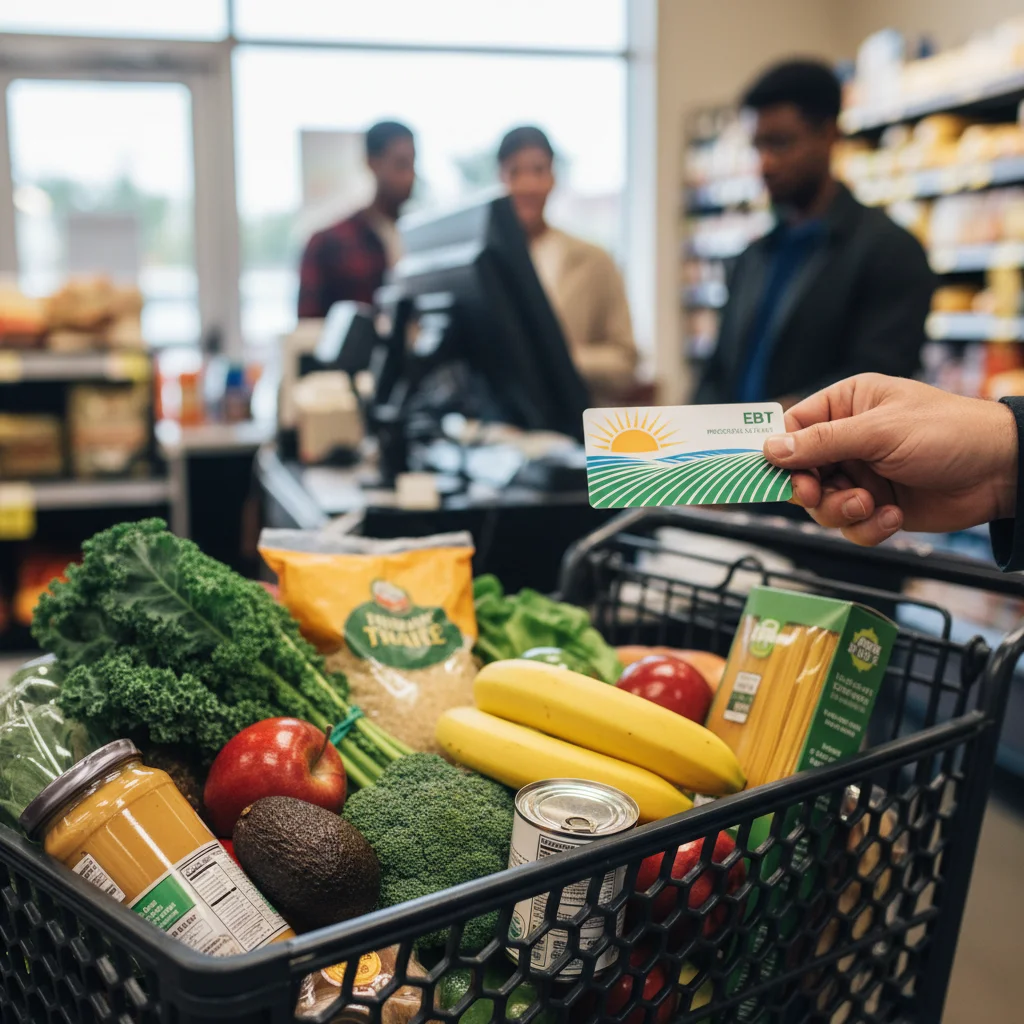
The Electronic Benefits Transfer (EBT) card is your gateway to accessing SNAP benefits. It works just like a debit card, allowing you to purchase eligible food items at authorized retailers. Understanding how to use your EBT card effectively and securely is paramount for managing your SNAP Benefits 2026.
How Your EBT Card Works
When your application for SNAP is approved, you will receive an EBT card in the mail. This card will be loaded with your monthly benefit amount. To use it:
- Swipe Your Card: At the checkout, swipe your EBT card through the card reader.
- Enter Your PIN: You will be prompted to enter your Personal Identification Number (PIN). Keep your PIN secret and never write it on your card.
- Select ‘EBT’ or ‘Food Stamps’: Some terminals may ask you to select the payment type.
- Check Your Receipt: Your receipt will show the remaining balance of your benefits.
It’s important to note that EBT cards can only be used for food items. They cannot be used to purchase alcohol, tobacco, hot prepared foods, or non-food items like pet food, soap, or household supplies. Knowing what you can and cannot buy is a key part of utilizing SNAP Benefits 2026 responsibly.
Protecting Your EBT Card and Benefits
EBT card fraud is a growing concern. Protecting your card and PIN is essential to prevent unauthorized use of your benefits. Here are some critical tips:
- Keep Your PIN Secret: Never share your PIN with anyone, even if they claim to be from a government agency.
- Cover Your PIN: When entering your PIN at a store, always cover the keypad to prevent ‘shoulder surfing.’
- Check Card Readers: Before swiping, look for anything unusual on the card reader or keypad. Skimming devices can be attached to steal your card information.
- Monitor Your Balance: Regularly check your EBT balance. You can usually do this online, through a mobile app, or by calling the customer service number on the back of your card.
- Report Theft Immediately: If your EBT card is lost, stolen, or if you notice unauthorized transactions, report it to your state’s EBT customer service immediately.
Staying vigilant about EBT card security will safeguard your access to SNAP Benefits 2026.
Maximizing Your SNAP Benefits 2026: Smart Strategies
Receiving SNAP benefits is a significant help, but knowing how to stretch those dollars further can make an even bigger impact on your household’s food security. Here are some smart strategies to maximize your SNAP Benefits 2026:
Budgeting and Meal Planning
- Create a Weekly/Monthly Meal Plan: Plan your meals around what’s on sale and what you already have. This reduces impulse buys and food waste.
- Make a Shopping List: Stick to your list to avoid unnecessary purchases.
- Track Your Spending: Keep a record of your EBT purchases to stay within your budget.
- Cook at Home: Eating out is expensive. Cooking meals at home is almost always more cost-effective and often healthier.
- Batch Cooking: Prepare larger quantities of food and freeze portions for later, saving time and money.
Smart Shopping Techniques
Where and how you shop can significantly impact your budget:
- Shop Sales and Use Coupons: Look for weekly flyers and digital coupons. Many stores offer double-up programs for SNAP users on produce.
- Buy Store Brands: Generic or store-brand items are often just as good as name brands but cost less.
- Purchase In-Season Produce: Fruits and vegetables are cheaper and fresher when they are in season.
- Buy in Bulk (Wisely): Non-perishable items like rice, beans, pasta, and canned goods can be cheaper when bought in larger quantities, but only if you have storage and will use them.
- Visit Farmers’ Markets: Many farmers’ markets accept EBT and some even offer matching programs (e.g., ‘Double Up Food Bucks’) where your SNAP dollars are matched for fresh produce. This is an excellent way to get more fresh food for your SNAP Benefits 2026.
- Avoid Processed Foods: These are often more expensive and less nutritious than whole foods.
Leveraging Additional Resources
SNAP is just one piece of the puzzle. Explore other resources that can complement your food assistance:
- Food Banks and Pantries: Utilize local food banks and pantries for supplemental food items, especially when your SNAP benefits run low.
- Community Gardens: Participate in or benefit from community gardens to access fresh produce.
- WIC Program: If you are pregnant, postpartum, or have young children, check eligibility for the WIC (Women, Infants, and Children) program, which provides additional food benefits for specific items.
- School Meal Programs: Ensure eligible children participate in free or reduced-price school breakfast and lunch programs.
By combining these strategies, you can significantly enhance the impact of your SNAP Benefits 2026.
Potential Changes and Updates for SNAP Benefits in 2026
Government programs are subject to legislative changes, economic factors, and administrative updates. While it’s impossible to predict exact changes, we can anticipate areas where adjustments might occur for SNAP Benefits 2026.
Legislative and Policy Shifts
Every few years, the Farm Bill, which authorizes SNAP, is reauthorized by Congress. The next Farm Bill is expected to be debated and potentially passed around or before 2026. This legislation can introduce significant policy changes, such as:
- Changes to Eligibility Criteria: Adjustments to income thresholds, asset limits, or work requirements.
- Benefit Level Adjustments: Revisions to how benefit amounts are calculated, potentially impacting the maximum allotment.
- Program Modernization: Initiatives to streamline the application process, improve EBT card security, or enhance program integrity.
- Expanded or Restricted Waivers: Changes to the conditions under which work requirements are waived.
Staying informed about congressional discussions and proposed legislation will be crucial for understanding the future of SNAP Benefits 2026.
Economic Factors and Inflation
The cost of living and inflation directly impact the purchasing power of SNAP benefits. The Thrifty Food Plan (TFP), which is used to calculate maximum SNAP benefit allotments, is reviewed and updated periodically. In an inflationary environment, we might see:
- Increased Benefit Allotments: To ensure benefits keep pace with rising food costs.
- Adjustments to Deductions: Changes to the standard deduction or shelter deduction to reflect economic realities.
These economic adjustments are vital to ensure that SNAP Benefits 2026 remain effective in combating food insecurity.
Technological Advancements and EBT Card Security
The use of EBT cards is continually evolving. In 2026, we might see further advancements in:
- Mobile EBT Applications: Enhanced mobile apps for checking balances, finding authorized retailers, and managing benefits.
- Improved Security Features: New technologies to combat EBT card skimming and fraud, potentially including chip-enabled cards or enhanced authentication methods.
- Online Grocery Shopping Expansion: Continued expansion of the ability to use EBT for online grocery purchases, offering greater convenience and access, especially for those with mobility challenges.
These technological improvements aim to make accessing and using SNAP Benefits 2026 more secure and user-friendly.

Common Misconceptions About SNAP Benefits
Despite its widespread impact, SNAP is often subject to various misconceptions. Dispelling these myths is important for fostering a better understanding of the program and its role in supporting vulnerable populations.
Myth: SNAP is for lazy people who don’t want to work.
Reality: The vast majority of SNAP recipients who can work do work, but often in low-wage jobs or part-time positions that don’t provide enough income to cover basic needs, including food. Many recipients are children, seniors, or individuals with disabilities who are unable to work. Work requirements are in place for able-bodied adults without dependents, and many states have strict compliance rules. This misconception often overlooks the complex economic realities faced by many families receiving SNAP Benefits 2026.
Myth: SNAP recipients buy luxury items or junk food.
Reality: SNAP benefits can only be used for eligible food items, which specifically exclude alcohol, tobacco, hot prepared foods, and non-food items. Research consistently shows that SNAP households purchase similar types of food as non-SNAP households, with a focus on staples like fruits, vegetables, dairy, and meat. Furthermore, low-income individuals often face higher prices for nutritious foods in their neighborhoods, making every dollar of SNAP Benefits 2026 crucial for basic sustenance.
Myth: SNAP is riddled with fraud.
Reality: While some instances of fraud occur in any large-scale program, the USDA reports that the SNAP fraud rate is extremely low. Continuous efforts are made to enhance program integrity, including robust verification processes, data matching, and penalties for fraudulent activity. The focus on EBT cards has also significantly reduced the potential for fraud compared to the old paper food stamp system. Protecting your EBT card is key to preventing the very small percentage of fraud that does occur within SNAP Benefits 2026.
Myth: SNAP costs taxpayers too much.
Reality: SNAP is a highly effective anti-poverty program. Studies show that for every dollar of SNAP benefits, up to $1.80 in economic activity is generated, as benefits are spent quickly in local communities. SNAP also reduces healthcare costs by improving nutritional intake and health outcomes. The long-term benefits to society, including healthier children and a more productive workforce, far outweigh the program’s costs. Investing in SNAP Benefits 2026 is an investment in human capital and economic stability.
Advocacy and Your Role in Shaping SNAP’s Future
Understanding SNAP Benefits 2026 is not just about knowing how to apply or use your card; it’s also about recognizing the program’s importance and, if you feel compelled, advocating for its continued strength. Public opinion and advocacy play a role in shaping legislative decisions.
Why Advocacy Matters
SNAP has consistently been a target for budget cuts and restrictive policy changes. Advocates, including individuals, non-profits, and community organizations, play a vital role in educating policymakers about the program’s effectiveness and its impact on food security. Your voice, even as an individual, can contribute to these efforts.
How to Get Involved
- Stay Informed: Follow reputable news sources and advocacy groups that report on SNAP and food assistance policy.
- Contact Your Elected Officials: Share your stories or concerns about food insecurity and the importance of SNAP with your representatives at both state and federal levels.
- Support Advocacy Organizations: Donate to or volunteer with organizations that work to protect and strengthen nutrition assistance programs.
- Share Your Experience: If you are comfortable, sharing your positive experiences with SNAP can help combat negative stereotypes and highlight the program’s value.
By engaging in these ways, you contribute to a more informed discussion about the future of SNAP Benefits 2026 and beyond.
Conclusion: Navigating SNAP Benefits in 2026 with Confidence
As we navigate towards 2026, understanding and effectively utilizing SNAP Benefits 2026 will remain a cornerstone of food security for many American households. From knowing your eligibility and mastering the application process to employing smart EBT card strategies and anticipating potential changes, being informed is your greatest asset.
SNAP is more than just a government program; it’s a critical tool that empowers individuals and families to put nutritious food on their tables, fostering better health, educational outcomes, and economic stability. By staying proactive, informed, and engaged, you can ensure that you and your community continue to benefit from this essential assistance. Remember to regularly check official state and federal USDA websites for the most up-to-date information regarding policies, benefit levels, and application procedures for SNAP Benefits 2026.