Child Care Subsidies 2026: Maximizing Eligibility for Federal Programs – 20% Income Boost Potential
Child Care Subsidies 2026: Maximizing Your Eligibility for Federal Programs with a 20% Income Boost Potential
Navigating the costs of child care can be one of the most significant financial burdens for families across the United States. As we look ahead to 2026, understanding the landscape of federal child care subsidies becomes crucial for parents seeking to alleviate these expenses and, in many cases, significantly boost their effective household income. This comprehensive guide will delve into the intricacies of child care subsidies 2026, exploring eligibility requirements, application processes, and the potential financial impact these programs can have on your family’s budget.
The rising cost of living, coupled with stagnant wage growth for many, makes every dollar count. For families with young children, child care costs often rival or even exceed housing expenses. Federal child care subsidy programs are designed precisely to bridge this gap, ensuring that children receive quality care while parents can work or pursue educational opportunities without crippling financial stress. By effectively utilizing these subsidies, families can experience a tangible increase in their disposable income, potentially up to 20% or more, transforming their financial outlook.
This article aims to be your definitive resource for understanding and accessing child care subsidies 2026. We’ll break down the key programs, highlight changes and updates anticipated for the upcoming year, and provide actionable advice to help you maximize your eligibility. Whether you’re a first-time parent or looking to renew your subsidy, the information contained here will empower you to make informed decisions and secure the financial support your family deserves.
The Landscape of Federal Child Care Subsidies in 2026
The federal government plays a pivotal role in supporting access to affordable child care through various initiatives. The primary vehicle for these subsidies is often the Child Care and Development Block Grant (CCDBG) program. Administered by states, territories, and tribal communities, the CCDBG provides funding to help low-income families afford child care so that parents can work or attend school. While the core framework of CCDBG is expected to remain consistent in 2026, states often adjust their specific eligibility criteria, income thresholds, and co-payment structures based on federal guidelines and local needs.
Understanding the Child Care and Development Block Grant (CCDBG)
The CCDBG aims to increase the availability, affordability, and quality of child care. Through this grant, states receive federal funds to provide financial assistance to eligible families. The specific details of how these funds are distributed and who qualifies can vary significantly from one state to another. Therefore, while we discuss federal programs, it’s crucial to remember that local implementation will dictate the precise benefits you can receive. For child care subsidies 2026, expect continued emphasis on:
- Income-based eligibility: Subsidies are primarily targeted at families whose income falls below a certain percentage of the State Median Income (SMI) or the Federal Poverty Level (FPL).
- Work or educational requirements: Parents typically need to be working, attending school, or participating in job training programs to qualify.
- Child’s age: Programs generally cover children from birth through age 12, and sometimes up to age 19 for children with special needs.
- Provider choice: Families often have the flexibility to choose their child care provider, including centers, family child care homes, and in-home care, as long as the provider meets state health and safety standards.
Beyond CCDBG, other federal programs may indirectly support child care costs, such as the Earned Income Tax Credit (EITC) and the Child and Dependent Care Credit (CDCC). While these are tax credits rather than direct subsidies, they can significantly reduce a family’s overall tax burden and effectively increase their disposable income, much like a subsidy. For child care subsidies 2026, it’s wise to consider how these tax benefits can complement direct assistance.
Who Qualifies for Child Care Subsidies in 2026? Key Eligibility Criteria
Eligibility for child care subsidies 2026 is multi-faceted and primarily depends on a combination of factors related to your family’s income, work or education status, and the age of your children. While specific thresholds vary by state and program, understanding the general criteria is the first step toward determining if you qualify.
Income Thresholds and Family Size
The most common determinant for child care subsidies is your household income relative to your family size. States typically set their income limits as a percentage of the State Median Income (SMI) or the Federal Poverty Level (FPL). For 2026, these thresholds will be updated to reflect current economic conditions. It’s common for eligibility to extend to families earning up to 85% of the SMI. For example, a family of four might qualify with an income significantly higher than the FPL, but still below the SMI threshold for their state.
- Gross vs. Net Income: Be aware of whether the program considers your gross income (before taxes and deductions) or net income (after taxes and deductions). This can make a substantial difference in eligibility.
- Family Composition: The number of adults and children in your household directly impacts the income threshold. Larger families generally have higher income limits.
Work, Education, and Training Requirements
Federal child care subsidy programs are fundamentally designed to support parents who are working or pursuing activities that lead to employment. This usually means:
- Employment: Parents must be employed, typically for a minimum number of hours per week (e.g., 20-30 hours). Some programs may have specific requirements regarding the type of employment.
- Education/Training: Enrollment in an accredited educational institution or an approved job training program can also qualify you. There may be minimum credit hour or attendance requirements.
- Job Search: In some instances, parents actively searching for employment may be eligible for a limited period.
- Special Circumstances: Families experiencing homelessness, those involved with child protective services, or parents with disabilities may have different or more lenient requirements.
Child’s Age and Needs
Child care subsidies 2026 generally cover children from infancy up to age 12. For children with documented special needs or disabilities, coverage may extend up to age 19. Some programs also prioritize or offer enhanced support for infants and toddlers due to the higher cost of care for these age groups.
Residency Requirements
To qualify for state-administered programs, you must typically be a resident of the state where you are applying for assistance. There might also be specific documentation required to prove residency.

How to Apply for Child Care Subsidies in 2026: A Step-by-Step Guide
Applying for child care subsidies 2026 requires careful attention to detail and a clear understanding of your state’s specific process. While the exact steps can vary, the general framework remains consistent. Here’s a step-by-step guide to help you navigate the application process.
Step 1: Research Your State’s Program
The first and most critical step is to identify the agency responsible for administering child care subsidies in your state or territory. This is typically your state’s Department of Social Services, Department of Human Services, or a dedicated child care agency. A quick online search for "child care subsidies [Your State] 2026" should lead you to the official government website.
- Identify Income Limits: Find the specific income thresholds for your family size.
- Understand Work/Education Requirements: Confirm the minimum hours of work or education required.
- Gather Required Documents: Make a list of all necessary paperwork.
Step 2: Gather Required Documentation
Preparation is key. Collecting all necessary documents before starting your application will streamline the process. For child care subsidies 2026, expect to provide:
- Proof of Identity: Photo IDs for all adults in the household (e.g., driver’s license, state ID).
- Proof of Residency: Utility bills, lease agreements, or mail with your current address.
- Proof of Income: Recent pay stubs (typically 4-8 weeks), tax returns, W-2 forms, unemployment benefits statements, or other income verification for all adults.
- Proof of Employment/Education: Letters from employers verifying hours and wages, school enrollment verification, class schedules, or job training program documentation.
- Children’s Information: Birth certificates, social security cards, or other identification for all children needing care.
- Child Care Provider Information: If you’ve already chosen a provider, have their contact information and licensing details ready.
- Other Relevant Documents: Proof of disability, court orders for child support, or other documents related to special circumstances.
Step 3: Complete the Application
Most states offer online applications, which are often the quickest way to apply. Some may still provide paper applications that can be mailed or submitted in person. Fill out the application completely and accurately. Any missing information or discrepancies can delay the processing of your application for child care subsidies 2026.
Step 4: Attend an Interview (If Required)
Some states or local agencies may require an interview to review your application and documents. This is an opportunity to clarify any information and ask questions. Be prepared to discuss your family’s circumstances and needs.
Step 5: Await Approval and Understand Your Co-Payment
Once your application is processed, you will be notified of your eligibility. If approved, the notification will detail the amount of assistance you will receive and any co-payment you are responsible for. Co-payments are typically a small percentage of your income and are designed to be affordable. Understanding your co-payment is crucial for budgeting and maximizing the financial relief provided by child care subsidies 2026.
Maximizing Your Child Care Subsidies in 2026: Strategies for Success
Securing child care subsidies 2026 is a significant victory, but there are additional strategies you can employ to maximize the benefits and ensure continuous support for your family.
Understand Your State’s Specific Benefits and Tiers
Beyond basic eligibility, many states have tiered subsidy structures. For instance, families with lower incomes might receive a higher percentage of their child care costs covered, or certain providers (e.g., those with higher quality ratings) might be eligible for enhanced reimbursement rates, indirectly benefiting families. Researching these nuances can help you choose a provider that offers the best value while being supported by your subsidy.
Keep Your Information Updated
Life circumstances change. A new job, a raise, a change in family size, or a move can all impact your eligibility or the amount of your subsidy. It is crucial to report any significant changes to your state agency promptly. Failure to do so could result in overpayment (requiring you to pay back funds) or underpayment (meaning you’re not receiving the full benefit you’re entitled to). For child care subsidies 2026, proactive communication is key to uninterrupted support.
Explore Complementary Programs and Tax Credits
As mentioned, federal tax credits like the Child and Dependent Care Credit (CDCC) and the Earned Income Tax Credit (EITC) can significantly reduce your tax liability and effectively increase your disposable income. Consult with a tax professional to understand how these credits can work in conjunction with your direct child care subsidies. Additionally, some states offer their own child care tax credits or specific programs for certain populations (e.g., single parents, foster parents, parents of children with special needs). Don’t overlook these additional avenues for financial relief when planning for child care subsidies 2026.
Seek Out Quality, Subsidized Providers
Many child care providers are accustomed to working with subsidy programs. When choosing a provider, inquire about their experience with subsidized families and their willingness to accept your state’s subsidy payments. Some states maintain lists of approved providers, which can simplify your search. Opting for a provider who understands the system can alleviate administrative headaches and ensure smooth payment processing.
Advocacy and Community Resources
If you encounter challenges or believe you’re not receiving adequate support, don’t hesitate to seek help. Local child care resource and referral agencies (CCR&Rs) are invaluable resources. They can provide personalized assistance, help you understand complex regulations, and advocate on your behalf. They are often the best local point of contact for understanding the specifics of child care subsidies 2026 in your area.
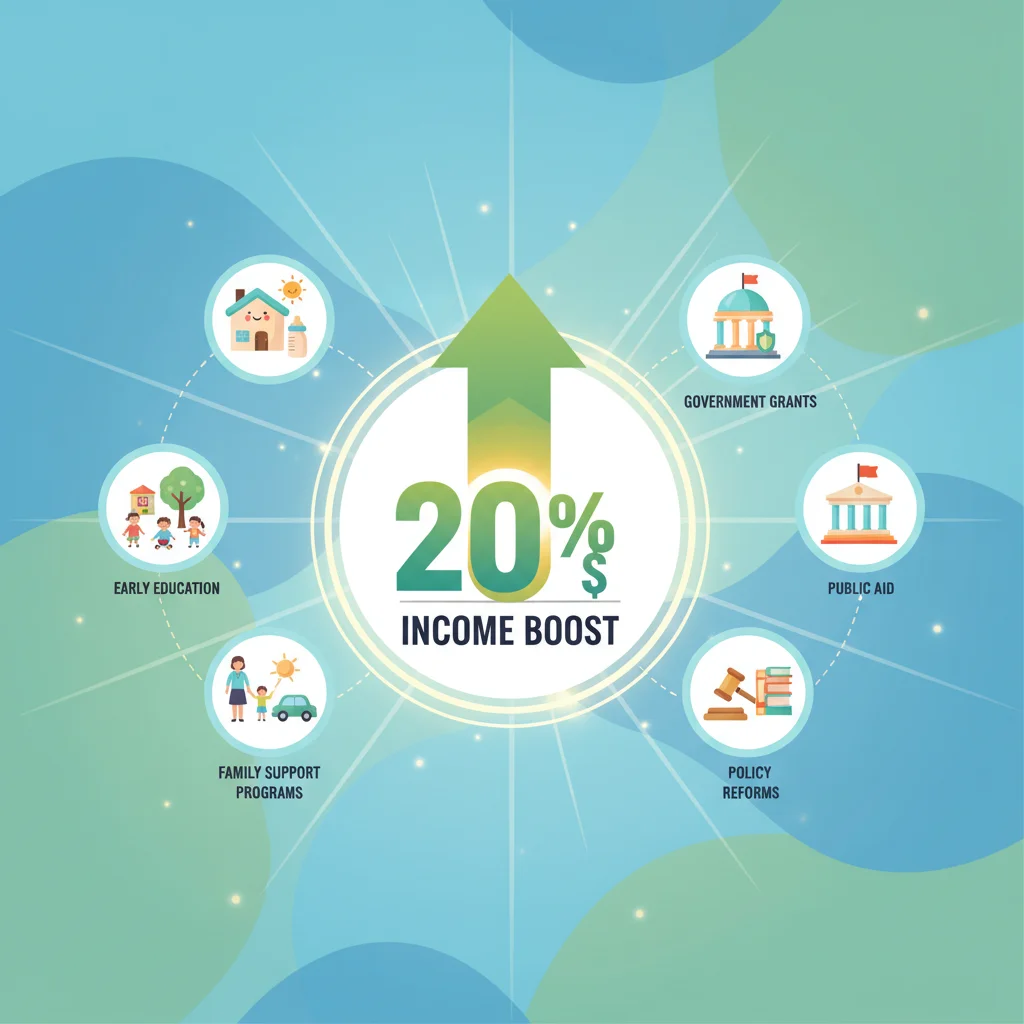
The 20% Income Boost Potential: A Real-World Impact
The financial relief provided by child care subsidies 2026 is not just theoretical; it translates into a tangible boost to a family’s effective income. Let’s consider a hypothetical scenario:
Imagine a family of three (two parents, one child) with a combined annual income of $50,000. In many urban areas, child care costs for an infant can easily range from $1,200 to $1,800 per month, or $14,400 to $21,600 per year. Without subsidies, this family would be spending between 28% and 43% of their gross income on child care alone, leaving very little for other essential expenses.
With a child care subsidy, this family might see their monthly child care expense reduced to a manageable co-payment, perhaps $100-$300, depending on their state’s program and income tier. If the subsidy covers $1,500 of a $1,800 monthly cost, that’s an annual saving of $18,000. For a family earning $50,000, saving $18,000 is equivalent to a 36% increase in their disposable income, far exceeding the 20% potential boost discussed earlier. Even a more conservative saving of $10,000 annually represents a 20% increase in their effective income.
This "income boost" isn’t a direct payment but rather the freeing up of funds that would otherwise be allocated to child care. This saved money can then be used for:
- Debt Reduction: Paying off credit cards, student loans, or other high-interest debts.
- Savings: Building an emergency fund, saving for a down payment on a home, or contributing to retirement.
- Essential Expenses: Affording better housing, healthier food options, or necessary medical care.
- Children’s Enrichment: Investing in educational activities, extracurriculars, or quality toys.
- Increased Work Hours/Career Advancement: With reliable and affordable child care, parents can pursue promotions, take on more hours, or invest in further education, directly boosting their earnings.
The impact of child care subsidies 2026 extends beyond mere financial relief; it contributes to family stability, child development, and economic mobility. It allows parents to remain in the workforce, enhancing their career trajectories and contributing to the broader economy, while ensuring their children are in safe and nurturing environments.
Anticipated Changes and Future Outlook for Child Care Subsidies in 2026
The landscape of federal and state funding for child care is dynamic. While comprehensive legislative overhauls are always subject to political processes, several trends and potential changes could influence child care subsidies 2026.
Continued Focus on Quality and Access
There’s a consistent bipartisan interest in improving the quality of child care and expanding access, especially in underserved areas. This could lead to increased funding for CCDBG, potentially raising income thresholds or reducing co-payments for more families. States may also continue to invest in quality rating and improvement systems (QRIS) for child care providers, which can indirectly benefit families by ensuring higher standards of care.
Workforce Development for Child Care Providers
A critical challenge in the child care sector is the retention and recruitment of qualified educators, often due to low wages. There’s growing recognition that supporting the child care workforce is essential for the stability and quality of the entire system. Future initiatives for child care subsidies 2026 might include provisions or incentives aimed at increasing provider compensation, which, while not a direct subsidy for families, helps ensure the availability of high-quality care options.
Technological Integration and Streamlined Applications
States are increasingly leveraging technology to make the application process for benefits more accessible and efficient. Expect further advancements in online portals, digital document submission, and potentially integrated eligibility systems that simplify applying for multiple benefits simultaneously. This could make accessing child care subsidies 2026 less daunting for busy parents.
Addressing the "Child Care Cliff"
The "child care cliff" refers to the phenomenon where a small increase in a family’s income can lead to a sudden and significant loss of child care subsidies, creating a disincentive for parents to earn more. Policymakers are actively exploring ways to mitigate this, such as creating more gradual phase-out mechanisms for subsidies. While a complete overhaul might not be in place for child care subsidies 2026, incremental improvements are possible at the state level to make the transition smoother as family incomes rise.
Conclusion: Empowering Families with Child Care Subsidies in 2026
The availability of child care subsidies 2026 represents a vital lifeline for countless families, offering not just financial relief but also the peace of mind that comes with knowing children are in safe, nurturing, and enriching environments. Understanding the federal programs, knowing your eligibility, and diligently navigating the application process are crucial steps toward unlocking these benefits.
By taking advantage of these programs, families have the potential to boost their disposable income by up to 20% or more, allowing them to allocate funds to other critical needs, save for the future, or invest in their children’s development. As we move into 2026, stay informed about your state’s specific guidelines, utilize available resources, and don’t hesitate to seek assistance from local agencies. Your efforts in securing these subsidies will not only benefit your family’s immediate financial well-being but also contribute to a stronger, more stable future for your children and your community.
Remember, affordable, quality child care is not a luxury; it is a necessity for working families and a cornerstone of a thriving society. Embrace the opportunities presented by child care subsidies 2026 to empower your family and secure a brighter financial future.