Personal Investment Strategies 2026: Diversify Beyond Stocks & Bonds

In the ever-evolving landscape of global finance, relying solely on traditional stocks and bonds for your investment portfolio might no longer be the most optimal strategy for achieving robust growth and mitigating risks. As we look towards 2026 and beyond, the savvy investor understands the necessity to Diversify Investment Strategies. This comprehensive guide will delve into advanced personal investment strategies, offering insights into how to broaden your financial horizons beyond the conventional to secure a more resilient and prosperous future.
The financial world is a dynamic ecosystem, constantly reshaped by technological advancements, geopolitical shifts, and changing economic paradigms. What worked yesterday may not yield the same results tomorrow. Therefore, a proactive approach to Diversify Investment Strategies is not just prudent; it’s essential. Diversification, at its core, is about spreading your investments across various assets to reduce risk. However, in today’s complex market, it means more than just having a mix of large-cap and small-cap stocks or government and corporate bonds. It demands exploring new frontiers, understanding emerging asset classes, and adapting your financial planning to a future that is already here.
The Shifting Sands of Traditional Investing: Why Diversify Investment Strategies Now?
For decades, the 60/40 portfolio (60% stocks, 40% bonds) was the gold standard for many investors. The logic was sound: stocks provided growth, while bonds offered stability and income, often acting as a hedge during market downturns. However, recent years have challenged this conventional wisdom. Low interest rates have diminished the appeal of bonds, offering meager returns and limited protection against inflation. Simultaneously, stock market volatility, influenced by everything from global pandemics to supply chain disruptions and geopolitical tensions, has underscored the need for more robust risk management.
This is where the imperative to Diversify Investment Strategies comes into sharp focus. Investors need to look beyond the two pillars of traditional finance and consider a broader spectrum of assets that can offer uncorrelated returns, inflation protection, and new avenues for growth. The goal is not to abandon stocks and bonds entirely but to integrate them into a more expansive and resilient portfolio framework.
Understanding Modern Diversification: Beyond the Basics
True diversification in 2026 goes deeper than simply owning different types of stocks and bonds. It involves diversifying across asset classes, geographies, industries, and even investment methodologies. This approach aims to minimize the impact of any single asset’s poor performance on your overall portfolio and maximize your chances of capturing growth opportunities wherever they may arise.
Consider the impact of inflation, for instance. While stocks can offer some protection over the long term, certain alternative assets like real estate or commodities might provide a more direct hedge. Similarly, technological disruptions can create new industries and render old ones obsolete, emphasizing the importance of staying agile and open to emerging investment themes.
Unlocking New Horizons: Alternative Assets for 2026
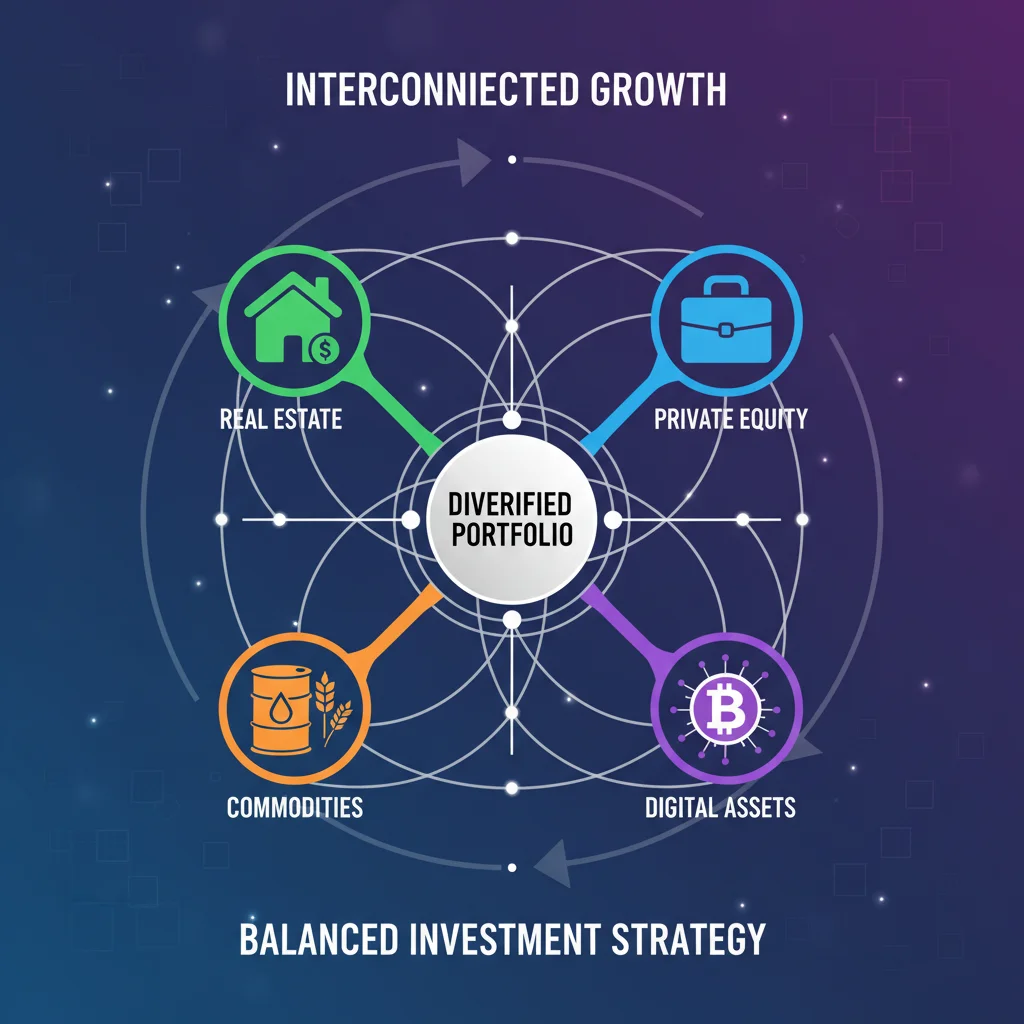
When we talk about the need to Diversify Investment Strategies, alternative investments are often at the forefront of the discussion. These are assets that fall outside the traditional categories of stocks, bonds, and cash. They can include a vast array of options, each with its unique risk-reward profile and potential for portfolio enhancement.
Real Estate: More Than Just Bricks and Mortar
Real estate has long been a favorite alternative asset, offering potential for capital appreciation, rental income, and inflation hedging. However, the real estate landscape is also evolving. Beyond direct ownership of residential or commercial properties, investors can now explore:
- Real Estate Investment Trusts (REITs): These are companies that own, operate, or finance income-producing real estate. They trade on major exchanges like stocks, offering liquidity and diversification across various property types (e.g., apartments, offices, warehouses, data centers). REITs provide an accessible way to invest in real estate without the complexities of direct property management.
- Crowdfunded Real Estate: Platforms allow individuals to invest in specific real estate projects (debt or equity) with smaller amounts of capital than traditional routes. This opens up opportunities in commercial, residential, or development projects that were once exclusive to institutional investors.
- Specialized Real Estate: Consider niche segments like industrial logistics properties, senior living facilities, or even timberland, which can offer unique return profiles and less correlation with broader market cycles.
Private Equity and Venture Capital: High Risk, High Reward
Investing in private companies, either through private equity funds or venture capital, can offer significant upside potential. These investments typically involve higher risk and illiquidity but can provide exposure to innovative businesses and industries before they hit public markets.
- Private Equity Funds: These funds invest in established private companies, often with the goal of improving their operations and eventually selling them for a profit. They typically require substantial capital and a long-term commitment.
- Venture Capital Funds: Focused on early-stage, high-growth companies, venture capital offers the potential for exponential returns but also carries a higher risk of failure. Angel investing, a form of venture capital, allows individuals to invest directly in startups.
- Growth Equity: This sits between venture capital and traditional private equity, investing in more mature, yet still rapidly growing, private companies.
Commodities: A Hedge Against Inflation
Commodities, such as gold, silver, oil, natural gas, and agricultural products, can act as a hedge against inflation and currency devaluation. Their prices are often driven by supply and demand dynamics that are different from those affecting stocks and bonds.
- Precious Metals: Gold and silver are often seen as safe-haven assets during times of economic uncertainty. They can be held directly or through ETFs.
- Energy Commodities: Oil and natural gas prices are influenced by global economic activity, geopolitical events, and production levels.
- Agricultural Commodities: Wheat, corn, and soybeans can be affected by weather patterns, global demand, and trade policies.
Investing in commodities often involves futures contracts or exchange-traded funds (ETFs) that track commodity prices. It’s crucial to understand the volatility and specific market drivers of each commodity.
Digital Assets and Cryptocurrencies: The New Frontier
The rise of digital assets, led by cryptocurrencies like Bitcoin and Ethereum, has opened an entirely new asset class. While highly volatile, they offer decentralization, technological innovation, and potential for significant growth.
- Cryptocurrencies: Beyond the major coins, thousands of altcoins exist, each with different use cases and underlying technologies. Investing requires a deep understanding of blockchain technology and market dynamics.
- Non-Fungible Tokens (NFTs): Representing ownership of unique digital items, NFTs have gained traction in art, gaming, and collectibles. They are a highly speculative and nascent market.
- Decentralized Finance (DeFi): This ecosystem of financial applications built on blockchain technology offers services like lending, borrowing, and trading without traditional intermediaries.
Investing in digital assets requires careful research, understanding of cybersecurity risks, and a high tolerance for volatility. However, for those looking to truly Diversify Investment Strategies, it represents a frontier with immense potential.
The Role of Sustainable and Impact Investing
Beyond financial returns, a growing number of investors are seeking to align their portfolios with their values. Sustainable, Responsible, and Impact Investing (SRI) or Environmental, Social, and Governance (ESG) investing focuses on companies that demonstrate strong performance in these non-financial areas.
- ESG Funds and ETFs: These investment vehicles specifically target companies with high ESG ratings, offering a way to invest responsibly while still pursuing financial gains.
- Impact Investments: These are investments made with the intention to generate positive, measurable social and environmental impact alongside a financial return. This can include anything from renewable energy projects to microfinance initiatives.
Integrating ESG considerations into your portfolio can not only contribute to a better world but also potentially enhance long-term returns, as companies with strong ESG practices often exhibit better resilience and innovation.

Strategic Approaches to Diversify Investment Strategies
Simply knowing about alternative assets isn’t enough; you need a strategic framework to integrate them effectively into your personal investment plan. Here are key considerations:
1. Define Your Risk Tolerance and Time Horizon
Before diving into any new asset class, honestly assess your risk tolerance. Alternative investments often come with higher liquidity risk, meaning it might be harder to convert them to cash quickly without a significant loss. Your time horizon also plays a crucial role; some alternative investments, like private equity, require a long-term commitment.
2. Start Small and Gradually Increase Exposure
Don’t put all your eggs in one new basket. Begin with a small allocation to alternative assets (e.g., 5-10% of your portfolio) and gradually increase it as you gain understanding and comfort. This allows you to learn about the asset class without exposing yourself to undue risk.
3. Conduct Thorough Due Diligence
Each alternative asset class has its own intricacies. Research thoroughly, understand the underlying drivers of value, and be aware of the specific risks involved. For example, in crowdfunded real estate, scrutinize the project sponsor, the property’s location, and the projected returns. For cryptocurrencies, understand the technology and market sentiment.
4. Leverage Professional Advice
Navigating the world of alternative investments can be complex. A qualified financial advisor who specializes in these areas can provide invaluable guidance, help you assess risks, and integrate these assets into a cohesive overall financial plan. They can help you understand how to Diversify Investment Strategies effectively for your unique situation.
5. Rebalance Your Portfolio Regularly
Diversification is not a one-time event. Your portfolio’s asset allocation will drift over time due to varying asset performance. Regularly rebalancing ensures that you maintain your desired risk profile and don’t become overexposed to any single asset class. This is especially important when you Diversify Investment Strategies with volatile assets.
The Future of Personal Investing: Beyond 2026
As we look beyond 2026, several trends are likely to continue shaping personal investment strategies:
- Increased Accessibility to Alternatives: Technology will continue to democratize access to alternative investments, making private markets, venture capital, and specialized real estate more available to individual investors through fractional ownership, tokenization, and innovative platforms.
- Data-Driven Investing: Artificial intelligence and machine learning will play an increasingly significant role in investment analysis, risk management, and personalized portfolio construction, enabling more sophisticated and data-driven decisions.
- Hyper-Personalization: Investment solutions will become even more tailored to individual preferences, risk profiles, and ethical considerations, moving beyond generic model portfolios.
- Global Interconnectedness: Investors will increasingly look beyond domestic markets, seeking opportunities in emerging economies and understanding the impact of global events on their diversified portfolios.
The successful investor of the future will be one who embraces continuous learning, adapts to change, and is willing to explore new avenues for wealth creation. The mantra to Diversify Investment Strategies will remain a cornerstone, but its interpretation will broaden significantly.
Case Study: A Balanced Diversification Approach
Let’s consider a hypothetical investor, Sarah, who in 2026 decides to significantly Diversify Investment Strategies. Instead of a traditional 60/40 stock/bond split, her portfolio might look something like this:
- 35% Public Equities: A mix of global large-cap, small-cap, and growth stocks, including some ESG-focused ETFs.
- 15% Fixed Income: A diversified bond portfolio, including short-term government bonds, investment-grade corporate bonds, and perhaps some inflation-protected securities.
- 20% Real Estate: A combination of publicly traded REITs for liquidity and a small allocation to crowdfunded commercial real estate projects for higher potential returns and direct exposure.
- 10% Private Equity/Venture Capital: Through a diversified fund that invests in a basket of private companies, offering exposure to high-growth sectors.
- 10% Commodities: Primarily through a broad-based commodity ETF, with a small direct allocation to physical gold as a hedge.
- 5% Digital Assets: A diversified basket of leading cryptocurrencies, held with a long-term perspective and rigorous risk management.
- 5% Other Alternatives: This could include anything from fine art funds to litigation finance, depending on Sarah’s specific interests and access.
This example illustrates how a thoughtful approach to Diversify Investment Strategies can create a more resilient portfolio, capable of navigating different market cycles and capturing opportunities from various economic sectors.
Common Pitfalls to Avoid When Diversifying
While the benefits of diversifying are clear, investors should be aware of potential pitfalls:
- Over-Diversification: Spreading your money too thinly across too many assets can dilute returns and make it difficult to monitor your investments effectively. There’s a point where additional diversification provides diminishing returns.
- Chasing Returns: Don’t jump into an alternative asset class simply because it has performed well recently. Understand its fundamentals and long-term potential.
- Ignoring Fees: Alternative investments, especially private funds, can come with higher fees. Be aware of management fees, performance fees, and other charges that can eat into your returns.
- Lack of Understanding: Investing in something you don’t understand is a recipe for disaster. Take the time to educate yourself or seek expert advice.
- Liquidity Risk: Many alternative investments are illiquid, meaning you can’t easily sell them quickly. Ensure that your liquid assets are sufficient to cover your short-term financial needs.
- Not Rebalancing: As mentioned, a diversified portfolio needs regular rebalancing to maintain its intended asset allocation and risk profile. Failing to do so can lead to unintended concentrations.
Conclusion: Embrace the Future of Investing with Diversified Strategies
The financial landscape of 2026 demands a sophisticated and forward-thinking approach to personal investing. The days of solely relying on traditional stocks and bonds are giving way to a more expansive and nuanced understanding of portfolio construction. To truly Diversify Investment Strategies means to explore the vast potential of alternative assets, from real estate and private equity to commodities and digital assets, while always maintaining a keen eye on risk management and long-term financial goals.
By embracing these modern diversification principles, defining your risk tolerance, conducting thorough due diligence, and leveraging professional expertise, you can build a resilient, growth-oriented portfolio that is well-positioned to thrive in the dynamic economic environment of the coming years. The journey to financial prosperity in 2026 and beyond is not about avoiding risk entirely, but about intelligently managing it through strategic and thoughtful diversification.
Start your journey today by assessing your current portfolio, identifying areas for diversification, and exploring the exciting opportunities that lie beyond the conventional. Your financial future will thank you.